
Deals with Chronic diseases
Practicing at:Hahnemann Homoeo clinic
About Dr. Habib
Dr. Habib khan practising Homoeopathy in Gwalior, Madya Pradesh last from 25 years. He is a single remedy Practicnor. trusted by Thousand. Clinic address: 203 cosmo business, park, new city centre Gwalior,
- Total Articles
- 30
- Blog Posts
- 10
- Case Studies
- 20
- Total Views
- 36,359
Visit the Clinic
Hahnemann Homoeo clinic
Gwalior, Madhya Pradesh, India
Clinic Photos
 Case Study
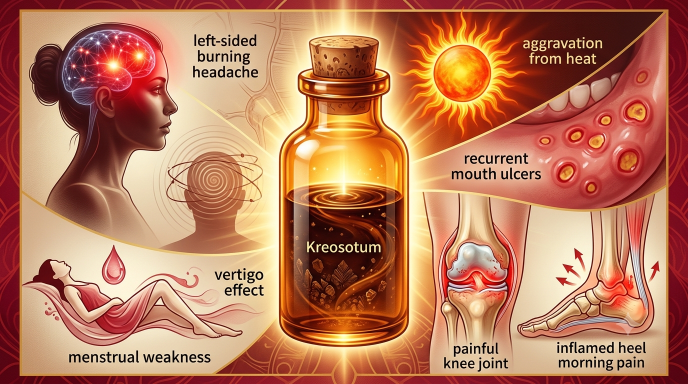
Kreosotum in a Case of Menstrual Headache, Vertigo, Heel Pain, and Recurrent Fever.
A 40-year-old woman presented with a complex symptom picture characterized by left-sided burning headache with vertigo, menstrual aggravation, burning urination, recurrent mouth ulcers, knee pain, morning heel pain, chronic constipation, excessive sleepiness, and marked sensitivity to heat. Careful individualization revealed a characteristic symptom totality corresponding to Kreosotum. Following the administration of Kreosotum 30C, the patient experienced marked improvement in nearly all complaints within fifteen days. This case illustrates the importance of individualizing peculiar modalities, burning sensations, and constitutional characteristics in the successful selection of a homoeopathic remedy.
 Blog
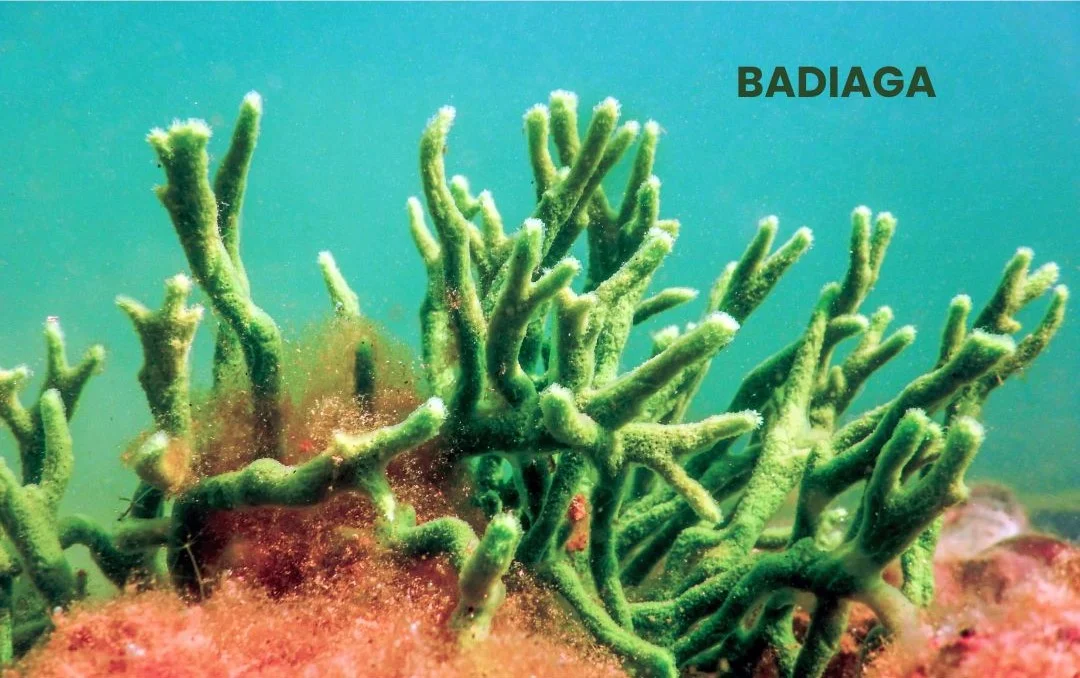
Badiaga in Clinical Practice: Addressing Headache and Fever Accompanied by Eye Pain.
Every medicine in homoeopathic proving yields numerous symptoms, yet their value is unequal. Some are decisive and characteristic, others incidental. A symptom may be highly significant in one patient but negligible in another; the physician’s art lies in discerning those that truly individualize the case. Proving itself is not the isolated action of the drug, but the dynamic interplay between substance and prover’s constitution, producing a composite symptom‑picture. Because medicines manifest differently in different provers, separate evaluation in male and female subjects is essential, as constitutional distinctions influence expression. In practice, the same principle applies: a symptom may carry different weight in male and female patients. Hence arises the gradation of symptoms—highest rank to those repeatedly observed and clinically confirmed; lower grades to those fewer but consistent; the least to occasional or weakly verified signs. Beyond proving‑derived symptoms stand clinical symptoms: not elicited in provings, but repeatedly cured in practice. Through therapeutic verification they acquire practical value, enriching the materia medica. Thus, homoeopathy rests upon both provings and bedside confirmation, weaving together drug action and clinical experience into a reliable portrait of each remedy.
 Blog
Teething Troubles in Children: Etiology, Consequences, and Homoeopathic Therapeutics.
Teething, though a physiological milestone, often becomes a source of systemic disturbance in susceptible children. The etiology lies not in infection but in the irritability of the gums and the heightened excitability of the nervous system, which in certain constitutions manifests as diarrhoea, fever, or even convulsions. The consequences extend beyond local discomfort, revealing deeper constitutional susceptibilities and miasmatic tendencies. Homoeopathy interprets these troubles as expressions of the disturbed vital force and prescribes remedies that correspond to the child’s individuality. Chamomilla suits the irritable, inconsolable child; Belladonna addresses febrile states with cerebral irritation; Calcarea carbonica aids delayed dentition in flabby, perspiring children; and Silicea supports delicate constitutions with poor assimilation. Thus, homoeopathic therapeutics aim not merely at palliation but at harmonizing the child’s systemic balance during this natural developmental passage
 Case Study
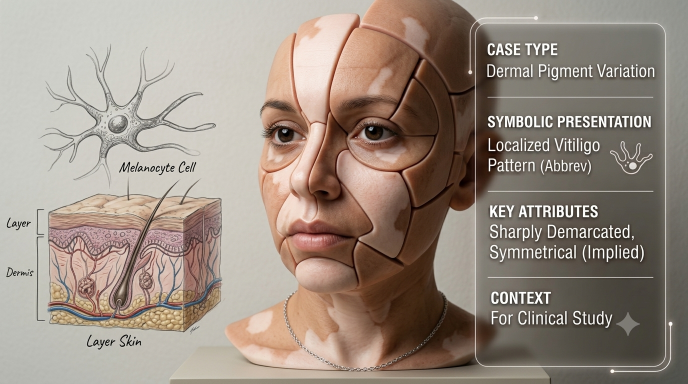
Rhus tox in Segmental Vitiligo: Localized Depigmented Lesions in a Pediatric Patient.
Vitiligo in pediatric patients often presents as localized depigmented patches with preserved sensation, occasionally accompanied by mild itching. In this case, a child presented with a small, depigmented area around the mouth, with normal tactile response and slight pruritus. The remedy Rhus tox was prescribed for one month. On follow‑up after three months, the lesion had to reduced up to great extent, demonstrating the curative potential of homoeopathic intervention in segmental vitiligo. This outcome highlights the importance of individualized remedy selection and supports the role of Rhus tox in cases where depigmentation is accompanied by itching and localized distribution.
 Blog
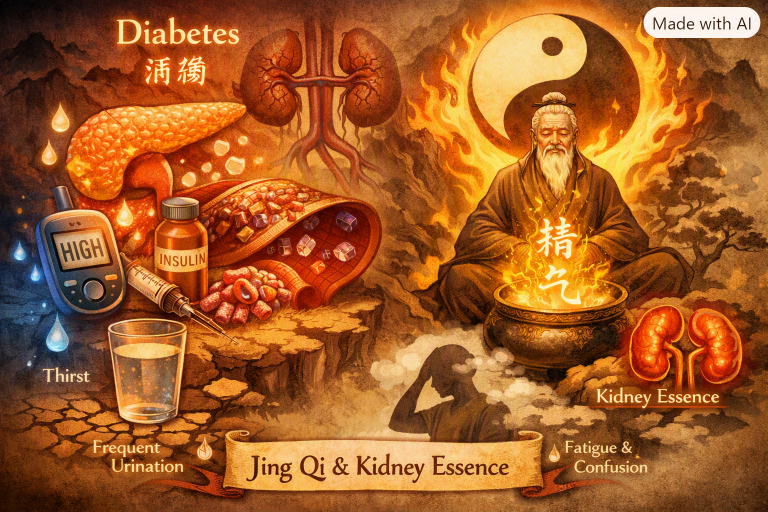
Diabetes Mellitus: Etiology, Clinical Features, and Homoeopathic Therapeutics.
Diabetes mellitus is a chronic metabolic disorder characterized by persistent hyperglycemia and gradual onset of complications such as retinopathy, nephropathy, neuropathy, and ketoacidosis. Despite significant advances in medical science, its exact etiology remains uncertain. Modern research emphasizes the roles of insulin and renal function in maintaining glucose homeostasis, while Traditional Chinese Medicine (TCM) interprets diabetes as a manifestation of Jing (Essence) and Qi deficiency within the genito‑urinary system. In TCM philosophy, Jing represents the balanced integration of Yin and Yang energies, serving as the foundation of vitality, growth, and longevity. Its depletion weakens Kidney Qi, leading to systemic dysfunctions that parallel diabetic manifestations such as fatigue, excessive hunger, and frequent urination. This energetic debility reflects a subtle but crucial link between kidney vitality and metabolic regulation — a concept that resonates with Hahnemann’s homoeopathic view of disease as a disturbance of the vital force. Thus, diabetes mellitus may be understood as both a biochemical disorder and an energetic imbalance, where the decline of Jing‑Qi bridges the physiological and philosophical dimensions of health.
 Case Study
Unexpected Haemorrhage, Unexpected Cure: Mezereum’s Swift Action.
A male patient presented in a state of almost collapse, with profuse rectal haemorrhage of unknown origin. His appearance was almost cadaveric, with pallor and weakness so profound that life seemed to be ebbing away. Conventional measures offered no relief, and the urgency of the situation demanded immediate intervention. Mezereum was selected on the basis of its characteristic affinity for mucosal haemorrhage and profound exhaustion. A single dose was administered. Within minutes, the bleeding ceased entirely, and the patient’s vitality began to return. The rapidity of the response was striking: from a state resembling near‑death, the patient revived, stabilized, and recovered without further recurrence. This case illustrates the remarkable power of the similimum, where one well‑chosen dose of Mezereum transformed a desperate situation into complete restoration.
 Blog
Dynamic Disease Unveiled: A Chronic Case of G.I.T. tract Cured by Arsenic Album
Disease is the dynamic derangement of the Vital Force — a timeless statement well evidenced by the study of this case. On 10/09/2023, I received a 22‑year‑old male patient suffering from persistent vomiting for the past 15 days, accompanied by tenderness in the lower abdominal region. General weakness was the distinguishing feature of the case. On investigation, a history of abdominal pain was revealed, which had begun gradually, worsened over time, and eventually culminated in vomiting — a condition that had first appeared 15 years earlier.
 Case Study
Digitalis’s Therapeutic Value in Acute Hypertension: A Rapid Case Report
A male patient presented with acute hypertension, marked by a blood pressure of 200/110 mmHg, chest constriction, husky voice, and anxious facial expression. A single dose of Digitalis 30 was prescribed. Within 20 minutes, the patient’s blood pressure reduced to 140/90 mmHg, chest constriction subsided, and overall comfort was restored. This case illustrates the therapeutic value of Digitalis in acute hypertensive states, highlighting its rapid action and clinical significance in homoeopathic practice.
 Case Study
Role of the Vital Force in Chronic Kidney Disease: Despite Irreversible Pathology.
This case study presents a 32‑year‑old male with end‑stage renal disease (ESRD) (Creatinine 18 mg/dL, GFR 3 mL/min/1.73 m²), who refused dialysis and renal transplant. Despite severe pathology, a single dose of homeopathic medicine in 30 potency led to symptomatic improvement: urine output resumed, appetite returned, edema resolved, and facial swelling disappeared. However, biochemical parameters (Creatinine, GFR) remained unchanged. This paradox highlights the role of vital force in palliation and quality of life improvement, even when structural pathology persists.
 Case Study
Ignatia Amara in Peptic Ulcer with Melancholic Disposition: A Case Study
A 33‑year‑old female, referred by one of my old patients, consulted me at my evening clinic with stomach complaints. Detailed case‑taking revealed a history of mental trauma following the death of her mother, whose demise was associated with irregular lifestyle, loss of sleep, and delayed meals. The patient was admitted to the hospital and managed with allopathic treatment. Investigations, including upper GI endoscopy, confirmed the diagnosis of peptic ulcer disease. Clinically, this was a case of nervous dyspepsia progressing into peptic ulcer, with the underlying etiology traced to profound emotional shock. Remedy selection was guided entirely by the predominance of mental symptoms, reaffirming Dr. Hahnemann’s observation that mental symptoms occupy a central and decisive role in homeopathic prescription.
 Case Study
Phosphorus as a Remedy in Tongue Cancer: A Case Study
The healing power of Homoeopathic medicines in cancer is a challenging subject. Cancer is one of the most difficult conditions to treat, yet in some cases, remedies have shown clear benefit. This case of tongue cancer responded in a remarkable way to Phosphorus 1M, given in a single dose. Dr. Samuel Hahnemann taught that a physician should never be judgmental or make assumptions about the outcome. Our duty is not to speculate, but to carefully observe how the remedy acts. In this case, Phosphorus showed its specific effect very clearly. After one dose of Phosphorus 1M, the cancerous growth burst open, giving great relief to the patient. The most important change was that the patient, who had been unable to open the mouth because of the growth, was now able to do so. This improvement brought both physical comfort and emotional relief. Such cases remind us that the physician’s role is to apply the law of similars with care and patience, allowing the remedy to show its natural action. The effect of Phosphorus here is a strong example of the lasting truth of Hahnemann’s principles.
 Case Study
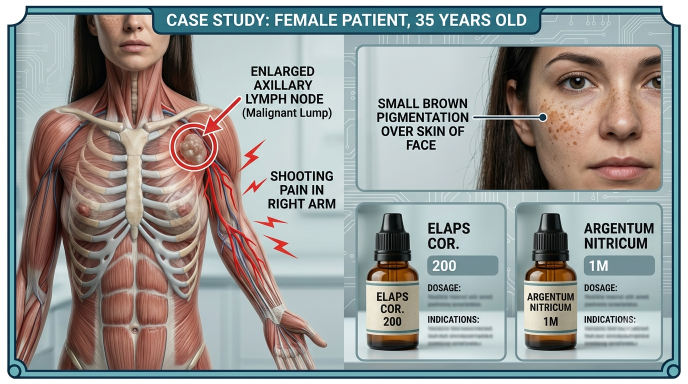
Resolution of Suspected Malignant Axillary Lymphadenopathy Through Homoeopathic Intervention
A female patient from Delhi, India, presented with a painful bluish lump in the right axilla, for which a surgeon had expressed suspicion of malignancy. The pain was of a shooting character, radiating down the arm to the fingertips. During case taking, the most characteristic modality elicited was a marked aggravation from cold and sour foods, particularly curd and lemon juice. Based on the totality of symptoms, Elaps corallinus 200C was prescribed, producing substantial relief and a gradual disappearance of the original modalities. However, the case subsequently relapsed, revealing a new characteristic modality: aggravation after eating sweets. A fresh evaluation of the case led to the prescription of Argentum nitricum 1M, which acted curatively. The axillary lump gradually disappeared, the pain was completely relieved, and the patient's fear of malignancy was removed. During eighteen months of follow-up, no recurrence of the complaint was observed. The case illustrates the successful application of the doctrine of complete symptoms, with the prescription being based chiefly upon location, sensation, and modality, despite the absence of a clearly defined concomitant symptom.
Contact Dr. Habib khan
Have a question or need professional advice? Send a direct inquiry to Dr. Habib.