The Limits of Germ Theory:
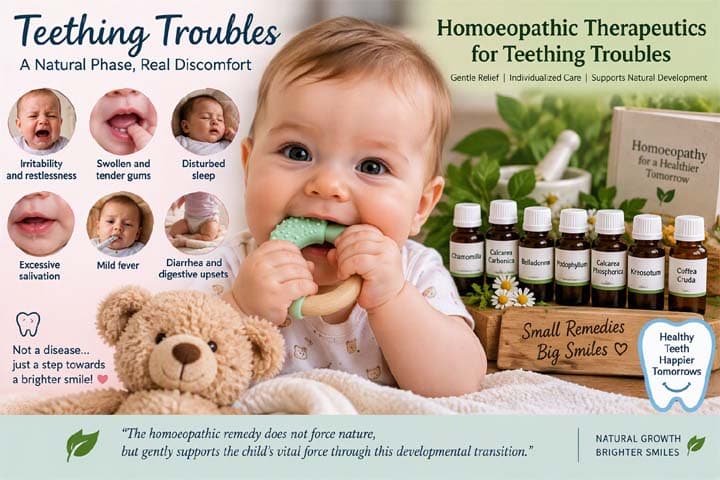
“Antibiotics are not the solution to every problem. There exists a sphere of human suffering where they have no role whatsoever: the troubles of children during dentition. Teething is a natural developmental process, yet it often brings irritability, sleeplessness, and discomfort to the infant. No bacterium or virus has ever been identified as its cause, and antibiotics—designed to combat microbes—remain powerless in alleviating the child’s distress. This example clearly demonstrates that not all ailments can be reduced to infection, and not all remedies can be found in the antibiotic bottle. From the foregoing discussion, it becomes evident that not every disease originates from microbes, and therefore antibiotics cannot be regarded as universal remedies. A striking example is the distress experienced by children during dentition. Teething is a natural developmental stage, yet it often brings irritability, sleeplessness, diarrhea, or other varied complaints. No bacterium or virus has ever been identified as its cause, and antibiotics remain ineffective in alleviating these troubles. This naturally raises a logical question: what, then, is the probable cause of disease during dentition, and why do different children manifest different complaints? The homoeopathic doctrine provides a coherent answer. These disturbances are not the result of external infection but rather the expression of an inherited susceptibility—the dynamic disturbance of the vital force shaped by chronic miasms, most often psora. Each child’s constitution, inherited tendencies, and individual susceptibility determine the particular form of complaint. Thus, one child may suffer chiefly from restlessness, another from digestive upset, and yet another from recurrent fevers. The diversity of symptoms reflects the diversity of susceptibility, not the presence of microbes. In this way, dentition troubles illustrate both the limits of germ theory and the explanatory power of homoeopathic philosophy.”
Etiology: The Dynamic Basis of Teething Problems:
Homoeopathy provides a comprehensive answer: all troubles arising during the dentition period are rooted in inherited miasms transmitted from the parental side. Under the influence of these miasms, the child is born with certain constitutional susceptibilities, and it is precisely these susceptibilities that determine the nature of the complaints. Thus, one child may suffer from irritability and restlessness, another from digestive disturbances, and yet another from febrile episodes. The diversity of symptoms is not due to microbial invasion but to the individuality of susceptibility shaped by the inherited miasmatic background.
Psora often works silently in the background of troubles during the dentition period. In the present age, it is frequently observed that almost every child is under the influence of miasmatic taint, and consequently, nearly all children suffer from some form of complaint during teething. Because of its widespread prevalence, society has come to regard these disturbances as normal, even though they are in fact the outward expression of deeper constitutional susceptibility rooted in inherited miasms.
It must be remembered that the eruption of teeth is, in itself, a normal bio‑physical process—an essential developmental milestone in human life. If the organism were free from the burden of miasmatic influence, no problems would arise during this period. The troubles commonly observed in children at the time of dentition are therefore not inherent to the process itself, but rather the consequence of underlying miasms acting upon the child’s constitution. In a state of freedom from such inherited taints, dentition would proceed naturally and without distress. Thus, in precise terms, the complaints of the dentition period are purely of miasmatic origin. This fact lends strong support to the miasmatic theory, standing apart from and in contrast to the germ theory of conventional medical science.
Consequences: Clinical Picture of Dentition:
The consequences of teething extend beyond gum pain. Clinically, one observes:
Irritability and inconsolable crying.
Sleep disturbance with frequent waking.
Digestive upset such as diarrhoea or anorexia.
Febrile states with flushed cheeks and restlessness.
Convulsions in highly susceptible children.
These consequences highlight that dentition is not a trivial mechanical event but a systemic challenge to the child’s equilibrium.
Common Homoeopathic medicine:
1. Chamomilla., 2. Phytolacca., 3. Silica., 4. Calc carb., 5. Calc phos., 6. Hyprericum., 7. Kresote., 8. Aethusa., 9. Cuprum., 10. Ignatia., 11. Mag- mur., 12. Nat-mur., 13. Rheum., 14. Psorinum., 15. Podophylum., 16. Mag-phos., 17. Kali-brom., 18. Helliborus., 19. Belladonna., 20. Cicuta., 21. Causticum., 22. Coffea., 23. Terebinthina., 24. Cimicifuga., 25. Scutelaria., 26. Hyocymus., 27. Ipecac. 28. Cina- maritima., 29. Colocynthis., 30. Zincum met.,
Teething Remedies with Constitutional Features:
1. Nervous Irritability & Pain
Chamomilla – The child exhibits extreme irritability and inconsolable weeping, demanding to be carried yet rejecting every offered comfort. The restlessness is marked by a constant desire to remain in the mother’s lap, where alone some transient relief is found. Dentition is accompanied by green, foul‑smelling diarrhoea, and the nervous system is so excitable that even slight pain provokes disproportionate distress. Convulsions during teething may also call for Chamomilla, especially when irritability and oversensitivity are the keynote features. (Bry., Kre., Cina.)
Coffea – Nervous excitement, sleeplessness from pain; hypersensitivity to touch and noise. the main indication for this medicine is hypertensive for pain, eruption of teeth from the gums is a painful procedure, hence child becomes hypertensive, caused symptoms. (Aco., Cham.,)
Belladonna – Sudden high fever, flushed face, dilated pupils, cerebral irritation; child bores head into pillow. Medicine is suitable for plethoric child of sanguine temperament.
Ignatia – Nervous, changeable moods; sobbing or sighing; spasmodic complaints. great anger like nux vomica. convulsive symptoms have the prominence. (Cic, Cham.,)
Cicuta – Convulsions during dentition; sudden rigidity and jerks.
Hyoscyamus – Twitching, grimaces, restless sleep with jerks; nervous excitability.
Kali bromatum – Restless, sleepless, nervous children; tendency to night terrors.
Slow or Difficult Dentition
Calcarea carbonica – Fat,
flabby, perspiring children; delayed dentition; large head, open fontanelles,
sour smell.
Silicea – Delicate, chilly
children; poor assimilation; slow dentition with suppuration tendency.
Calcarea phosphorica –
Thin, emaciated children; delayed or difficult dentition with diarrhoea;
craving for salty food.
Magnesia muriatica –
Constipation with hard, knotty stools; slow dentition in nervous children.
Natrum muriaticum – Thin,
anaemic children; craving for salt; emotional sensitivity.
Psorinum – Dirty,
offensive smell; unhealthy skin; slow dentition with recurrent troubles.
Gastrointestinal Disturbances
Phytolacca –
Diarrhoea accompanied by marked tenesmus; the impulsive disposition is evident—he attempts to cut or destroy objects, seizes them with eagerness, and presses them firmly against the mouth.
Rheum – Sour diarrhoea,
sour smell of whole body; child fretful, restless.
Podophyllum – Profuse,
watery, gushing diarrhoea; rolling of head; prostration.
Aethusa cynapium –
Intolerance of milk; vomiting immediately after feeding; prostration,
drowsiness.
Cuprum metallicum –
Violent vomiting, cramps, convulsions with dentition.
Colocynthis – Colicky
pains, child bends double, relieved by pressure.
Ipecacuanha – Persistent
nausea, vomiting, diarrhoea; pale face, clean tongue.
Cina maritima – Wormy
children; grinding teeth, picking nose, irritable.
Terebinthina – Offensive
urine, haematuria; intestinal irritation with foul stools.
Nervous System & Convulsions
Hypericum – Neuralgic
pains; nerve injuries during dentition; extreme sensitivity.
Zincum metallicum –
Restless feet, nervous irritability; child grinds teeth, cries out in sleep.
Helleborus – Slow,
stupefied states; rolling of head; hydrocephaloid tendency.
Causticum – Nervous, weak
children; tendency to paralysis; delayed dentition.
Cimicifuga – Nervous
irritability, chorea‑like movements; sensitive, excitable children.
Scutellaria – Nervous
restlessness, sleeplessness; twitching during dentition.
Philosophical Implications:
Dentition, though a physiological milestone, often becomes a crucible in which the child’s constitutional susceptibilities are revealed. The homoeopathic axiom—that disease is the reaction of the vital force to external stimuli—finds a vivid demonstration here. The eruption of teeth is not in itself pathological; rather, it is a natural stimulus that evokes diverse responses depending upon the child’s inherited vitality, miasmatic background, and constitutional soil.
The physician’s responsibility, therefore, is not to suppress the outward manifestations—such as irritability, diarrhoea, fever, or convulsions—but to interpret them as signs of deeper susceptibility. Each symptom is a language through which the vital force speaks, indicating the inner imbalance and pointing toward the similimum. To palliate or silence these expressions with crude measures is to misunderstand their meaning; to read them correctly and respond with the appropriate remedy is to harmonize the disturbed life‑principle.
By administering the similimum, the homoeopath transforms teething from a crisis into a natural developmental passage. The child’s suffering is not merely alleviated but transmuted into growth, as the remedy strengthens the constitution and restores equilibrium. Thus, dentition becomes not an ordeal but a revelation—an opportunity to guide the child’s unfolding vitality in accordance with nature’s laws. In this way, homoeopathy affirms its philosophical mission: to cure by recognizing disease as the dynamic reaction of the vital force, and to ensure that development proceeds in harmony with nature rather than in conflict with it.