
Case Studies
Real homeopathic case studies and treatment outcomes from experienced practitioners
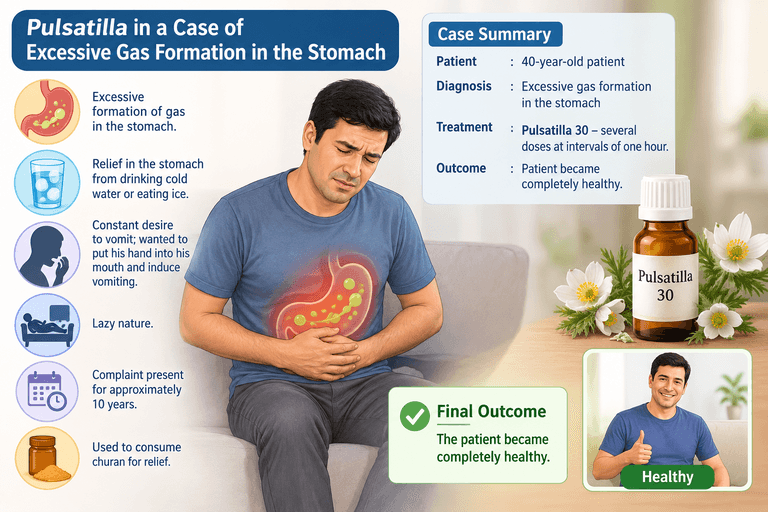
Pulsatilla in a Case of Excessive Gas Formation in the Stomach
Generally, it is believed that Pulsatilla is only a medicine for women. However, this is a common misconception. It is true that Pulsatilla has provided relief to many women, and it suits complaints occurring in women that are aggravated by pregnancy. Yet, its therapeutic sphere is not confined to female constitutions alone. The remedy acts universally, provided the prescription is guided by the totality of symptoms rather than by gender stereotypes
Aphorism 6 in Practice: The Physician Beyond Prejudice.
A 40‑year‑old female presented with a constellation of chronic complaints reflecting both physical discomfort and constitutional imbalance. Urinary symptoms were marked by interrupted, scanty flow with burning, temporarily relieved by local oiling. Abdominal tympanites with frequent eructations failed to provide relief, while general soreness, laziness, and constipation added to her burden. Hair fall was noted, along with numbness and restlessness in the extremities (ameliorated by cold drinks), weakness and pain in the lower limbs, and monthly headaches beginning at the nape and settling at the vertex. Medical history revealed a tendency toward typhoid fever. Generalities included alternating sleep, diminished appetite and thirst, craving for salt, aggravation from food, and sensitivity to both heat and cold. The peculiar modalities — relief by oiling and cold drinks — provided key individualizing features for remedy selection.
Unexpected Haemorrhage, Unexpected Cure: Mezereum’s Swift Action.
A male patient presented in a state of almost collapse, with profuse rectal haemorrhage of unknown origin. His appearance was almost cadaveric, with pallor and weakness so profound that life seemed to be ebbing away. Conventional measures offered no relief, and the urgency of the situation demanded immediate intervention. Mezereum was selected on the basis of its characteristic affinity for mucosal haemorrhage and profound exhaustion. A single dose was administered. Within minutes, the bleeding ceased entirely, and the patient’s vitality began to return. The rapidity of the response was striking: from a state resembling near‑death, the patient revived, stabilized, and recovered without further recurrence. This case illustrates the remarkable power of the similimum, where one well‑chosen dose of Mezereum transformed a desperate situation into complete restoration.
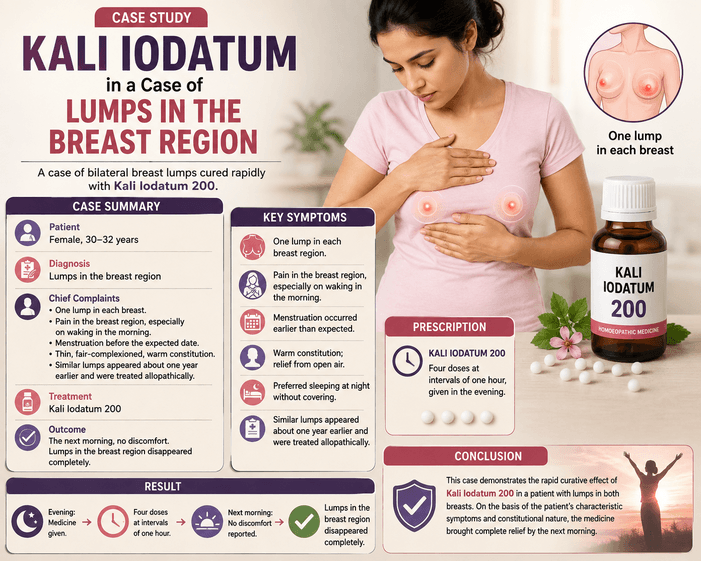
Kali Iodatum in a Case of Lumps in the Breast Region
Some people believe that homoeopathic medicines act slowly. This is only a misconception. In fact, many homoeopathic physicians themselves repeat this claim, asserting that homoeopathy works at a sluggish pace. Yet such statements usually arise from the physician’s own inability to select the correct remedy. To say so is not only self‑deceptive but also undermines confidence in the system of medicine itself. When the right medicine is chosen with precision, homoeopathy demonstrates its power swiftly and effectively.
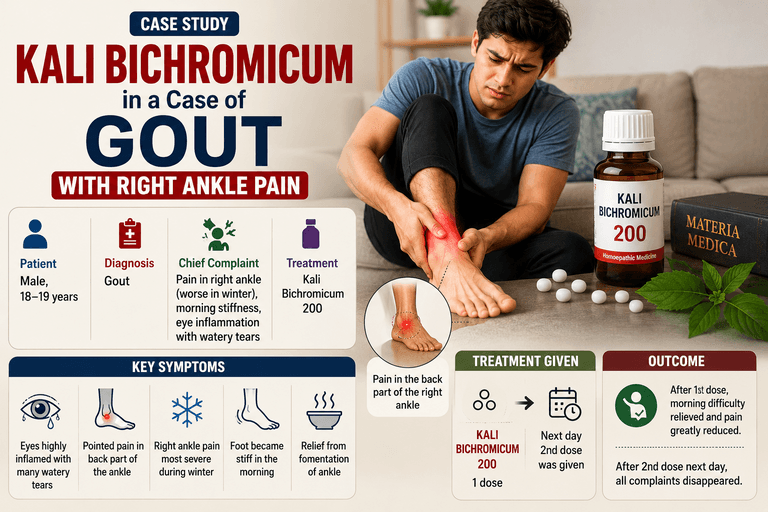
Rapid Cure of Gout with Kali Bichromicum 200: A Clinical Case Report.
This case describes an 18–19-year-old male suffering from a condition of gout, with pain in the right ankle that became most severe during winter. The patient had been treated with various allopathic and homoeopathic medicines for approximately four years without benefit. Based on the characteristic symptoms, Kali Bichromicum 200 was prescribed, following which the patient's complaints were relieved.
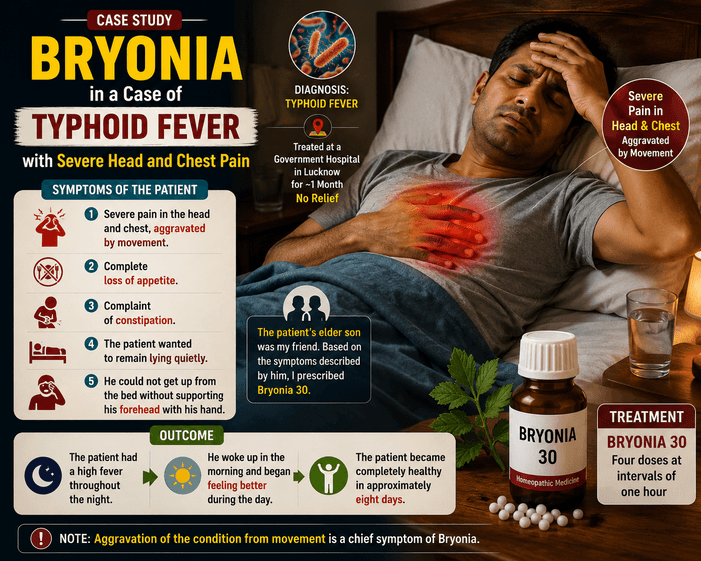
Bryonia in a Case of Typhoid Fever with Severe Head and Chest Pain
This case is of a 38–40-year-old male suffering from typhoid fever. He was treated for approximately one month at a government hospital in Lucknow, India, but the allopathic treatment did not provide relief. Based on the symptoms described by his son, Bryonia 30 was prescribed. The patient gradually improved during the day and became completely healthy within approximately eight days.
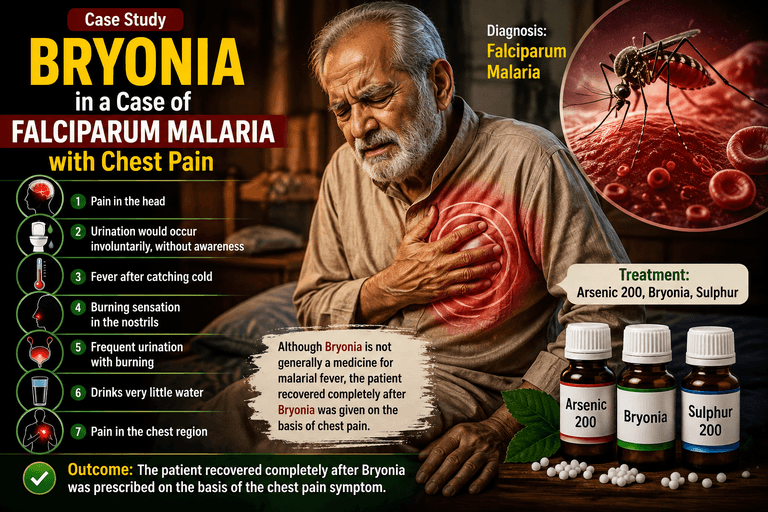
Bryonia in a Case of Falciparum Malaria with Chest Pain
This case is of an 80-year-old elderly patient suffering from falciparum malaria. The patient presented with several symptoms including headache, involuntary urination without awareness, fever after catching cold, burning in the nostrils, frequent urination with burning, drinking very little water, and pain in the chest region. Although Bryonia is not generally used as a medicine for malarial fever, the patient recovered completely after Bryonia was prescribed on the basis of the symptom of chest pain.
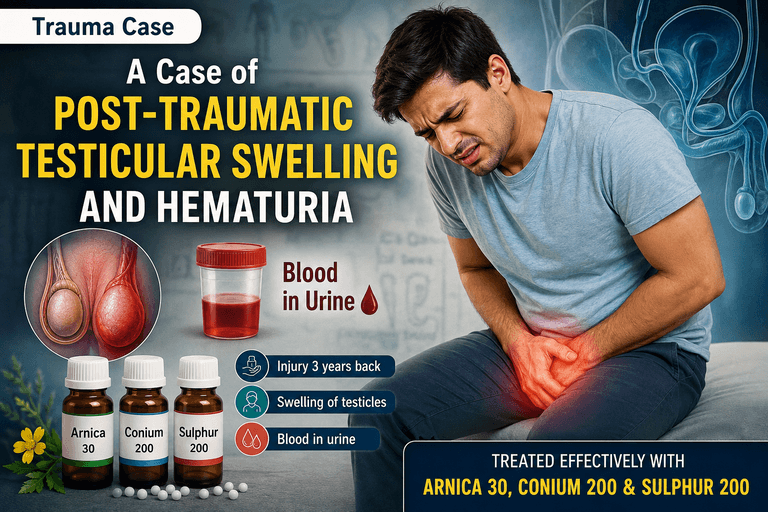
Traumatic Testicular Swelling and Hematuria
This case describes a 20–21-year-old male who developed swelling of the testicles and blood in the urine three years after an injury to the testicles. The case was managed with Arnica 30, Conium 200, and Sulphur 200 at different stages. The swelling subsided after a single dose of Conium 200, while the complaint of blood in the urine was subsequently managed with Arnica.
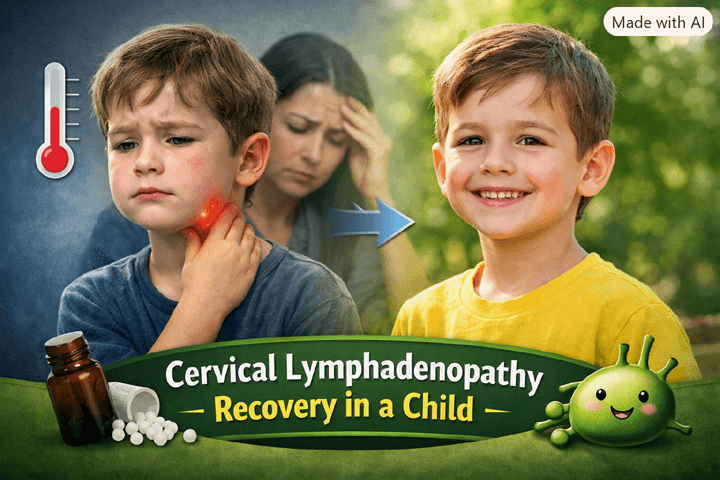
Cervical Lymphadenopathy (Suspected Tuberculosis) with Intense Fever: case resolved by single dose of Lac canainum - 200.
Although this case was not an acute emergency, the statement of the attending allopathic physician turned it into one. His remarks deeply distressed the patient’s mother, as he asserted that the enlarged gland was not a simple infection but could be tubercular or even cancerous, necessitating a biopsy. At that time, the patient was suffering from intense fever accompanied by cervical gland enlargement. The illness had begun with pain in the right cheek and swelling of the gums, and within a day had shifted to the left side, progressing to cervical lymphadenopathy with high fever, general malaise, anxious facial expression, and complete loss of appetite.
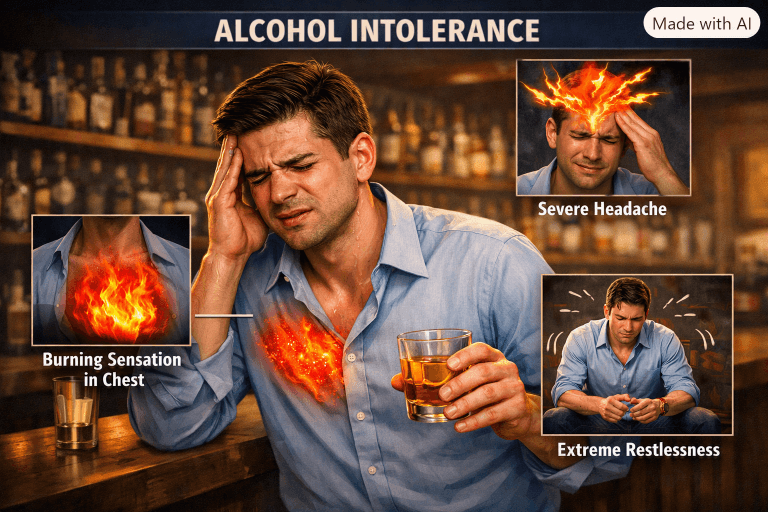
Alcohol Sensitivity and Homoeopathic Therapeutics: A Case‑Based Approach
A 31‑year‑old male, professionally engaged as an event organizer, presented with marked intolerance to alcohol. Though not a habitual drinker, the demands of his profession occasionally compelled him to consume small quantities, yet each exposure produced disproportionate dynamic disturbances far beyond what the material dose could explain. He described his suffering in vivid terms, stating that there was intense heat inside his chest as if boiling water were present, that he suffered a severe headache as though his head would burst, and that he felt extreme restlessness with no effort bringing relief. On thorough investigation, the symptoms revealed a prominent left‑sided seat of action, which guided remedy selection. After fifteen days of treatment, the patient reported consuming alcohol on three occasions; twice he experienced no complaints, and on one occasion only mild restlessness. A one‑month supply of medicine was provided with instructions for use. The remedy Kreosote offered significant support in managing professional obligations, though not a curative solution. The patient was advised of two possible paths: either continued alcohol consumption with ongoing medication, or withdrawal from the profession to avoid further dynamic derangement
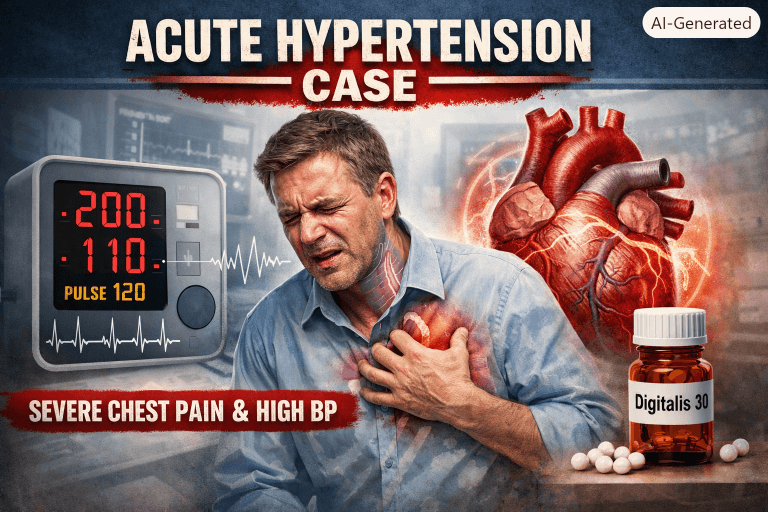
Digitalis’s Therapeutic Value in Acute Hypertension: A Rapid Case Report
A male patient presented with acute hypertension, marked by a blood pressure of 200/110 mmHg, chest constriction, husky voice, and anxious facial expression. A single dose of Digitalis 30 was prescribed. Within 20 minutes, the patient’s blood pressure reduced to 140/90 mmHg, chest constriction subsided, and overall comfort was restored. This case illustrates the therapeutic value of Digitalis in acute hypertensive states, highlighting its rapid action and clinical significance in homoeopathic practice.
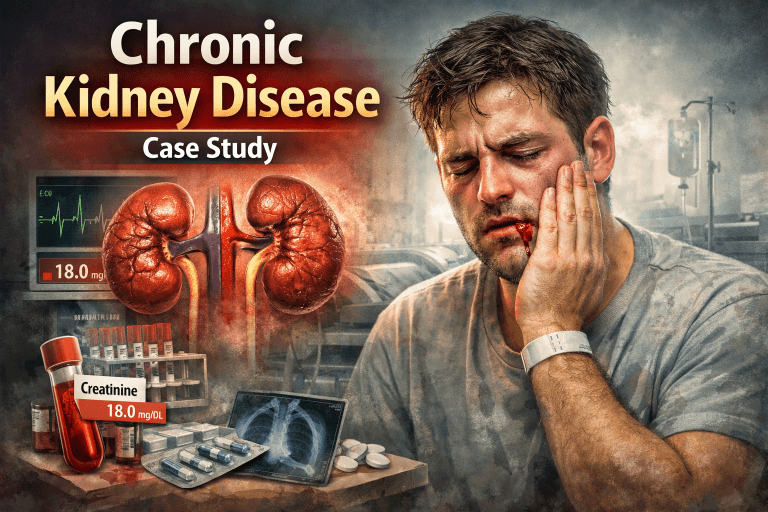
Role of the Vital Force in Chronic Kidney Disease: Despite Irreversible Pathology.
This case study presents a 32‑year‑old male with end‑stage renal disease (ESRD) (Creatinine 18 mg/dL, GFR 3 mL/min/1.73 m²), who refused dialysis and renal transplant. Despite severe pathology, a single dose of homeopathic medicine in 30 potency led to symptomatic improvement: urine output resumed, appetite returned, edema resolved, and facial swelling disappeared. However, biochemical parameters (Creatinine, GFR) remained unchanged. This paradox highlights the role of vital force in palliation and quality of life improvement, even when structural pathology persists.
Stay Updated with Latest Research
Get weekly digests of new articles, case studies, and homeopathic insights delivered to your inbox
By subscribing, you agree to our Privacy Policy. Unsubscribe anytime.