
Deals with Chronic diseases
Practicing at:Hahnemann Homoeo clinic
About Dr. Habib
Dr. Habib khan practising Homoeopathy in Gwalior, Madya Pradesh last from 25 years. He is a single remedy Practicnor. trusted by Thousand. Clinic address: 203 cosmo business, park, new city centre Gwalior,
- Total Articles
- 30
- Blog Posts
- 10
- Case Studies
- 20
- Total Views
- 36,359
Visit the Clinic
Hahnemann Homoeo clinic
Gwalior, Madhya Pradesh, India
Clinic Photos
 Case Study
Bryonia in Tormenting Right sided‑Parietal Headache: Aggravation from Motion, Light, and Heat.
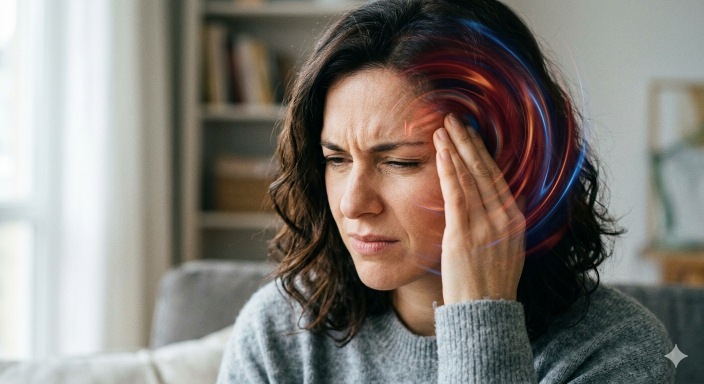
On 29/05/2026, a 32‑year‑old female presented with persistent headache in the right parietal region, unrelieved by prior allopathic and homoeopathic treatments. Despite prescriptions of Belladonna, Ignatia, Spigelia, Sanguinaria, and Silicea, her condition remained unchanged. During case‑taking, two striking modalities emerged: pain ameliorated by firm pressure and aggravation from motion, morning rising, light, and heat. The headache was sudden in onset but deeply rooted in a suppressed febrile history. Careful observation revealed recurrent throbbing pain every 1–1.5 minutes, visibly affecting her facial expression. Based on the totality of symptoms—location, sensation, and modalities—the remedy Bryonia 30 was selected. Within three days, facial expression normalized and pain spells ceased; by the fifth day, complete relief was achieved. This case highlights the principle of prescribing on the portrait of complete symptoms, demonstrating Bryonia’s efficacy in right‑sided parietal headache with modalities of motion, light, and heat, ameliorated by pressure.
 Case Study
Terebinthina: A Case of Abdominal Bloating Cured by a Single Dose
This case demonstrates the remarkable efficacy of homoeopathic medicine, where a single, well‑selected dose brought lasting relief in a chronic condition. A 32‑year‑old male, long troubled by abdominal bloating and a history of chronic urinary infection, had undergone numerous investigations without a clear diagnosis. He suffered from a gripping abdominal sensation, inability to eat comfortably, and early satiety after meals. Following administration of the indicated remedy, his symptoms subsided, appetite improved, and overall health was restored—highlighting the curative potential of individualized homoeopathic treatment.
 Case Study
Nux vomica: role of complete symptoms; A case study.
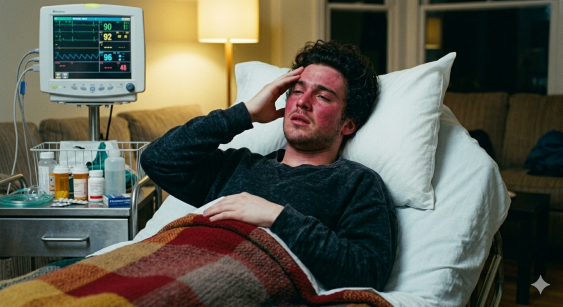
Nux Vomica is not ordinarily regarded as a remedy for headache. Yet, in certain cases of hepato‑encephalopathic headache, it demonstrates striking efficacy. One patient, nearly unconscious, suffered from severe headache aggravated by motion and light. The anxious family members surrounded him, witnessing his rapid decline. Guided by the theory of complete symptoms, Nux Vomica 200 was administered. Within one hour, the patient experienced marked relief, regaining clarity and comfort. This case illustrates how Nux Vomica, though not classically catalogued as a headache remedy, can act profoundly when the totality of symptoms directs its selection.
 Case Study
Sambucus nigra: A Clinical Insight into Fever Management.
A nine‑year‑old girl returned home after visiting her grandmother. Her father, noticing a sickly expression on her face, became anxious and brought her to my clinic. He remarked: “Doctor, sickness is clearly depicted on the face of my child, but she has no complaints. I am very concerned about her health and unable to decide what the actual problem is.” On examination, the child presented no overt symptoms at that time. To address the latent state and based on the constitutional appearance, I administered a single dose of Sulphur 200. By the evening, clear febrile symptoms emerged: 1. Dry heat of the body. 2. Frequent urination. 3. Marked thirstlessness. This progression confirmed the incipient febrile state, validating the father’s concern and the constitutional prescription
 Case Study
Antimonium Crudum in Chronic Summer Diarrhoea with Early Morning Aggravation: A Case Report
On 18th April 2026, during the evening clinic hours, a 35‑year‑old male teacher presented with a long‑standing complaint of chronic diarrhoea. The patient reported that for several years he had been experiencing early morning onset of watery stools, typically between 4:00–5:00 A.M., which continued throughout the day. He described associated cramping pain in the intestines, with partial relief at night, only for the symptoms to recur the following morning. A striking feature of the case was the seasonal modality: the diarrhoea was markedly aggravated during summer, with heat exerting a pronounced influence on the intensity of the complaints. The chronicity of the condition, coupled with its peculiar time modality and seasonal aggravation, made the case noteworthy for clinical documentation.
 Case Study
Antimonium Tartaricum in Pediatric Vomiting: A Clinical Case Report.
A 13‑year‑old girl presented with persistent nighttime vomiting after meals, unrelieved by multiple prior treatments. Ultrasound revealed mesenteric lymphadenopathy. Initial prescription of Arsenicum Album 30 offered no benefit. On follow‑up, a peculiar modality emerged: the child could lie only on her right side without vomiting, while any change of position triggered the symptom. This guiding feature narrowed the choice to Antimonium Tartaricum and Colchicum. A single dose of Antimonium Tartaricum 200 was prescribed, resulting in complete relief within three days. The case underscores the importance of individualization and peculiar modalities in homeopathic practice, demonstrating rapid cure through precise remedy selection.
 Case Study
Urticaria a long-standing case: with the history of epilepsy cured by Pulsatilla.
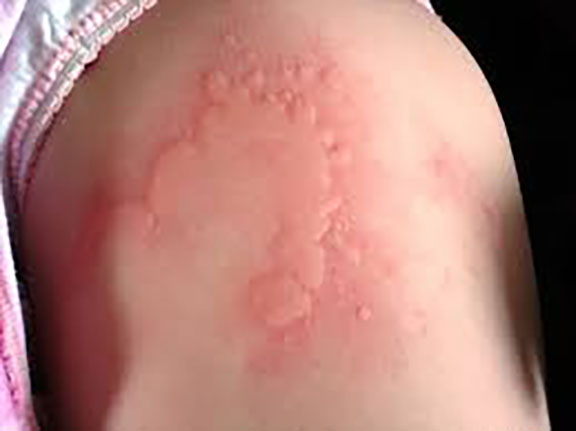
Dr. Hahnemann’s timeless statement, “Treat the sick, not the disease,” finds repeated verification in the hands of a true physician. This case is a living example. A nine‑year‑old boy had been suffering from urticaria for one year, with no relief despite treatment by several allopathic physicians. One of my previously cured patients, who had experienced similar trouble, referred the child’s mother to my clinic. On examination, the child presented with marked evening aggravation, skin slightly warm to touch with intense itching, and ravenous hunger aggravated by fatty food. He also experienced vertigo on exposure to sun heat. A deeper inquiry revealed an active history of epilepsy, previously treated with allopathy. Recognizing the individuality of the case, I prescribed Pulsatilla 30 in repeated doses. Within a 15‑day course of treatment, the patient was completely cured. This outcome underscores the principle of individualization in homeopathy and demonstrates how a carefully chosen remedy can restore health where other systems have failed.
 Blog
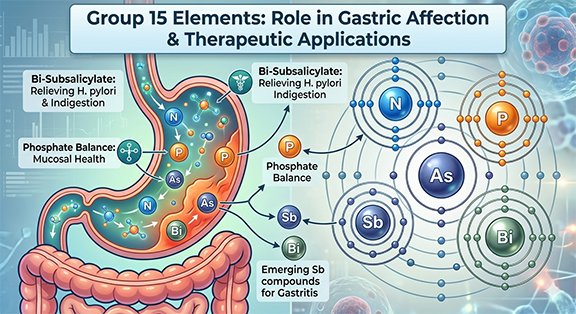
From Phosphorus to Bismuth: Comparative Utility of Group 16 Elements in Gastritis Management.
In homeopathy, disease is understood as a disturbance of the vital force. This disturbance is not material but energetic, and therefore can only be corrected by another dynamic influence—what Hahnemann termed the medicinal force. Thus, both disease and cure operate on the same energetic plane. A noteworthy observation is that elements belonging to the same group in the periodic table often display similar therapeutic effects. This similarity extends beyond chemistry into the dynamic sphere of homeopathy. For instance, the Group 17 elements (Fluorine, Chlorine, Bromine, Iodine), known as halogens, act directly on the thyroid gland and are frequently indicated in thyroid disorders. In parallel, the Group 15 elements (Nitrogen, Phosphorus, Arsenic, Antimony, Bismuth) exert a marked influence on the stomach, particularly in conditions such as gastritis. Thus, the periodic table serves not only as a chemical classification but also as a therapeutic guide, helping physicians select remedies whose energetic affinities resonate with specific organs and pathological states. This reflects a deeper harmony between nature’s design and healing
 Blog
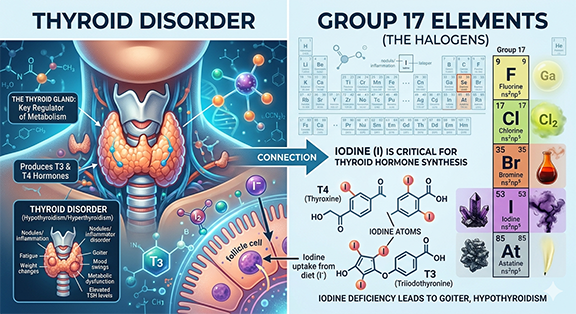
Group 17 Elements and Thyroid Disorders: Physiological, Pathological, and Therapeutic Perspectives
Halogens play a central role in thyroid physiology due to their shared electronic configuration, which resonates with thyroid tissue and influences both disease and cure. In homeopathy, each halogen has distinct therapeutic applications: * Fluorine: Remedies like Fluoric acid and Calcarea fluorica address hyperthyroidism with tissue destruction and hypothyroidism with glandular hardness. * Chlorine: Compounds such as Kali muriaticum and Natrum muriaticum are used across varied thyroid disorders. * Bromine: Preparations like Kali bromatum and Ammonium bromatum target specific thyroid conditions. * Iodine: Essential for hormone synthesis, it remains vital in both conventional and homeopathic practice. * Astatine: Not used clinically due to radioactivity, but research suggests potential in malignant thyroid disease. * Additionally, animal and plant remedies (Sepia, Spongia) embody halogen resonance through their marine constitution, further harmonizing thyroid function
 Blog
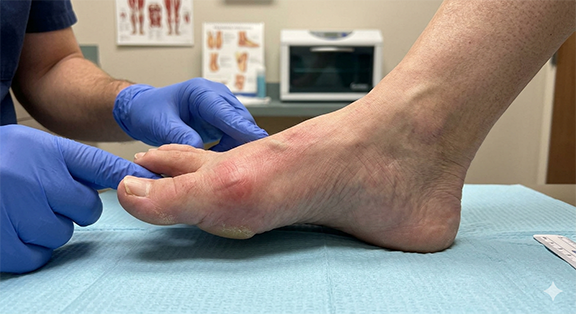
Redirect of vital force: post-operative diarrhoea Cured by Benzoic acid.
A female patient with a long-standing history of knee joint pain, unrelieved by homoeopathic treatment, ultimately underwent surgical intervention. Post-operatively, she developed persistent diarrhoea, with a striking modality of aggravation between 4–8 p.m. This new symptom complex was accompanied by the formation of a bunion on the right toe joint. The emergence of these fresh symptoms indicated a redirection of the vital force, manifesting in a new pathological expression. Careful analysis of the modalities and concomitants led to the prescription of Benzoic acid 200, administered as a single dose. The patient responded with complete recovery, confirming the appropriateness of the remedy selection. This case illustrates the dynamic nature of symptom evolution following surgical intervention and highlights the importance of perceiving the altered flow of vitality in remedy choice.
 Case Study
Acute Crisis Management with Homoeopathy: A Clinical Perspective
Homoeopathy in Acute Emergencies: Clinical Reflections Homoeopathy has repeatedly demonstrated its efficacy in acute emergencies, offering rapid relief where conventional approaches sometimes falter. In my own clinical experience, I have witnessed remarkable recoveries through timely administration of the appropriate remedy. One striking case involved a severe reaction to an allopathic medicine prescribed for headache. The patient developed alarming symptoms, yet a single dose of Camphor 1M brought immediate stabilization and eventual cure. Another case concerned the suppression of an acute fever. The patient’s condition worsened despite conventional measures, but repeated doses of Aconite 200 suppressed fever distorted vital force and led to complicate the case. These experiences reaffirm the principle that homoeopathy, when applied with precision, can act swiftly and decisively in emergencies. Each remedy, selected according to the totality of symptoms, becomes a powerful ally in restoring health—even in critical situations.
 Blog
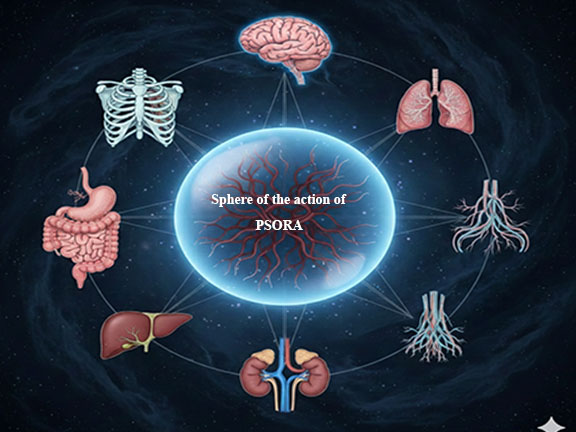
Psora: Sphere of the action of latent Psora.
To become an eminent physician in the field of Homoeopathy and to treat chronic diseases successfully, it is essential for every practitioner to undertake a thorough study of chronic miasms. These underlying disease tendencies, first described by Dr. Samuel Hahnemann, form the foundation of understanding long-standing and recurring illnesses. Without grasping the nature, origin, and manifestations of miasms such as Psora, Sycosis, and Syphilis, a physician cannot fully comprehend the root causes of chronic ailments, nor can they prescribe remedies with lasting curative effect
Contact Dr. Habib khan
Have a question or need professional advice? Send a direct inquiry to Dr. Habib.