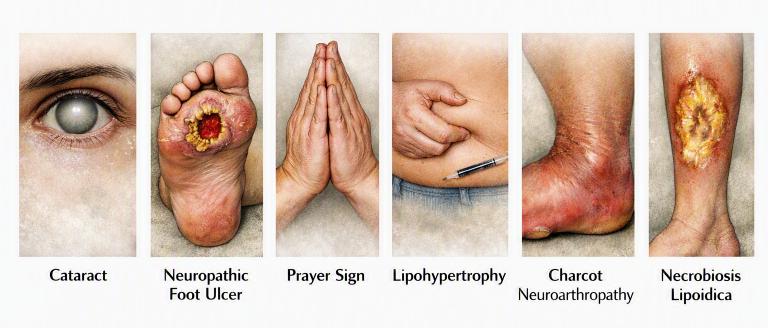
Diabetes mellitus is chronic metabolic disorder, characterised by increased blood sugar level (Hyperglycemia) its symptoms develop slowly and cause serious complication. the measure complications of diabetes mellitus are. 1. Diabetic Retinopathy. 2. Diabetic Nephropathy. 3. Diabetic Neuropathy and Diabetic Keto-acidosis. There are too many other complications are unusual weight loss, Excessive hunger feeling, Frequent and profuse urination, and dry skin.
Diabetes mellitus is often regarded as a disease of modern society, arising from faulty lifestyle habits and a departure from natural living. Contributing factors include late-night dining, lack of physical exercise, persistent mental stress, frequent consumption of street food, and insufficient intake of raw vegetables and fruits. These triggers collectively disturb metabolic balance and elevate blood sugar levels. Among them, mental stress is one of the most significant contributors. Stress commonly leads to higher blood glucose levels, with elevated cortisol secretion providing clear physiological evidence of this link.
1. Diabetes insipidus: characterized by frequent and profuse urination without raised blood sugar level.
2. Diabetes Mellitus: Characterized by persistent, elevated blood sugar level.
Diabetes insipidus is the precursor state of diabetes mellitus, characterized by frequent, profuse, dilute urination in response to antidiuretic hormone (ADH) deficiency. In this type of diabetes, blood sugar levels remain quite normal. This phenomenon indicates that the urinary tract is directly involved in the development of diabetes mellitus. There are three pathogenic mechanisms has been proposed to explain the condition of diabetes insipidus (Polyurea) but all are assumption none of them clearly define the condition of polyurea. the mechanisms are.
1. Reduced renal response to vasopressin (nephrogenic diabetes insipidus, NDI)
2. Lack of Osmoregulated vasopressin (cranial or hypothalamic diabetes insipidus CDI)
3. Persistent excessive fluid intake (Primary polydipsia)
👉The true action behind disease, including conditions like diabetes insipidus, lies not merely in structural or biochemical defects but in the energetic disturbance of the vital principle. Dr. Samuel Hahnemann’s theory of vitalism emphasizes that health is sustained by a harmonious vital force, and disease arises when this force is deranged. Thus, the mechanisms described by modern medicine (central, nephrogenic, dipsogenic, gestational) are only partial explanations of the outward phenomena, while the deeper cause resides in the disruption of the organism’s dynamic energy.
1. IDDM (Insulin dependent diabetes mellitus, Type 1) - Caused by non-secretion or defective secretion of Insulin hormone.
2. NIDDM (Non-insulin dependent diabetes mellitus Type 2) Caused by defective glucose receptor on the cell membrane.
According to Davidson’s Principles and Practice of Medicine, the diagnostic thresholds for diabetes are a fasting plasma glucose of 126 mg/dL or higher, and a 2‑hour post‑meal glucose of 200 mg/dL or higher. However, truly normal values are lower: fasting glucose should be below 100 mg/dL, and post‑meal values below 140 mg/dL. These parameters are not applied uniformly to every individual, since metabolic demands vary with age, physiology, and health status. Therefore, glucose targets must be individualized, recognizing that each person’s metabolic needs are unique.
The exact etiology of diabetes mellitus remains uncertain despite remarkable advances in medical science and technology. Nevertheless, several factors are known to play a crucial role in the regulation of blood glucose levels. Among the most significant are the hormone insulin, which facilitates cellular uptake and utilization of glucose, and the kidneys, which contribute to glucose homeostasis through filtration and reabsorption mechanisms.
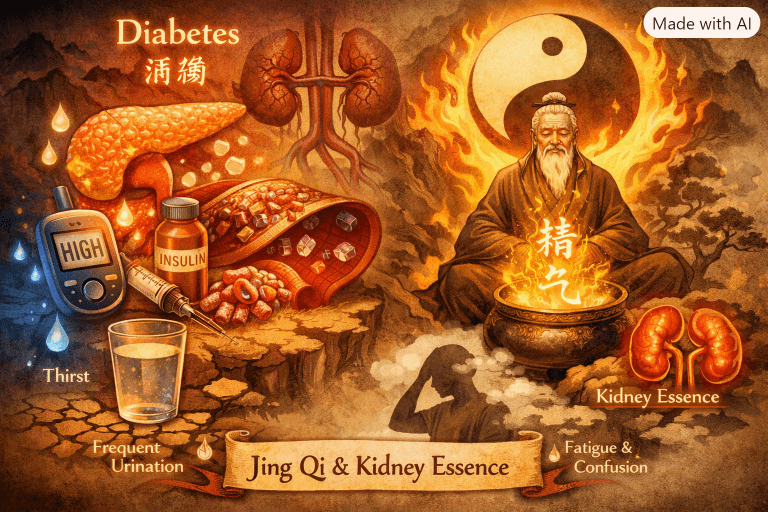
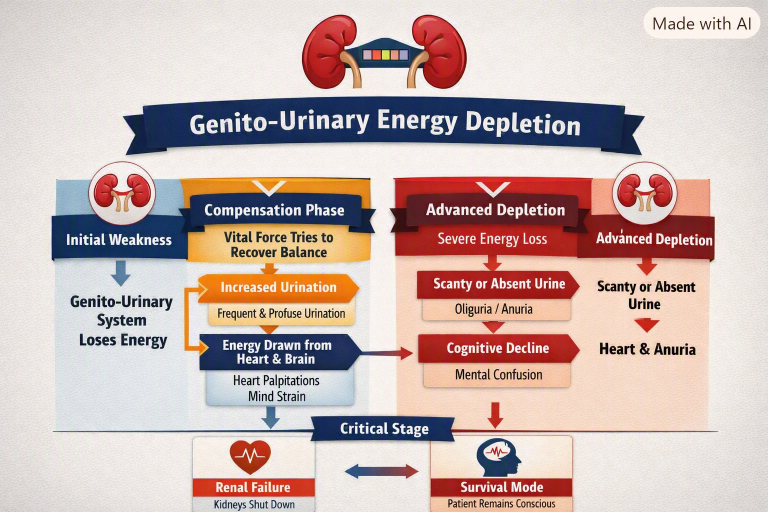
Although the precise relationship between diabetes mellitus and kidney function is not yet fully understood, clinical evidence consistently highlights the kidneys as a major target of diabetic complications. From the perspective of Traditional Chinese Medicine (TCM), this connection is symbolically explained through the concept of Jing (Essence) — the vital energy stored in the Genito‑urinary system. Jing is regarded as the foundation of growth, reproduction, and longevity, and its depletion is believed to weaken Kidney Qi, thereby predisposing individuals to disorders such as diabetes mellitus. Hence in precise way I can clearly say that " Deficiency of Vital energy in Genito-urinary tract directly caused Diabetes mellitus."
Thus, in the development of diabetes, a hidden debility of the Genito‑urinary tract energy (Qi–Jing) may play a subtle but crucial role, bridging the biomedical understanding of renal involvement with the TCM view of energy imbalance. the TCM concept of disease is very close the Homoeopathic concept of disease, Where Dr. Hahnemann says, Diseases are caused by the derangement of vital force.
1. Premature aging (gray hair, loose teeth, weak bones).
2. Infertility or reproductive issues.
3. Developmental delays in children
4. Poor memory, concentration, or mental decline.
5. Chronic fatigue and weakness
6. Excessive urination,
7. Sexual debility.
8. Excessive hunger.
1. Congenital weakness (hereditary constitution)
2. Aging (natural decline of Kidney Qi over time)
3. Chronic illness (long-standing disease depletes Kidney energy)
4. Excessive sexual activity (considered to drain Kidney Essence)
5. Overwork and stress (weaken Qi reserves)
6. Poor lifestyle (malnutrition, lack of rest, excessive worry)
Note: The kidneys play a vital role in nourishing the brain. When kidney function declines, the depletion of Jing — the vital energy of the Genito‑urinary system — can severely impair cerebral activity. As a result, patients may experience cognitive disturbances, manifesting as confusion or even episodes of delirium and this is clinically proved. this impairment of cerebral activity directly established the connection of brain and kidney.
Jing is not an independent or newly formed energy; rather, it arises from the harmonious interaction of Yin and Yang. Within the genito‑urinary system, the balanced integration of Yin and Yang energies is expressed as Jing (Essence). When this vital energy becomes depleted, its effects are often felt throughout the body. For example, if an individual experiences excessive weakness or unusual hunger following sexual intercourse, it may indicate a weakening of their Jing energy, reflecting a loss of balance in the Kidney system.
Yin and Yang separately represent themself:
1. Kidney Yin deficiency → more dryness, night sweats, heat signs.
2. Kidney Yang deficiency → more coldness, edema, low libido.
Kidney Qi deficiency is considered a functional weakness, often an early stage before Yin or Yang deficiency develops.
Improving Jing (Essence) is about nurturing the deepest layer of vitality — the foundation of life itself. In Traditional Chinese Medicine (TCM), Jing is stored in the Kidneys, and its refinement depends on how you live, eat, rest, and think. Here’s a structured, practical way to enhance Jing quality:
1. Preserve What You Have.
a. Moderation in lifestyle: Avoid overwork, chronic stress, and excessive sexual activity — all deplete Jing.
b. Adequate sleep: Jing replenishes during deep rest; aim for consistent, restorative sleep cycles.
c. Emotional balance: Prolonged fear or anxiety weakens Kidney energy; cultivate calm through meditation or prayer.
2. Nourish Through Diet.
a. Essence-building foods:
(i) Black sesame seeds, walnuts, goji berries, mulberries.
(ii) Bone broth, marrow soups, seaweed, kelp, and mineral-rich foods.
b. Avoid depletion: Limit stimulants (coffee, alcohol), processed foods, and excessive fasting.
c. Hydration: Pure water supports Kidney filtration and energy flow.
3. Cultivate Energy.
a. Qigong or Tai Chi: Gentle, rhythmic movements strengthen Kidney Qi and refine Jing.
b. Breathwork: Deep abdominal breathing nourishes the lower dantian — the energetic reservoir of Jing.
c.
Acupressure points:
(i) KI‑3 (Taixi): Tonifies Kidney Essence.
(ii) BL‑23 (Shenshu): Strengthens Kidney Qi
(ii) CV‑4 (Guanyuan): Restores vitality and reproductive energy
Homoeopathic medicines that, in their provings, manifest a tendency toward renal hypofunction or diminished kidney activity may be regarded as potentially curative remedies for diabetes mellitus, reflecting the principle of similarity between functional pathology and therapeutic response.
Examples include
Pulsatilla, Nux vomica, Lac defloratum, Lac caninum, Helleborus niger, Causticum, and Sambucus nigra, Lycopodium, Acid phos, Sepia, Among the other.