Case reception:
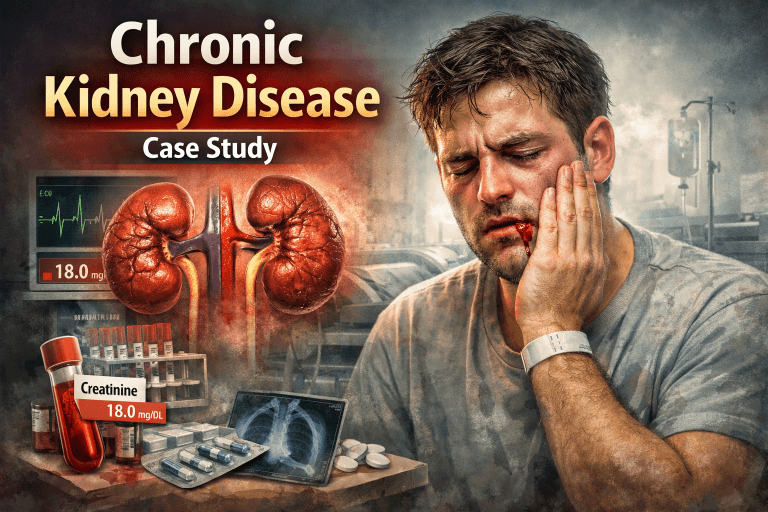
A 32‑year‑old male arrived at the clinic from KJMU, Lucknow, visibly exhausted and burdened by illness. His face carried the marks of suffering—swelling on the left side, ulcers lining the inner cheeks, and a dull expression of drowsiness. He had not passed urine for a week, and his legs were swollen, itching, and weak.
As he sat before me, he described his complaints in fragments: “Blood oozes from my mouth… my legs itch and feel weak… there is a pain in my head, always on the right side… sometimes my heart feels like an electric shock… I feel feverish, but it never comes out.” His words painted the picture of a man trapped in a suppressed febrile state, weighed down by chronic bronchitis and a history of allergic reactions—sneezing and fever whenever exposed to cold or rainy weather.
His past medical history revealed a fragile constitution. As a child, he had suffered from marasmus and carried the burden of inherited tuberculosis. A fracture scarred his history, and untreated hypertension had silently progressed over the years. His blood pressure was high, his serum creatinine stood at 18 mg/dL, and his GFR was only 3 mL/min, confirming the severity of his renal failure.
Despite this, his generalities revealed a peculiar pattern: he was excessively sleepy, his appetite had recently vanished, yet he craved cold drinks and meat. His thirst was diminished, perspiration scanty, and urine output almost absent. The patient’s constitution was unmistakably tubercular, supported by psoric tendencies—weak lungs, susceptibility to infection, and a lifelong struggle with vitality.
In his own words and demeanor, the sketch of his life unfolded: a man born with a tubercular inheritance, prone to lung affections since childhood, craving cold water and meat, yet weakened by systemic disease. His limbs betrayed his exhaustion, his head throbbed with right‑sided migraine, and his allergic nature made him vulnerable to every change in weather.
This was not merely a case of chronic kidney disease; it was a portrait of a tubercular miasm, manifesting through multiple systems, demanding recognition of the vital force that still flickered within him
Case details:
Patient: 32‑year‑old male
Origin: KJMU, Lucknow
Diagnosis: Chronic Kidney Disease (Stage 5, ESRD)
Lab Findings:
a. Serum Creatinine: 18 mg/dL
b. GFR: 3 mL/min/1.73 m
Clinical Features:
1. Anuria (no urine for 7 days)
2. Generalized edema, leg swelling
3. Facial swelling (left side)
4. Oral ulcers (inner cheeks)
5. Complete loss of appetite
6. Nausea, conscious state preserved
7. Persistent blood vomiting
1. Patient Decision: Not interested in dialysis or transplant.
Intervention: Single dose of Kresote - 30 potency.
Clinical outcome:
Within 7 hours: Urine passed spontaneously
Daily progression: Urine output increased
Appetite: Returned, patient demanded food
Edema: Disappeared
Facial swelling: Resolved
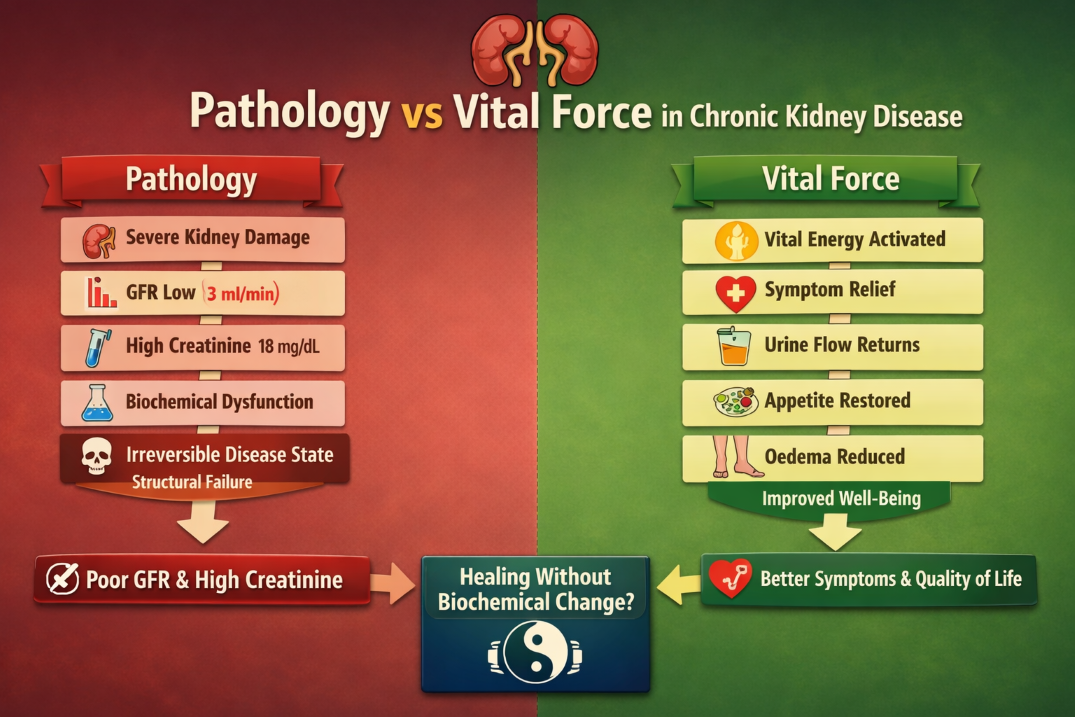
Biochemistry: Creatinine and GFR unchanged.
Pathological Explanation:
Structural vs Functional:
GFR 3 indicates irreversible nephron loss.
Creatinine remains high due to poor clearance.
Yet, tubular function (water handling) may persist, allowing urine volume without solute clearance.
Vital Force Interpretation:
Improvement in appetite, urine flow, and edema reflects activation of vitality, not structural cure.
The patient’s subjective well‑being improved, despite unchanged pathology.
Logical Definition:
Pathology unchanged → biochemical markers remain poor.
Vital force active → clinical symptoms improve, quality of life enhanced.
This case demonstrates that vital force can manifest clinical improvement even without biochemical recovery. Artificial Intelligence analysis supports the distinction between pathological irreversibility and functional palliation, making this case valuable for both academic publication and public education.