HomeoEra
Back to Blogs

Badiaga in Clinical Practice: Addressing Headache and Fever Accompanied by Eye Pain.

Every medicine in homoeopathic proving yields numerous symptoms, yet their value is unequal. Some are decisive and characteristic, others incidental. A symptom may be highly significant in one patient but negligible in another; the physician’s art lies in discerning those that truly individualize the case. Proving itself is not the isolated action of the drug, but the dynamic interplay between substance and prover’s constitution, producing a composite symptom‑picture. Because medicines manifest differently in different provers, separate evaluation in male and female subjects is essential, as constitutional distinctions influence expression. In practice, the same principle applies: a symptom may carry different weight in male and female patients. Hence arises the gradation of symptoms—highest rank to those repeatedly observed and clinically confirmed; lower grades to those fewer but consistent; the least to occasional or weakly verified signs. Beyond proving‑derived symptoms stand clinical symptoms: not elicited in provings, but repeatedly cured in practice. Through therapeutic verification they acquire practical value, enriching the materia medica. Thus, homoeopathy rests upon both provings and bedside confirmation, weaving together drug action and clinical experience into a reliable portrait of each remedy.

H

Deals with Chronic diseases

5 min read51 views
Badiaga in Clinical Practice: Addressing Headache and Fever Accompanied by Eye Pain.

The Language of Symptoms in Homoeopathic Drug Proving's:

Every medicine possesses thousands of recorded symptoms, yet all symptoms are not of equal significance. Some are characteristic and decisive, while others hold only secondary value. A symptom that is highly relevant in one patient may be of little importance in another. The physician's task is to discern those symptoms that truly individualize the case. Moreover, a homoeopathic proving does not represent the pure action of the drug alone, but the interaction between the medicinal substance and the unique constitution of the prover, from which the symptom-picture emerges. 

This is because a homoeopathic medicine manifests differently in different provers, revealing not only the action of the drug but also its interaction with the individual constitution of each prover. Conceptually, therefore, the study of drug proving may benefit from separate evaluation in male and female provers, as constitutional and physiological differences can influence the expression of symptoms. The same principle applies in clinical practice, where a symptom or remedy indication may assume different degrees of significance in male and female patients.   

This principle forms the basis of symptom gradation in homoeopathic provings. Symptoms repeatedly observed in a large number of provers and confirmed through subsequent experience are generally accorded the highest rank. Symptoms recorded in fewer provers, yet appearing with marked intensity and consistency, are assigned a lower grade. Symptoms observed only occasionally or with limited confirmation are placed in the lower grades of reliability and importance.

Apart from symptoms derived directly from provings, there exists another category known as clinical symptoms. These symptoms may not have been observed during the proving of the medicine, yet they have been repeatedly cured by that remedy in clinical practice. Through such therapeutic verification, they acquire practical value and become an important part of the remedy's clinical portrait. Thus, the homoeopathic materia medica is built not only upon provings but also upon the careful confirmation of symptoms at the bedside.   

Proving of the Badiaga:

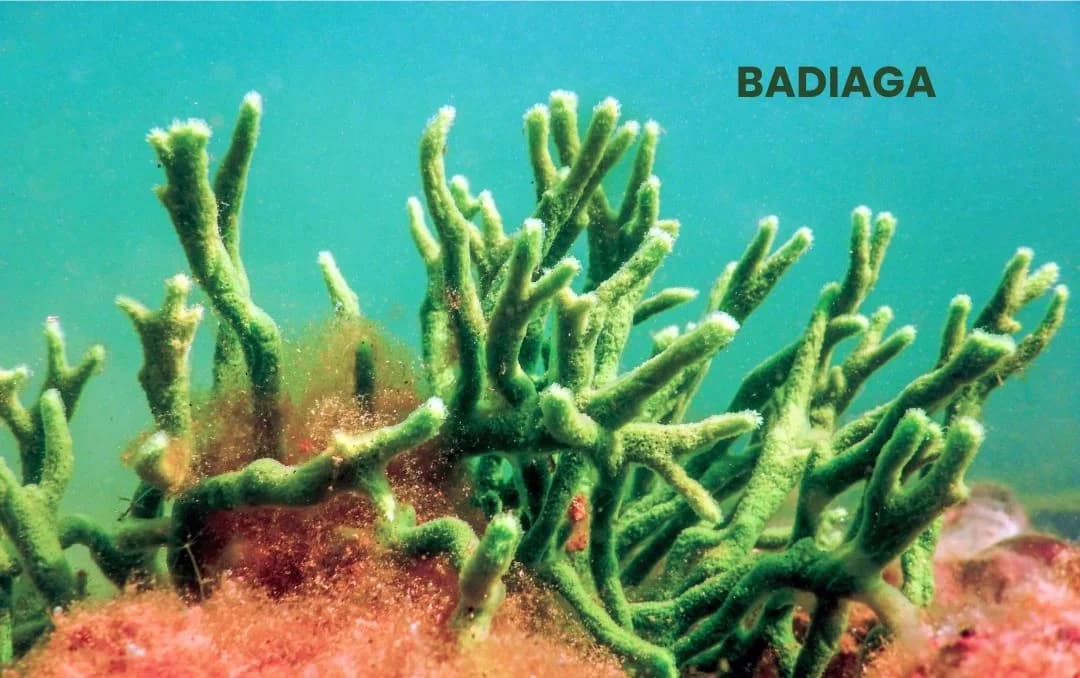
The ongoing discussion concerns Badiaga, a freshwater sponge belonging to the phylum Porifera. Although it resembles a plant in appearance, it is actually a simple multicellular animal. Badiaga is commonly found in freshwater lakes, ponds, and slow-moving streams. The homoeopathic remedy is prepared from the freshwater sponge Spongilla lacustris, commonly known as Badiaga.

The sponge is characterized by the presence of siliceous spicules and contains calcium and aluminium compounds among its structural constituents. From a homoeopathic standpoint, a comparative study of Badiaga may therefore be undertaken alongside remedies such as Silicea, Calcarea carbonica, and Alumina, owing to their relationship with the principal constituents of the source material. 

Remedy preparation:

The first trituration of Badiaga is prepared from the dried freshwater sponge, which is subsequently used in the preparation of the mother tincture. The mother tincture is prepared at a drug strength of 1/10. Although Badiaga cannot be regarded as a thoroughly proved remedy, it possesses several important clinical symptoms that have been repeatedly verified in practice. These clinically confirmed indications have considerably expanded our understanding of the remedy and enhanced its practical value in homoeopathic prescribing.

Totality Exclusion:

Every medicine presents a multitude of symptoms, yet not all of them stand in logical relation to one another. The true totality is not a mere aggregation of scattered phenomena, but rather the coherent constellation of symptoms that reveal an inner unity. Thus, within a single remedy, several distinct totalities may be discerned—each representing a particular logical grouping of symptoms. These differentiated totalities correspond to diverse clinical conditions, and it is by perceiving and applying the appropriate totality that the physician unlocks the curative potential of the remedy. In this way, the art of homoeopathy lies not in the mechanical enumeration of symptoms, but in discerning their rational connections and shaping them into meaningful therapeutic wholes. 

In the symptomatology of Badiaga, one perceives a multitude of scattered indications. Yet, the physician must discern which of this stand in rational relation to one another, for only such a logical combination constitutes a true totality. The totality that emerges most distinctly is the union of cephalic pain—headache accompanied by pain in the eyeball—with the pervasive soreness of the entire body. This triad forms a coherent picture: the cephalic suffering is not isolated, but bound to the general muscular and systemic soreness, thereby reflecting the remedy’s essential sphere of action. By excluding disconnected or adventitious symptoms, and by embracing this logical nexus, the practitioner arrives at a therapeutic whole that is both intelligible and clinically applicable. Thus, Badiaga reveals itself not merely as a collection of symptoms, but as a remedy whose curative power lies in the rationally connected totality of cephalic pain and corporeal soreness.

Key totality - Headache with eyes pain and drowsiness along with soreness in entire body with or without fever.  
Systematic arrangement of the symptoms:


H

About Habib khan

B.H.M.S

Dr. Habib khan practising Homoeopathy in Gwalior, Madya Pradesh last from 25 years. He is a single remedy Practicnor. trusted by Thousand. Clinic address: 203 cosmo business, park, new city centre Gwalior,

Have a Question?
Ask Habib khan about "Badiaga in Clinical Practice: Addressing Headache and Fever Accompanied by Eye Pain." and get a personalized response directly to your email.

0/500 characters

0 characters (minimum 10 required)

🔒 Privacy Notice: Your information will only be used to respond to your query and won't be shared with third parties.

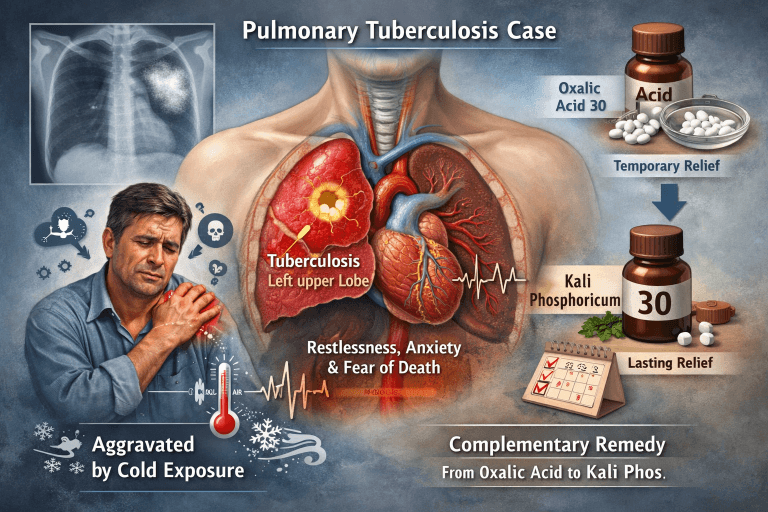
Kali Phosphoric as Complementary to Oxalic Acid: in Tubercular Affection of the Left Scapular Region
Homeopathic Medicine

Kali Phosphoric as Complementary to Oxalic Acid: in Tubercular Affection of the Left Scapular Region

This case illustrates the dynamic role of complementary remedies in homoeopathy. A patient with pulmonary tuberculosis of the left upper lobe, complicated by pleural effusion, initially responded to Calcarea Carbonica and later obtained temporary relief from Oxalic Acid. However, the persistence of pain, restlessness, anxiety, and fear of death—aggravated by cold exposure—necessitated deeper exploration. Guided by Hering’s Guiding Symptoms, Kali Phosphoricum was identified as a complementary and chronic remedy to Oxalic Acid. Its administration provided lasting relief, with sustained improvement even after discontinuation. This outcome highlights the importance of contextual complementarity, where Kali Phos not only complemented Oxalic Acid but also addressed the chronic dimension of cardiac‑pulmonary involvement.

HHomeoEra Journal Editorial Team
4m863
Belladonna (Deadly Nightshade)
Homeopathic Medicine

Belladonna (Deadly Nightshade)

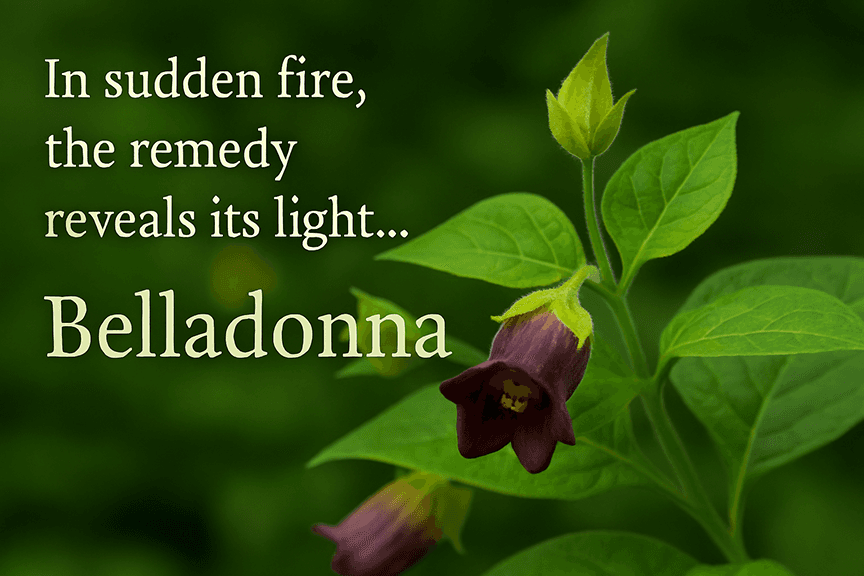
Belladonna, commonly known as Deadly Nightshade (Atropa belladonna), is a perennial herb belonging to the Solanaceae family. Renowned for its striking purple flowers and glossy black berries, the plant has long captivated both healers and historians. Its name, meaning “beautiful lady” in Italian, reflects its historical use in cosmetics, where extracts were applied to dilate pupils for an alluring appearance. Medicinally, belladonna contains potent tropane alkaloids—atropine, scopolamine, and hyoscyamine—that exert anticholinergic effects. These compounds have been employed to relieve muscle spasms, reduce secretions, and manage certain inflammatory conditions, though their therapeutic window is narrow and toxicity risk is high. While modern pharmacology recognizes belladonna derivatives in controlled medical use, the plant itself remains a symbol of the fine line between remedy and poison, embodying the dual nature of nature’s pharmacopeia.

HHomeoEra Journal Editorial Team
7m1745
Heel Pain: A Disorder of Modern Lifestyle Rooted in the Sycotic Miasm
General Homeopathy

Heel Pain: A Disorder of Modern Lifestyle Rooted in the Sycotic Miasm

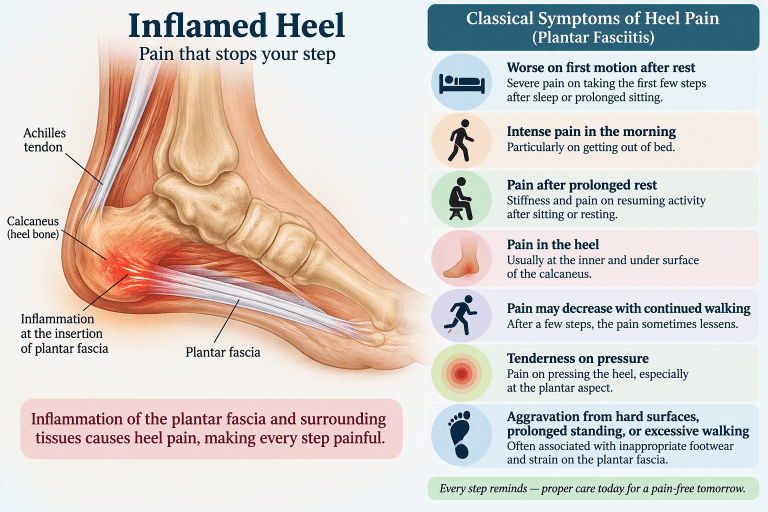
Heel pain is a common complaint often attributed to faulty lifestyle habits such as prolonged standing, obesity, sedentary living, and inappropriate footwear. Consequently, conventional treatment mainly focuses on lifestyle modification and footwear correction. However, the condition is not always as simple as it appears. Heel pain is essentially a rheumatic affection of the calcaneus and its surrounding tissues. Its characteristic aggravation on first motion after rest, especially on rising in the morning, strongly suggests Rhus toxicodendron. Yet, despite this apparent similarity, Rhus tox frequently fails to produce the desired curative effect. This illustrates the teaching of Aphorism 7 of the Organon, that symptoms are merely the outward manifestations of internal disease and do not always reveal the true derangement of the vital force. Therefore, successful treatment of heel pain often requires looking beyond the symptom picture to the deeper constitutional and miasmatic background of the case

HHomeoEra Journal Editorial Team
2m1
Aphorism - 14, Health as Harmony: Absence of Morbid Signs and Need for Cure.
Organon & Philosophy

Aphorism - 14, Health as Harmony: Absence of Morbid Signs and Need for Cure.

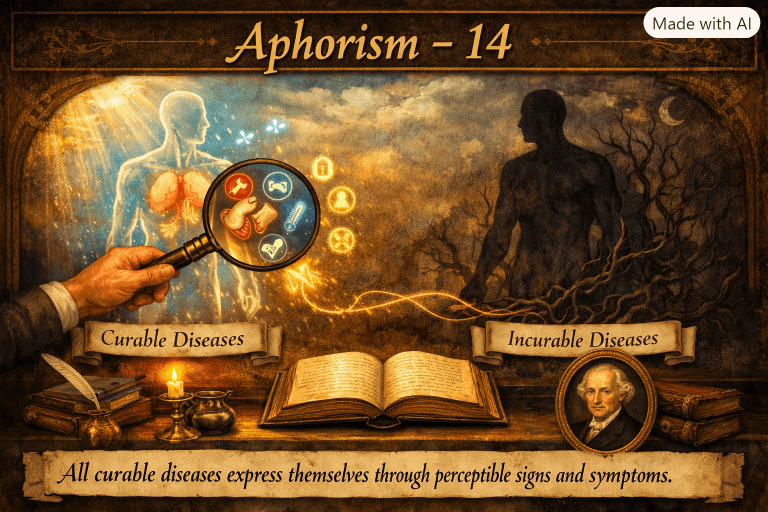
In this aphorism, Dr. Samuel Hahnemann elucidates a fundamental law of observation in medicine: that every curable disorder within the human organism necessarily reveals itself through perceptible signs and symptoms. Nothing curable remains hidden from the discerning physician, for the divine order has ordained that disease must express its presence outwardly to invite cure. Thus, the physician’s art depends entirely upon the faithful interpretation of these manifestations. The morbid phenomena are not mere disturbances but the visible language of Nature, guiding the healer toward restoration. Those affections that grow silently within, without perceptible symptoms, belong to the realm of the incurable; for where no sign is given, no curative response can be awakened. In essence, Hahnemann reminds us that symptoms are the thread of cure—the only bridge between the inner disorder and the physician’s understanding. To grasp that thread is to hold the possibility of healing; to lose it is to stand before disease without remedy.

HHomeoEra Journal Editorial Team
3m292

Comments (0)

Sign in or sign up to join the discussion

No comments yet. Be the first to share your thoughts!

Newsletter

Stay Updated with Latest Research

Get weekly digests of new articles, case studies, and homeopathic insights delivered to your inbox

By subscribing, you agree to our Privacy Policy. Unsubscribe anytime.