Case overview:
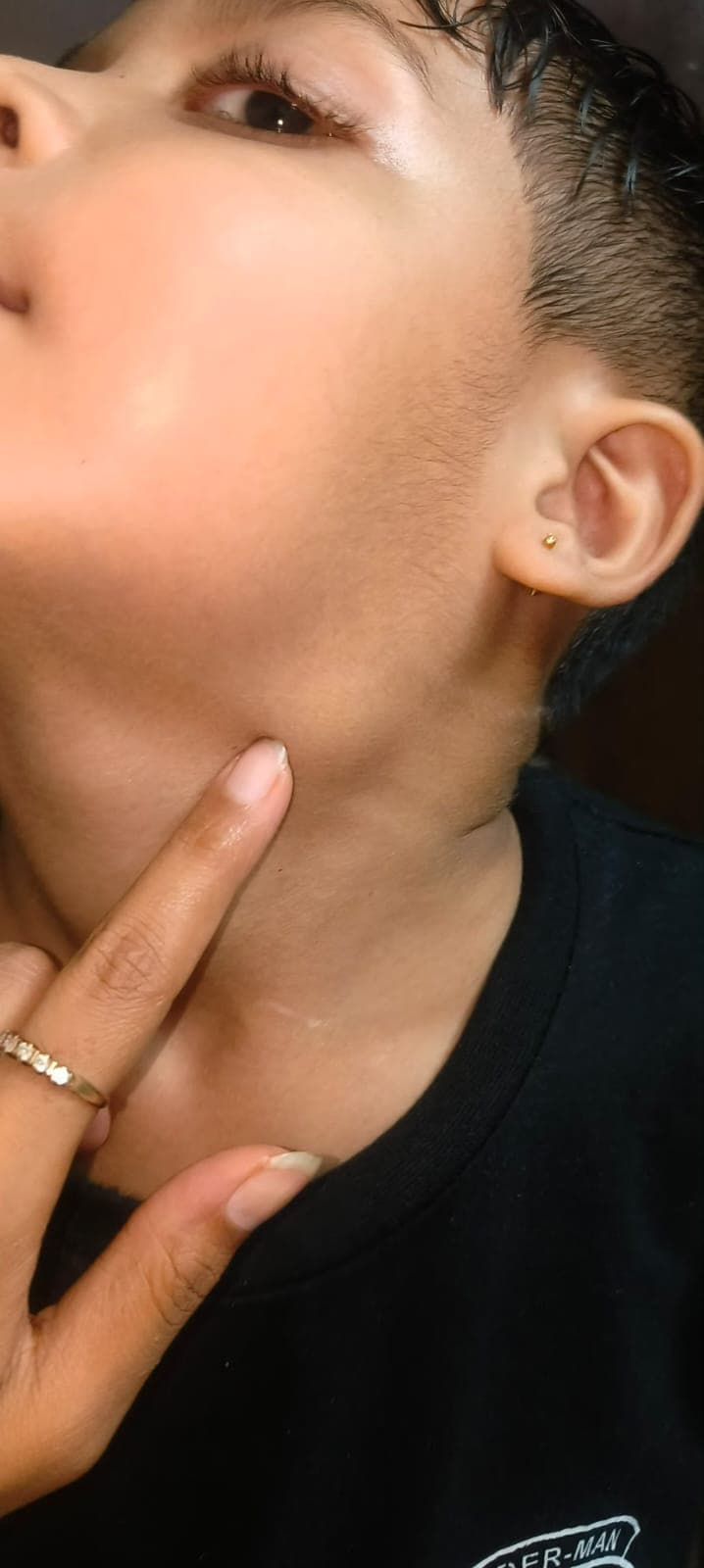
On 31 July 2026, a six‑year‑old boy was brought to me with intense fever, swelling around the neck, and gum swelling on the same side. His mother, anxious and distressed, narrated the events of the previous day.
She had first consulted an allopathic physician, who after examination remarked that the enlarged cervical gland might be tubercular or even cancerous, and advised a biopsy. The words of the physician left the mother deeply unsettled, filling her with fear. He prescribed initial treatment for fever and asked her to return the next day.
Unable to bear the anxiety, the mother came to me weeping, seeking another opinion. I listened carefully to her account and then undertook a detailed case‑taking. The history revealed that the illness had begun with pain in the right cheek and swelling of the gums. Within a day, the condition shifted to the left side, accompanied by cervical lymphadenopathy, intense fever, malaise, loss of appetite, and an anxious facial expression.
After considering the totality of symptoms, I decided to administer a single dose of Lac caninum 200, with instructions to report back after 24 hours.
The response was remarkable. Within 24 hours, the fever — which had temporarily subsided under allopathic treatment — returned and was cured the same night. From the next day, general improvement began malaise and fever disappeared completely, appetite increased, throat pain resolved, gum swelling subsided, and the cervical gland started to decrease slowly but steadily. No second dose was required.
Patient profile:
* Age: 6 years
* Presenting Complaints: Intense fever, swelling around
the neck, and swelling of gums on the same side.
* General Condition: Anxious facial expression, loss of
appetite, and general malaise
Allopathic consultation:
Homoeopathic consultation:
On the following day, the mother approached me, weeping and narrating the physician’s remarks. After detailed case‑taking, I observed the progression of symptoms:
The illness began with pain in the right cheek and swelling of the gums.
Within a day, the condition shifted to the left side, accompanied by cervical lymphadenopathy, intense fever, malaise, and loss of appetite.
Based on the totality of symptoms, I prescribed a single dose of Lac caninum 200, instructing the mother to report back after 24 hours.
Clinical Course of the case:
Within 24 hours: The fever, which had subsided temporarily under allopathic treatment, returned and was cured the same night.
Next day onwards:
General improvement began.
Malaise and fever disappeared completely.
Appetite increased.
Throat pain resolved.
Gum swelling subsided.
Cervical gland enlargement began to decrease slowly but steadily.
Follow‑up: No second dose of the medicine was required.
Conclusion:
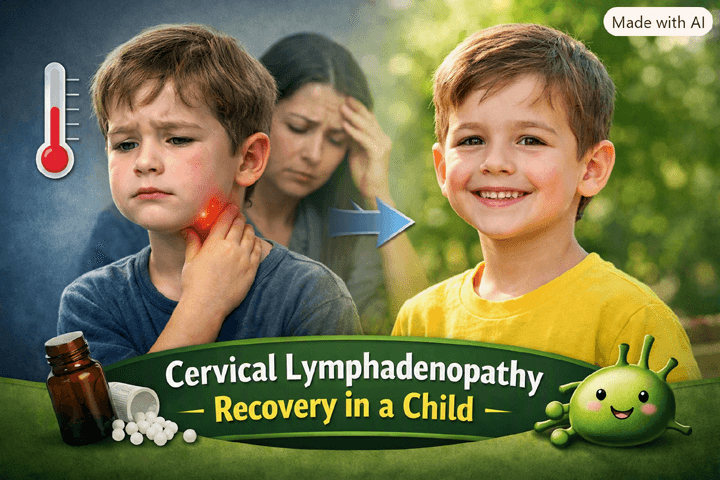
This case demonstrates the curative potential of a single dose of Lac caninum 200 in a child presenting with cervical lymphadenopathy, intense fever, and gum swelling. The outcome highlights:
Rapid resolution of fever.
Restoration of appetite and vitality.
Subsidence of local swelling.
Gradual regression of glandular enlargement.
The case underscores the importance of careful case‑taking and individualized prescription in homoeopathic practice, while also illustrating how physician communication can profoundly affect the emotional state of patients and their families.