
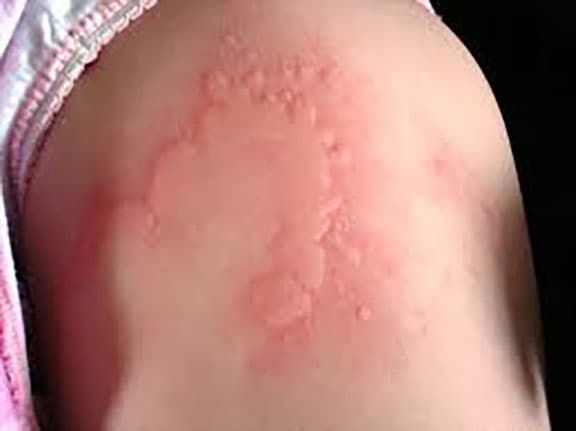
Case Story: Individualization in Urticaria with Epileptic History:
Dr. Hahnemann’s guiding principle, “Treat the sick, not the disease,” has stood the test of time, and in this case, it was once again verified in practice.
A nine‑year‑old boy had been suffering from urticaria for over a year. His family had sought help from several physicians of the allopathic system, but despite repeated treatments, the child found no lasting relief. The suffering continued, and the family grew increasingly disheartened.
It was at this point that one of my previously cured patients, who had endured similar troubles, recommended my clinic to the boy’s mother. Acting on this advice, she brought her son to me one evening.
During the consultation, I carefully recorded the case and soon discovered the keynotes that illuminated the individuality of the patient. The child’s symptoms were markedly aggravated in the evening, his skin was slightly warm to touch with intense itching, and he suffered from ravenous hunger that worsened with fatty food. Another striking feature was his vertigo on exposure to sun heat, which added depth to the clinical picture.
On further inquiry, I learned that the boy had an active history of epilepsy, previously treated with allopathy. This background added complexity to the case, but it also underscored the importance of treating the patient as a whole, not merely the presenting complaint.
With these gems of individuality in hand, I selected Pulsatilla 30, administered in repeated doses. The response was remarkable. Within just 15 days of treatment, the child was completely cured.
This case is more than a clinical success—it is a living demonstration of the homeopathic principle of individualization. Where other systems had failed, a carefully chosen remedy, matched to the patient’s unique constitution and symptoms, restored health.