Case reception:
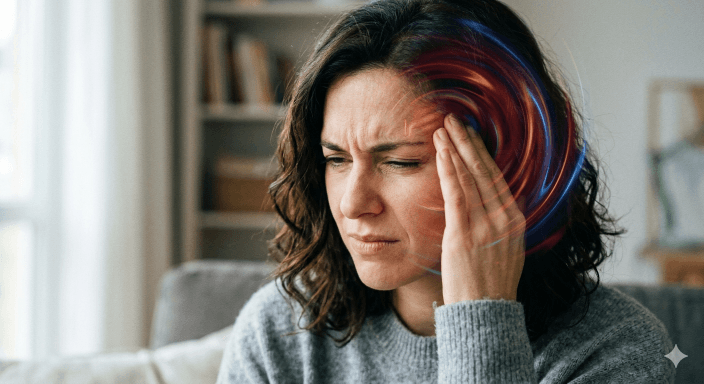
On 29/05/2026, I received a case of headache referred to me by one of my friends. The patient was a 32‑year‑old female suffering from headache in the right parietal region. She had previously been treated with both allopathy and homoeopathy. Several homoeopathic medicines—including Belladonna, Ignatia, Spigelia, Sanguinaria, and Silicea—had been prescribed, but none had benefited the patient. She came to my clinic in the evening, and I began the case‑taking.Case taking procedure:
I always begin my case‑taking with the formal question: “Yes, what type of complaints do you have?” But this case was slightly different. The patient entered my clinic holding the right side of her head and sat down on the chair in front of me. She visited the clinic with her husband, so I asked him, “How long has she been suffering from this headache?”
He replied that she had been suffering for almost 15 days, treated by both allopathic and homoeopathic doctors, but had obtained no relief. Dr. ABC refer us for you.
While I was involved in the case‑taking procedure, I noted that she had tilted her head toward the right side and was trying to press her head with her hand. At that moment, I found my first gem: “Pain ameliorated by firm pressure.” Usually, this symptom appears in cases of right‑sided pleurisy, where the patient continually wants to lie on the right side because pressure gives relief. In this case, the symptom had an analogy—the location was different, as it was the head—but the side was the same.
In order to confirm my selection, I asked her my second question: “Is there any factor affecting your headache? I mean, does anything aggravate or ameliorate your headache?” She and her husband replied together, “Yes, doctor, this headache surely gets worse in the morning after rising from bed, after taking a few steps.” I found my second gem and that was " Aggravation from motion along with morning agg." But this aggravation was not so clear as usually Bryonia has. so I was little confused.
Observation:
During case‑taking, I noticed remarkably that she was experiencing a thrill of pain almost every 1 to 1.5 minutes. The pain was clearly visible on her face. I had no memory of whether this symptom belonged to Bryonia or not. However, another modality that I recorded was that the patient felt somewhat uncomfortable when looking toward light; upon asking, it became clear that heat also aggravated her condition.
Analysis:
After fully consider the case, reached on the final point, I decide to give her Bryonia, but I need to check my Selection then I asked another question to her. it was direct question. in strict way of questioning to ask direct question is not allowed. but still I asked. " Does this pain have gradually origin? she replied no, its onset is sudden. this answer little confused me. because Bryonia has gradually onset in its origin. therefore, I need to investigate the case little more. I asked a one more question, is there you had any fever within two or three months? She replied yes.
Portrait of the disease:
Now I can clearly scratch out the portrait of the disease " Patient has the active history of fever, that was suppressed with Allopathic treatment. now vital force expressing himself by the form of headache that located on the right side with clear modality of aggravation from motion and in the morning, ameliorated by firm pressure. onset of headache was sudden, but it was not of acute origin but deeply rooted into the fever"
Selection of remedy:
1. Bryonia - 30 (Alter every two hour for 7 days.)
Follow up:
3 Days: 1. Facial expression became normal. 2. No spells of pain, 3. Now patient feeling pain on touching painful spot.
5 Days: Complete relief
The prescribed medicine was given for the next 15 days. The case is closed.
Case resolution:
Case is resolved by followed theory of complete symptoms.
Location - head internal side right
Sensation - throbbing pain
Modality - aggravation by light motion heat, amelioration by exerted pressure to affected side.