
Medical Blog Articles
Explore evidence-based homeopathic insights and articles from our expert practitioners

Navigating COVID-19 Vaccines: Understanding Risks and Homeopathic Support
COVID-19 has affected millions of people worldwide, leaving behind not only the illness itself but also long-term health problems. Vaccines have been introduced to reduce the risk of severe disease, hospitalization, and death. While they play an important role in prevention, some people still experience side effects or lingering symptoms after recovery. Homeopathy looks at health in a different way. Instead of focusing on the name of the disease, homeopathy pays attention to the symptoms each person experiences. Every patient is unique, and remedies are chosen based on their specific complaints—whether it is sore throat, cough, chest pain, or weakness. For example, a sore throat with general soreness may be helped by Phytolacca, while joint stiffness with fever and cough may respond to Causticum. Post-COVID problems such as weakness of the heart, persistent cough, or hearing difficulties are also treated symptomatically, with remedies like Iberis amara, Antimonium arsenicosum, or Gelsemium. The goal of homeopathy is to support recovery in a gentle, holistic way—helping patients regain strength and balance after the challenges of COVID-19.
The Artistic Prescriber (Prescription beyond Mechanical use of Repertory
Nowadays, prescriptions based on the repertory are trending. The common practice is to collect the patient’s symptoms, enter them into a computer repertory, and then prescribe the medicine that ranks highest according to marks and scores. Dr. Kent described this as the mechanical use of the repertory. He observed that many eminent homoeopathic physicians prescribe beyond the repertory—sometimes even when not a single symptom of the patient matches the remedy chosen. If you ask such a physician why they prescribed that particular medicine, they might reply: “I cannot explain it in words, but the remedy seemed to fit the patient perfectly.” Dr. Kent referred to such physicians as artistic prescribers—those who rely not only on repertorial analysis but also on deeper perception, intuition, and an artistic grasp of the patient’s individuality.
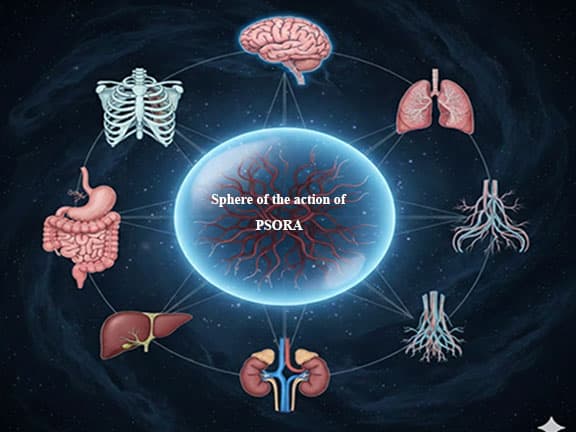
Psora: Sphere of the action of latent Psora.
To become an eminent physician in the field of Homoeopathy and to treat chronic diseases successfully, it is essential for every practitioner to undertake a thorough study of chronic miasms. These underlying disease tendencies, first described by Dr. Samuel Hahnemann, form the foundation of understanding long-standing and recurring illnesses. Without grasping the nature, origin, and manifestations of miasms such as Psora, Sycosis, and Syphilis, a physician cannot fully comprehend the root causes of chronic ailments, nor can they prescribe remedies with lasting curative effect

Psora: The Hidden Soil of Chronic Disease.
Psora is recognized in homoeopathy as the most ancient and fundamental chronic miasm, often described as the mother of all disease. It is considered the hidden soil from which chronic illness springs, shaping the destiny of mankind across every dimension—physical, mental, and spiritual. Without understanding Psora, no homoeopathic physician can truly grasp the roots of chronic disease. It is the ever‑present background, the silent force that supports and magnifies the destructive tendencies of Sycosis and Syphilis. Psora’s influence extends in all directions, affecting humanity in countless ways and making its study essential for every serious student of homoeopathy.
Miasm: Understanding the Invisible Threads of Chronic Illness.
Selection of medicine in homeopathic practice is often a challenging task. A thorough understanding of miasm makes this process easier; without it, prescribing is like hunting in the dark. In every case, numerous symptoms present themselves, but not all symptoms carry equal value. Hence, the valuation of symptoms becomes essential. Understanding miasm allows us to identify the true enemy of humanity—the underlying cause behind disease. Miasm reveals the real etiology of what we call illness. For this reason, it is imperative for every physician to grasp the concept of miasm, as it is the key to successful treatment.
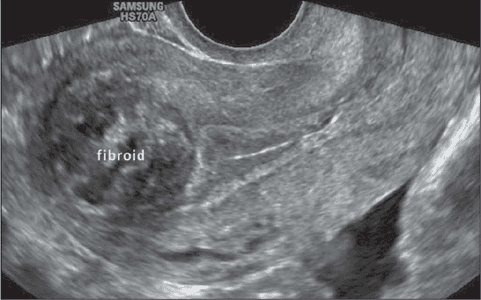
Uterine Fibroids: Understanding the Silent Growths
Uterine fibroids are noncancerous growths of the uterus that often appear during a woman’s reproductive years. Although benign, they can significantly affect quality of life, causing symptoms such as heavy menstrual bleeding, irregular cycles, a sense of weight or pressure in the uterine region, pelvic pain, and persistent discomfort. From the perspective of homoeopathic philosophy, uterine fibroids are considered to have a sycotic origin—linked to the gonorrhoeal miasma. This origin may be either acquired or congenital, reflecting the deeper constitutional influences that shape disease expression.

Aphorism - 4, (Physician likewise a preserver of health) duty of physician apart from the cure.
Dr. Hahnemann, in Aphorism 4, addresses the physician, emphasizing that cure is not the sole mission of the physician. The physician must also take up the noble task of being a preserver of health. It is the physician’s duty to continue working in the direction of identifying the factors responsible for illness within the community, and to strive to remove them both from individuals and from society at large. Thus, this aphorism is dedicated to the principles of community medicine.
Aphorism - 3, (Ascertaining Power of the Physician, Must Ensure the Cure)
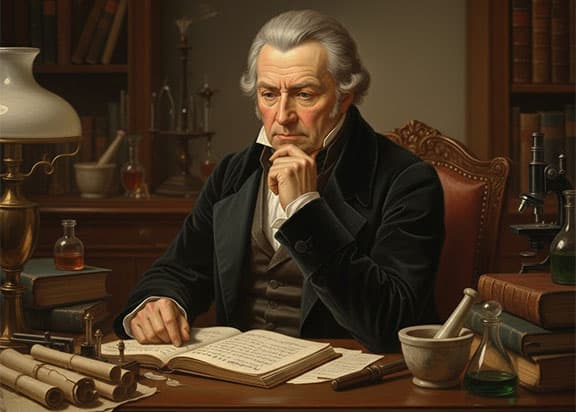
In this aphorism, Dr. Hahnemann addresses the physician, emphasizing the essential qualities required to ensure a permanent cure. The physician must possess the ability to perceive what is curative in the sick individual (knowledge of disease indications). He must also understand the curative power of medicines, grasp how this healing power should be adapted to the specific sickness, and finally, remain aware of the possible hindrances to cure.

Bronchitis in Kids: Signs, Treatment, and Prevention
Bronchitis in children, particularly those under five years of age, is quite common. The suffering of a young child often causes significant anxiety for parents. Homeopathy offers a gentle, safe, and effective approach to treatment. By keeping a few essential remedies in your homeopathic kit, you can manage such situations with greater confidence and calm. Homeopathic medicines have been shown to work safely and effectively, providing relief without harmful side effects.
Aphorism - 2, “Hahnemann’s Vision about the highest ideal of cure” (avoidance for unwanted medicinal aggravation)
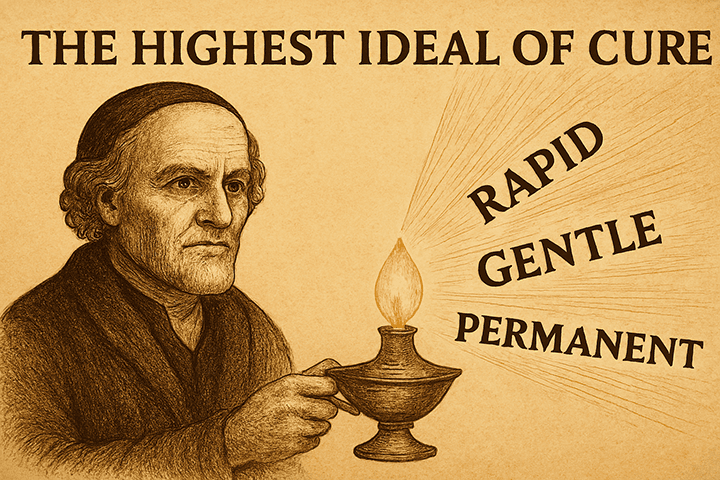
In Aphorism 2 of the Organon of Medicine, Hahnemann sets forth his vision of the physician’s mission: the highest ideal of cure. He insists that true healing must be rapid, gentle, and permanent, restoring health in its entirety without inflicting new suffering. This principle is not merely technical but profoundly ethical. To cure is not enough—the manner of cure must respect the patient’s dignity and avoid unnecessary aggravation. Hahnemann’s emphasis on gentleness was revolutionary in his time, when harsh purgatives, bloodletting, and massive doses often worsened disease. By contrast, he envisioned a medicine that works with precision, using the smallest dose necessary to stimulate recovery. In this way, the physician becomes not a tormentor but a restorer, guiding nature toward balance without violence. Thus, Aphorism 2 is more than a clinical directive; it is a moral compass. It reminds us that the physician’s art is measured not only by the disappearance of symptoms but by the absence of harm in the process of healing. The highest ideal of cure is a union of efficacy and compassion—a cure that is swift, certain, and enduring, yet free from unwanted medicinal aggravation.

Belladonna (Deadly Nightshade)
Belladonna, commonly known as Deadly Nightshade (Atropa belladonna), is a perennial herb belonging to the Solanaceae family. Renowned for its striking purple flowers and glossy black berries, the plant has long captivated both healers and historians. Its name, meaning “beautiful lady” in Italian, reflects its historical use in cosmetics, where extracts were applied to dilate pupils for an alluring appearance. Medicinally, belladonna contains potent tropane alkaloids—atropine, scopolamine, and hyoscyamine—that exert anticholinergic effects. These compounds have been employed to relieve muscle spasms, reduce secretions, and manage certain inflammatory conditions, though their therapeutic window is narrow and toxicity risk is high. While modern pharmacology recognizes belladonna derivatives in controlled medical use, the plant itself remains a symbol of the fine line between remedy and poison, embodying the dual nature of nature’s pharmacopeia.
Aphorism - 1, “Hahnemann’s Vision of the True Physician” (True meaning of the “Sick”)
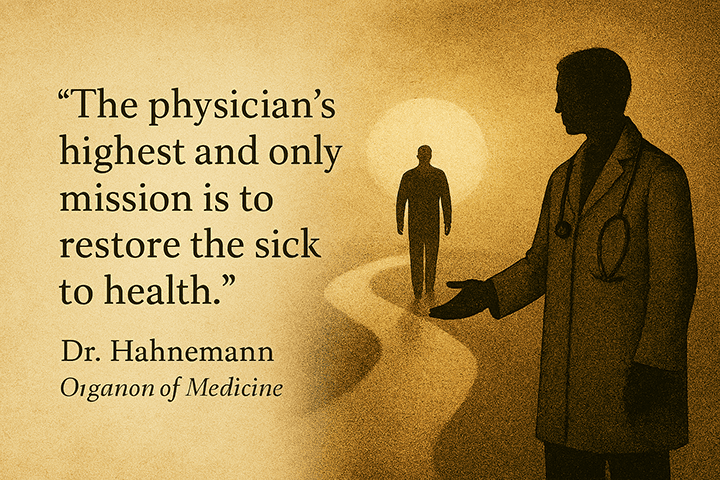
The physician’s high and only mission is to restore the sick to health, to cure as it is termed." This timeless declaration by Dr. Samuel Hahnemann underscores the noble purpose of medicine. The physician is entrusted not with the pursuit of fame, profit, or theoretical speculation, but with the singular duty of healing the suffering humanity. True cure, as Hahnemann envisioned, is not merely the suppression of symptoms but the complete restoration of harmony and vitality. This principle reminds us that medicine must remain patient-centered, guided by compassion and a commitment to genuine healing.