
Medical Blog Articles
Explore evidence-based homeopathic insights and articles from our expert practitioners

Ipecacuanha and Eupatorium perfoliatum: A Comparative Study of Two Parallel Remedies in Febrile Conditions
A successful homoeopathic management of fever depends not merely upon recognizing the presence of fever itself, but upon perceiving the individual characteristics through which it manifests. Among the remedies frequently encountered in bilious and intermittent fevers, Eupatorium perfoliatum and Ipecacuanha often present a close resemblance, challenging the physician's powers of observation and differentiation. Both remedies exhibit chilliness, headache, hepatic involvement, and backache during the febrile state; yet their distinguishing features reveal important differences. The persistent and characteristic nausea of Ipecacuanha, in contrast to the less prominent nausea of Eupatorium, often serves as a guiding indication. Likewise, the localization and direction of the back pain provide valuable clues, with Ipecacuanha presenting pain beginning between the shoulders and extending downward, while Eupatorium characteristically exhibits pain arising in the lower back and extending upward along the spine. This comparative study illustrates how precise remedy differentiation transforms fever management from mere symptom suppression into a truly curative homoeopathic approach, demonstrating both the therapeutic power of the remedies and the physician's skill in applying the law of similars.
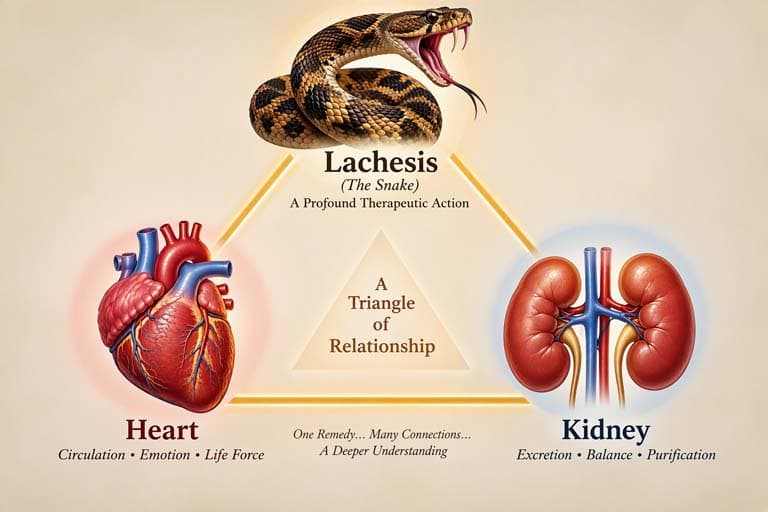
Lachesis in Urinary Disorders: The Clinical Significance of Urinary Symptoms as a Concomitants.
The urinary symptoms of Lachesis extend far beyond simple disturbances of urination. Variations in the colour, quantity, and concentration of urine, together with burning sensations and signs of renal involvement, form an important part of its clinical picture. Yet the true value of Lachesis often lies in its remarkable concomitant symptoms, which connect local urinary complaints with the broader constitutional state of the patient. Whether in cases of albuminuria, renal dysfunction, or chronic urinary irritation, an understanding of these accompanying symptoms enables the homoeopathic physician to recognize the deeper remedy portrait and prescribe with greater certainty.
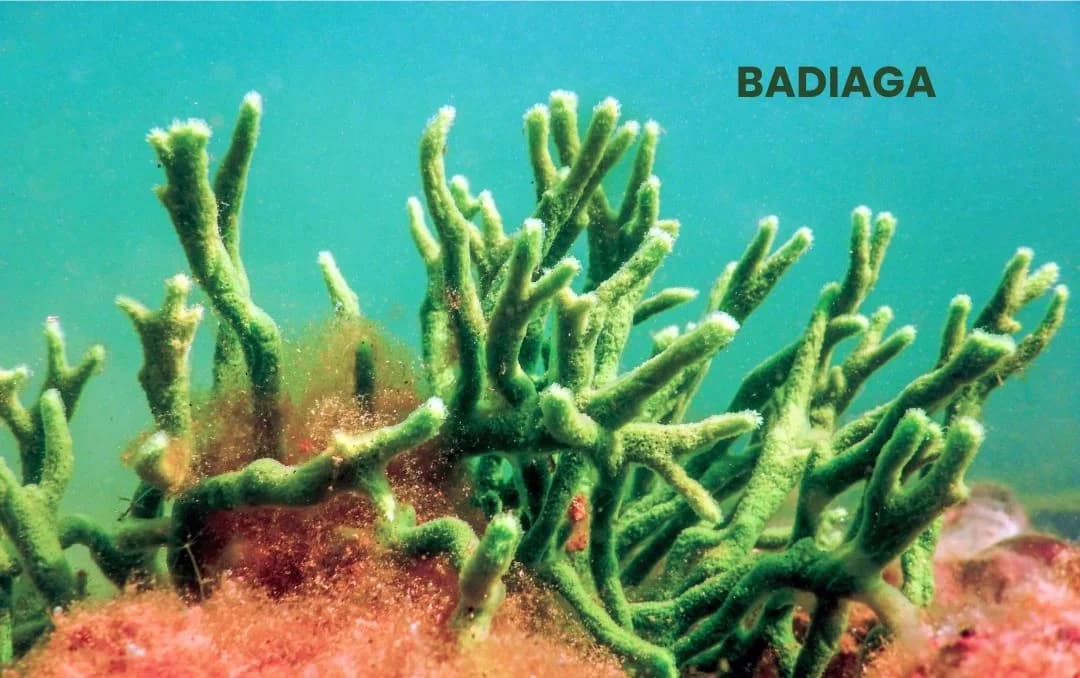
Badiaga in Clinical Practice: Addressing Headache and Fever Accompanied by Eye Pain.
Every medicine in homoeopathic proving yields numerous symptoms, yet their value is unequal. Some are decisive and characteristic, others incidental. A symptom may be highly significant in one patient but negligible in another; the physician’s art lies in discerning those that truly individualize the case. Proving itself is not the isolated action of the drug, but the dynamic interplay between substance and prover’s constitution, producing a composite symptom‑picture. Because medicines manifest differently in different provers, separate evaluation in male and female subjects is essential, as constitutional distinctions influence expression. In practice, the same principle applies: a symptom may carry different weight in male and female patients. Hence arises the gradation of symptoms—highest rank to those repeatedly observed and clinically confirmed; lower grades to those fewer but consistent; the least to occasional or weakly verified signs. Beyond proving‑derived symptoms stand clinical symptoms: not elicited in provings, but repeatedly cured in practice. Through therapeutic verification they acquire practical value, enriching the materia medica. Thus, homoeopathy rests upon both provings and bedside confirmation, weaving together drug action and clinical experience into a reliable portrait of each remedy.
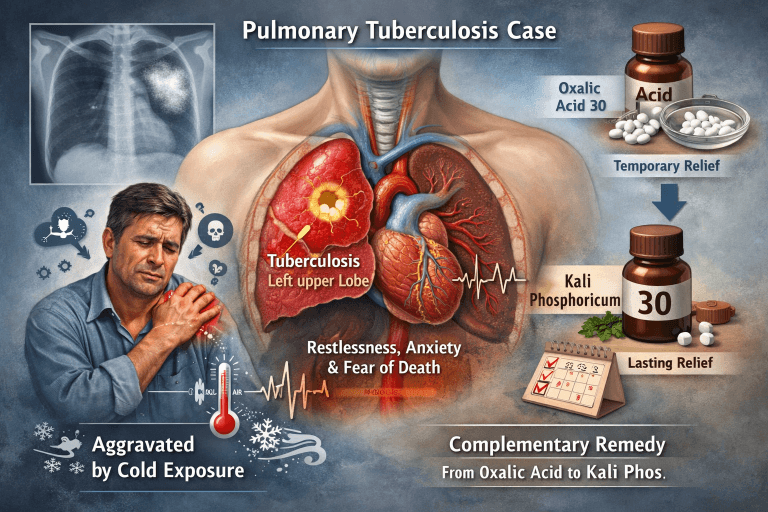
Kali Phosphoric as Complementary to Oxalic Acid: in Tubercular Affection of the Left Scapular Region
This case illustrates the dynamic role of complementary remedies in homoeopathy. A patient with pulmonary tuberculosis of the left upper lobe, complicated by pleural effusion, initially responded to Calcarea Carbonica and later obtained temporary relief from Oxalic Acid. However, the persistence of pain, restlessness, anxiety, and fear of death—aggravated by cold exposure—necessitated deeper exploration. Guided by Hering’s Guiding Symptoms, Kali Phosphoricum was identified as a complementary and chronic remedy to Oxalic Acid. Its administration provided lasting relief, with sustained improvement even after discontinuation. This outcome highlights the importance of contextual complementarity, where Kali Phos not only complemented Oxalic Acid but also addressed the chronic dimension of cardiac‑pulmonary involvement.

Belladonna (Deadly Nightshade)
Belladonna, commonly known as Deadly Nightshade (Atropa belladonna), is a perennial herb belonging to the Solanaceae family. Renowned for its striking purple flowers and glossy black berries, the plant has long captivated both healers and historians. Its name, meaning “beautiful lady” in Italian, reflects its historical use in cosmetics, where extracts were applied to dilate pupils for an alluring appearance. Medicinally, belladonna contains potent tropane alkaloids—atropine, scopolamine, and hyoscyamine—that exert anticholinergic effects. These compounds have been employed to relieve muscle spasms, reduce secretions, and manage certain inflammatory conditions, though their therapeutic window is narrow and toxicity risk is high. While modern pharmacology recognizes belladonna derivatives in controlled medical use, the plant itself remains a symbol of the fine line between remedy and poison, embodying the dual nature of nature’s pharmacopeia.
Stay Updated with Latest Research
Get weekly digests of new articles, case studies, and homeopathic insights delivered to your inbox
By subscribing, you agree to our Privacy Policy. Unsubscribe anytime.