
HomeoEra
Back to Blogs

Bronchitis in Kids: Signs, Treatment, and Prevention

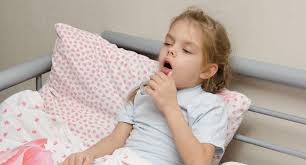
Bronchitis in children, particularly those under five years of age, is quite common. The suffering of a young child often causes significant anxiety for parents. Homeopathy offers a gentle, safe, and effective approach to treatment. By keeping a few essential remedies in your homeopathic kit, you can manage such situations with greater confidence and calm. Homeopathic medicines have been shown to work safely and effectively, providing relief without harmful side effects.

H

HomeoEra Journal Editorial Team

Updated 6 min read1719 views
Bronchitis in Kids: Signs, Treatment, and Prevention

Introduction:

Bronchitis is the inflammation of the bronchial tree, which extends from the upper part of the trachea down to the smaller bronchioles. When the inner lining of the bronchial passages becomes inflamed, it leads to excessive mucus (phlegm) production. As a result, the cough associated with bronchitis is typically productive, meaning it brings up mucus. This condition is often accompanied by wheezing or a rattling sound in the chest due to narrowed airways and accumulated secretions.

Early diagnosis:

Early diagnosis of bronchitis, particularly in infants, is crucial. Delayed recognition often results in the unnecessary use of antibiotics, an increased risk of pneumonia, and a greater likelihood of developing chronic bronchitis. Timely treatment not only reduces the risk of long-term damage to the lungs and airways but also alleviates suffering and helps limit the spread of infection. Early homeopathic or supportive care provides a safer, more targeted approach to management. Effective treatment restores normal breathing capacity more quickly, ensuring faster recovery and improved overall health.

Type of Bronchitis: Two types

1. Acute bronchitis: leads to scanty sputum with dry harsh cough, wheezing or rattling sound in the chest, resulting from upper respiratory tract infection. 

2. Chronic bronchitis: leads to productive cough, large quantity of sputum, resulting pneumonia or pulmonary tuberculosis. 

Causes of Bronchitis in Children & infants: 

Infants and young children are particularly vulnerable to acute infections because their immune systems are still in the developing stage. Bronchitis in this age group may arise from bacterial, viral, or even fungal origins. Frequent exposure to a cold and damp atmosphere, or living in poorly ventilated and damp houses, increases the risk of bronchial inflammation. Sudden changes in temperature can also trigger bronchitis—for example, giving a bath immediately after an oil massage may predispose a child to respiratory illness. A healthier practice is for the mother to bathe first and then perform the oil massage, thereby reducing the risk of sudden temperature shock. Additionally, breastfeeding in a lying position has been identified as a contributing factor not only to bronchitis but also to otitis media (middle ear infection)

 Symptoms Parents Should Watch For. 

1. Persistent cough, productive cough.

2. Wheezing or shortness of breath (Dyspnoea)

3. Fever and fatigue, over sleepiness or drowsiness is a danger symptom.

4. Chest discomfort

By the Homoeopathic point of view, while handling the case of a infants, Observation is must for physician, because infants are unable to give subjective symptoms. 

Homoeopathy in the Treatment of Childhood Bronchitis: 

Homeopathy offers an efficient and cost‑effective form of treatment. A wide range of remedies are available in the homeopathic physician’s kit, each carefully selected to match the child’s individual symptoms. These medicines not only help relieve the suffering of the child but also ease the anxiety of parents, who often feel distressed when their little one's struggle with cough and breathing difficulties. By providing gentle, safe, and targeted care, homeopathy supports recovery while minimizing side effects, making it a trusted option for many families.

HIGHLIGHTED MEDICINES: 

1. Aconite, 2. Ipecac, 3. Bryonia, 4. Kali sulph, 5. Antim-tart, 6. Arsnic, 7. Phosphorus, 8. Drosera, 9. Kalium carbonicum, 10 Calcarea carbonica, 11. Iodum, 12. Dulcamara, 13. Rhustox 

1. Aconitum: acute and sudden attack of bronchitis; after exposure to dry cold wind, high grade fever, child is restlessness, perspire only on lying side, dry cough. indicate for acute and violent attack. symptoms somewhat similar to Belladonna, what aconite is more indicated.

2. Ipecac: Useful in semi-chronic condition of bronchitis, cough with phlegm, child can expectorate easily, has sufficient power to expectorate, spasmodic cough with nausea, face becomes red coughing while. 

3. Bryonia: Bronchitis with fever and headache. Headaches worsen by motion. pain in chest, worse by coughing, Bryonia has the complains similar to Ipecac, Rattling sound in the chest, with rusty expectoration. 

4. Kali sulph: Very useful remedy for Acute and Chronic bronchitis, works for hot patient, rattling sound in the chest, cough worse at night similar to Ipecac. child do not want to cover-up, want to remain open. 

5. Antim tart: This is the medicine for Chronic Bronchitis, face is besotted, fan like motion of alae-nasi. Bubbling sound in the chest, has no capacity to expectorate, patient is dying with poison of carbonic acid. Antim-tart is a medicine for chronic and severe bronchitis.

6. Arsenic: Particularly useful in chronic bronchitis, fever and headache may be present. patient is very restlessness, chilly patient but head complaints get worse by warm; so, he has to desire open the head. thirst for cold water, little and frequent. desire for cold water but disagree, aversion for warm water but agree. bloody expectoration, blood dark black with offensive smell, fear of death and anxiety. says doctor no use of medicine; I'm dying. 

7. Phosphorus: Bronchitis with the affection of the left side of chest, high grade fever with cough and cold, bloody expectoration. strong desire for cold water. diarrhoea may be present. 

8. Drosera: This is the medicinee for child of tubercular diathesis. child coughs day and night, particularly at night, bronchitis after exposure to cold. cough Strock in head, 

9. Kalium carbonica: Another one of the fantastic medicines for cough and bronchitis in children and infant of tubercular diathesis. cough day and night, with marked pain in ribs, patient is chill, has the complaints of night sweat. 

10. Calcarea carbonica: Useful in the bronchitis of children and infants of fatty (Obese) constitution. children perspire on head, during sleep. feet extremely. 

11. Iodum: Bronchitis of children with high fever. 

12. Dulcamara: Bronchitis after exposure to rain, with fever and cough.  

13. Rhustox: Similar in action of Bryonia. Bronchitis in children with chest pain, rusty expectoration, fever and cough worse at night with severe soreness of extremities and backache. patient is drowsy and want to sleep. 

Prevention Tips:

1. Good hygiene practices

2. Avoiding smoke and pollutants

3. Strengthening immunity 

When to Seek Medical Help: 

1. if child falls asleep (Drossiness)

2. Slow breathing with rattling sound from the chest. 

3. Body cold to touch, particularly feet.

Conclusion:

Bronchitis in children can be worrying, but early recognition and care make a big difference. Watch for warning signs like persistent cough, wheezing, fever, or unusual sleepiness, and don’t delay seeking medical help if these appear. Gentle homeopathic remedies can ease symptoms safely, while good hygiene, avoiding smoke, and boosting immunity help prevent future episodes. With timely attention and simple preventive steps, children recover faster and stay healthier.


Have a Question?
Ask HomeoEra Journal Editorial Team about "Bronchitis in Kids: Signs, Treatment, and Prevention" and get a personalized response directly to your email.

0/500 characters

0 characters (minimum 10 required)

🔒 Privacy Notice: Your information will only be used to respond to your query and won't be shared with third parties.

Aphorism 18: The Totality of Symptoms as the Fundamental Basis for Remedy Selection
Organon & Philosophy

Aphorism 18: The Totality of Symptoms as the Fundamental Basis for Remedy Selection

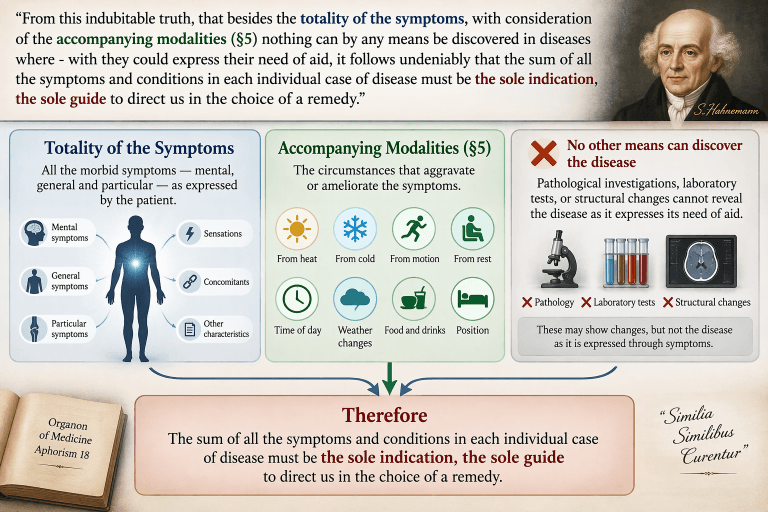
Aphorism 18 establishes that the totality of symptoms, together with their accompanying modalities, is the only reliable means of understanding disease and selecting the appropriate remedy. According to Hahnemann, disease cannot be perceived directly; it is known only through the signs and symptoms by which the disturbed vital force expresses itself. Therefore, every deviation from health has diagnostic and therapeutic significance.The physician must consider not only the symptoms themselves but also the circumstances that modify them, such as aggravations and ameliorations from motion, rest, weather, time, position, food, and other conditions. These modalities individualize the case and help distinguish one remedy from another.Hahnemann further teaches that pathological findings and structural changes may reveal the effects of disease, but they do not disclose the dynamic disturbance as clearly as the symptom totality. Consequently, the complete symptom-picture of the patient, rather than the disease name alone, must guide treatment.Thus, Aphorism 18 conveys two central truths: the totality of symptoms is the sole means of perceiving disease, and the same totality is the sole guide for selecting the curative remedy. It remains the foundation of individualization and successful homoeopathic prescribing.

HHomeoEra Journal Editorial Team
2m21
The Role of Autopsy in Investigating the Cause of Disease: A Homoeopathic Perspective
Organon & Philosophy

The Role of Autopsy in Investigating the Cause of Disease: A Homoeopathic Perspective

If disease originates primarily in the dynamic sphere of the living organism, then the true beginning of the disease process lies beyond the reach of post-mortem examination. An autopsy is performed upon the material body after the departure of the vital principle; therefore, it can reveal only the structural changes left behind by the disease and not the original dynamic disturbance that gave rise to them. It may demonstrate the location, extent, and pathological consequences of disease, but it cannot directly disclose the nature of the vital derangement from which those changes arose. In this sense, autopsy is invaluable for understanding the material effects and terminal expressions of disease, yet it remains limited as a means of investigating the primary dynamic cause. It informs us about the footprints of disease rather than the invisible force that first set the pathological process in motion

HHomeoEra Journal Editorial Team
6m18
Ipecacuanha and Eupatorium perfoliatum: A Comparative Study of Two Parallel Remedies in Febrile Conditions
Homeopathic Medicine

Ipecacuanha and Eupatorium perfoliatum: A Comparative Study of Two Parallel Remedies in Febrile Conditions

A successful homoeopathic management of fever depends not merely upon recognizing the presence of fever itself, but upon perceiving the individual characteristics through which it manifests. Among the remedies frequently encountered in bilious and intermittent fevers, Eupatorium perfoliatum and Ipecacuanha often present a close resemblance, challenging the physician's powers of observation and differentiation. Both remedies exhibit chilliness, headache, hepatic involvement, and backache during the febrile state; yet their distinguishing features reveal important differences. The persistent and characteristic nausea of Ipecacuanha, in contrast to the less prominent nausea of Eupatorium, often serves as a guiding indication. Likewise, the localization and direction of the back pain provide valuable clues, with Ipecacuanha presenting pain beginning between the shoulders and extending downward, while Eupatorium characteristically exhibits pain arising in the lower back and extending upward along the spine. This comparative study illustrates how precise remedy differentiation transforms fever management from mere symptom suppression into a truly curative homoeopathic approach, demonstrating both the therapeutic power of the remedies and the physician's skill in applying the law of similars.

HHomeoEra Journal Editorial Team
7m17
Concomitant Symptoms: A Conceptual Perspective and Practical Utility - A Broad-Spectrum Analysis
Organon & Philosophy

Concomitant Symptoms: A Conceptual Perspective and Practical Utility - A Broad-Spectrum Analysis

Concomitant symptoms occupy a unique position in homoeopathic philosophy and practice. While Bönninghausen regarded concomitants as the fourth indispensable element of the complete symptom, their practical application has often been misunderstood. A careful study reveals that concomitants are not merely incidental symptoms accompanying a chief complaint, nor can they be identified by a simple linguistic cue such as the word “with.” Rather, they represent definite manifestations arising from the same underlying derangement of the vital force. Drawing upon both Bönninghausen's theoretical framework and decades of clinical observation, this analysis explores the conceptual foundation, practical utility, and philosophical significance of concomitant symptoms. It argues that every genuine disease state possesses its own definite concomitant, whether readily recognized or not, and that the accurate perception of these accompanying symptoms remains one of the most important keys to individualization and successful remedy selection.

HHomeoEra Journal Editorial Team
7m22

Comments (2)

Sign in or sign up to join the discussion

P
Prashant Singh KushwahJun 7, 2026

My 4 months old baby girl was affected with bronchitis and she started recovering from first day by taking homeopathic medicine and completely recovered within 4 days. It was very easy to give medicine to 4 months old child that made our experience very comfortable.

H
Habib khanJun 7, 2026

Homoeopathy is still effective even in a case of infants

Newsletter

Stay Updated with Latest Research

Get weekly digests of new articles, case studies, and homeopathic insights delivered to your inbox

By subscribing, you agree to our Privacy Policy. Unsubscribe anytime.