
Case Studies
Real homeopathic case studies and treatment outcomes from experienced practitioners

Digitalis’s Therapeutic Value in Acute Hypertension: A Rapid Case Report
A male patient presented with acute hypertension, marked by a blood pressure of 200/110 mmHg, chest constriction, husky voice, and anxious facial expression. A single dose of Digitalis 30 was prescribed. Within 20 minutes, the patient’s blood pressure reduced to 140/90 mmHg, chest constriction subsided, and overall comfort was restored. This case illustrates the therapeutic value of Digitalis in acute hypertensive states, highlighting its rapid action and clinical significance in homoeopathic practice.
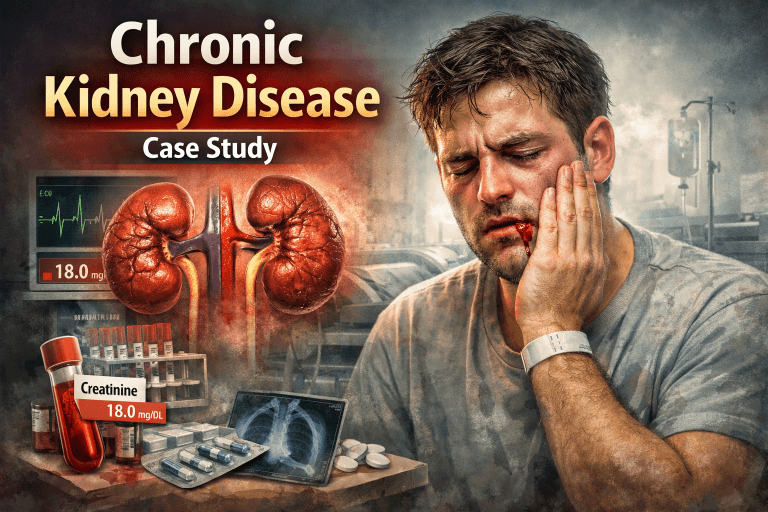
Role of the Vital Force in Chronic Kidney Disease: Despite Irreversible Pathology.
This case study presents a 32‑year‑old male with end‑stage renal disease (ESRD) (Creatinine 18 mg/dL, GFR 3 mL/min/1.73 m²), who refused dialysis and renal transplant. Despite severe pathology, a single dose of homeopathic medicine in 30 potency led to symptomatic improvement: urine output resumed, appetite returned, edema resolved, and facial swelling disappeared. However, biochemical parameters (Creatinine, GFR) remained unchanged. This paradox highlights the role of vital force in palliation and quality of life improvement, even when structural pathology persists.
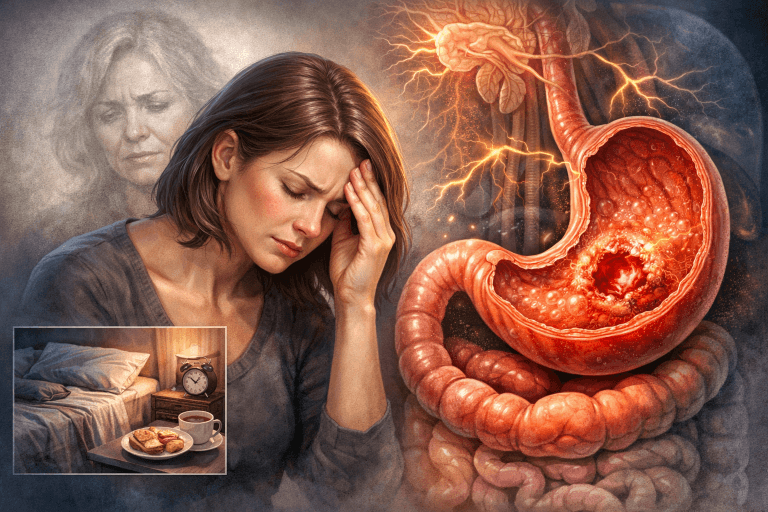
Ignatia Amara in Peptic Ulcer with Melancholic Disposition: A Case Study
A 33‑year‑old female, referred by one of my old patients, consulted me at my evening clinic with stomach complaints. Detailed case‑taking revealed a history of mental trauma following the death of her mother, whose demise was associated with irregular lifestyle, loss of sleep, and delayed meals. The patient was admitted to the hospital and managed with allopathic treatment. Investigations, including upper GI endoscopy, confirmed the diagnosis of peptic ulcer disease. Clinically, this was a case of nervous dyspepsia progressing into peptic ulcer, with the underlying etiology traced to profound emotional shock. Remedy selection was guided entirely by the predominance of mental symptoms, reaffirming Dr. Hahnemann’s observation that mental symptoms occupy a central and decisive role in homeopathic prescription.
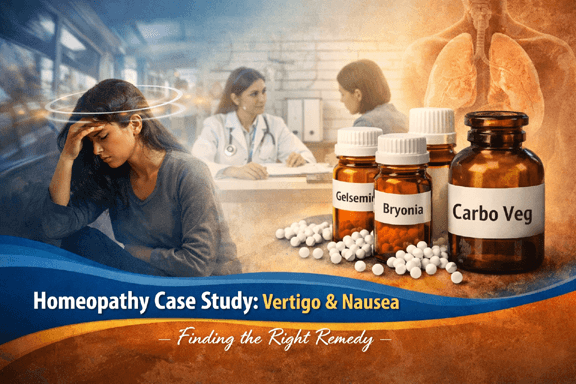
Carbo Vegetabilis - Case Report: Vertigo and Vomiting: Importance of Symptom's location in Homeopathic Prescription
This case highlights the decisive role of symptom location in remedy selection. A 35‑year‑old female presented with persistent vertigo following an episode of vomiting during travel. Initial remedies—Gelsemium, Bryonia, and Ipecac—each reflected partial aspects of her symptom picture, yet none achieved lasting cure. Careful study revealed that the true seat of disease corresponded with the pathogenesis of Carbo Vegetabilis, which encompassed her constellation of drowsiness, motion‑aggravated headache, and constant nausea. Two doses administered at thirty‑minute intervals produced complete recovery without aggravation. This case illustrates that while sensation, modality, and concomitant symptoms contribute to remedy differentiation, location remains the prime determinant in successful prescription.
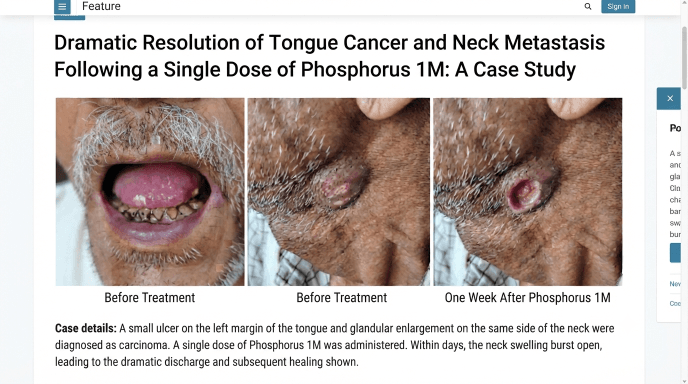
Phosphorus as a Remedy in Tongue Cancer: A Case Study
The healing power of Homoeopathic medicines in cancer is a challenging subject. Cancer is one of the most difficult conditions to treat, yet in some cases, remedies have shown clear benefit. This case of tongue cancer responded in a remarkable way to Phosphorus 1M, given in a single dose. Dr. Samuel Hahnemann taught that a physician should never be judgmental or make assumptions about the outcome. Our duty is not to speculate, but to carefully observe how the remedy acts. In this case, Phosphorus showed its specific effect very clearly. After one dose of Phosphorus 1M, the cancerous growth burst open, giving great relief to the patient. The most important change was that the patient, who had been unable to open the mouth because of the growth, was now able to do so. This improvement brought both physical comfort and emotional relief. Such cases remind us that the physician’s role is to apply the law of similars with care and patience, allowing the remedy to show its natural action. The effect of Phosphorus here is a strong example of the lasting truth of Hahnemann’s principles.

Bryonia in Tormenting Right sided‑Parietal Headache: Aggravation from Motion, Light, and Heat.
On 29/05/2026, a 32‑year‑old female presented with persistent headache in the right parietal region, unrelieved by prior allopathic and homoeopathic treatments. Despite prescriptions of Belladonna, Ignatia, Spigelia, Sanguinaria, and Silicea, her condition remained unchanged. During case‑taking, two striking modalities emerged: pain ameliorated by firm pressure and aggravation from motion, morning rising, light, and heat. The headache was sudden in onset but deeply rooted in a suppressed febrile history. Careful observation revealed recurrent throbbing pain every 1–1.5 minutes, visibly affecting her facial expression. Based on the totality of symptoms—location, sensation, and modalities—the remedy Bryonia 30 was selected. Within three days, facial expression normalized and pain spells ceased; by the fifth day, complete relief was achieved. This case highlights the principle of prescribing on the portrait of complete symptoms, demonstrating Bryonia’s efficacy in right‑sided parietal headache with modalities of motion, light, and heat, ameliorated by pressure.

Lac Caninum: Vital Expression, Articular Rheumatism — A Case Study
The vital force manifests itself through many expressions, and one of its remarkable phenomena is the alternation of disease symptoms from one side of the body to the other. This shifting pattern is not merely incidental but a dynamic expression of the vital force itself. In homeopathic proving's, certain remedies reproduce this same alternation of sides, thereby revealing their therapeutic affinity for such conditions. Lac caninum is especially noted for this characteristic, as it consistently demonstrates side-to-side alternation in its proving symptoms. I observed this phenomenon in a patient suffering from acute articular rheumatism, where the alternating pains were deeply hidden within the interior dynamics of the disease. Initially, the case was explored with Bryonia 30, which aggravated the symptoms. However, the curative response was achieved with Lac caninum 200, which corresponded precisely to the alternating nature of the symptoms and restored balance to the vital force.

Terebinthina: A Case of Abdominal Bloating Cured by a Single Dose
This case demonstrates the remarkable efficacy of homoeopathic medicine, where a single, well‑selected dose brought lasting relief in a chronic condition. A 32‑year‑old male, long troubled by abdominal bloating and a history of chronic urinary infection, had undergone numerous investigations without a clear diagnosis. He suffered from a gripping abdominal sensation, inability to eat comfortably, and early satiety after meals. Following administration of the indicated remedy, his symptoms subsided, appetite improved, and overall health was restored—highlighting the curative potential of individualized homoeopathic treatment.

Nux vomica: role of complete symptoms; A case study.
Nux Vomica is not ordinarily regarded as a remedy for headache. Yet, in certain cases of hepato‑encephalopathic headache, it demonstrates striking efficacy. One patient, nearly unconscious, suffered from severe headache aggravated by motion and light. The anxious family members surrounded him, witnessing his rapid decline. Guided by the theory of complete symptoms, Nux Vomica 200 was administered. Within one hour, the patient experienced marked relief, regaining clarity and comfort. This case illustrates how Nux Vomica, though not classically catalogued as a headache remedy, can act profoundly when the totality of symptoms directs its selection.

Sambucus nigra: A Clinical Insight into Fever Management.
A nine‑year‑old girl returned home after visiting her grandmother. Her father, noticing a sickly expression on her face, became anxious and brought her to my clinic. He remarked: “Doctor, sickness is clearly depicted on the face of my child, but she has no complaints. I am very concerned about her health and unable to decide what the actual problem is.” On examination, the child presented no overt symptoms at that time. To address the latent state and based on the constitutional appearance, I administered a single dose of Sulphur 200. By the evening, clear febrile symptoms emerged: Dry heat of the body Frequent urination Marked thirstlessness This progression confirmed the incipient febrile state, validating the father’s concern and the constitutional prescription

Antimonium Crudum in Chronic Summer Diarrhoea with Early Morning Aggravation: A Case Report
On 18th April 2026, during the evening clinic hours, a 35‑year‑old male teacher presented with a long‑standing complaint of chronic diarrhoea. The patient reported that for several years he had been experiencing early morning onset of watery stools, typically between 4:00–5:00 A.M., which continued throughout the day. He described associated cramping pain in the intestines, with partial relief at night, only for the symptoms to recur the following morning. A striking feature of the case was the seasonal modality: the diarrhoea was markedly aggravated during summer, with heat exerting a pronounced influence on the intensity of the complaints. The chronicity of the condition, coupled with its peculiar time modality and seasonal aggravation, made the case noteworthy for clinical documentation.

Aethusa Cynapium in Pediatric Summer Vomiting: A Life‑Saving Homeopathic Remedy
In the intense heat of summer, certain children develop a peculiar and dangerous cycle of vomiting after drinking milk. What appears to be a simple gastrointestinal disorder is, in fact, a reflex disturbance of the central nervous system triggered by solar heat. The child drinks milk, vomits, falls asleep from exhaustion, awakens hungry, drinks again, and the cycle repeats—draining vitality with each turn. Without timely administration of Aethusa Cynapium, this seemingly ordinary condition can prove fatal within just a few days. Recognizing this keynote symptom—vomiting milk followed by sleep—is critical, as the remedy acts swiftly to break the cycle and restore life.