
HomeoEra
Back to Cases

Lac Caninum: Vital Expression, Articular Rheumatism—A Case Study

The vital force manifests itself through many expressions, and one of its remarkable phenomena is the alternation of disease symptoms from one side of the body to the other. This shifting pattern is not merely incidental but a dynamic expression of the vital force itself. In homeopathic proving's, certain remedies reproduce this same alternation of sides, thereby revealing their therapeutic affinity for such conditions. Lac caninum is especially noted for this characteristic, as it consistently demonstrates side-to-side alternation in its proving symptoms. I observed this phenomenon in a patient suffering from acute articular rheumatism, where the alternating pains were deeply hidden within the interior dynamics of the disease. Initially, the case was explored with Bryonia 30, which aggravated the symptoms. However, the curative response was achieved with Lac caninum 200, which corresponded precisely to the alternating nature of the symptoms and restored balance to the vital force.

H

HomeoEra Journal Editorial Team

Updated 3 min read1241 views
Lac Caninum: Vital Expression, Articular Rheumatism—A Case Study
Case Summary
Patient: 39 Years, male
Diagnosis:

Acute articular Rheumatism

Chief Complaints:

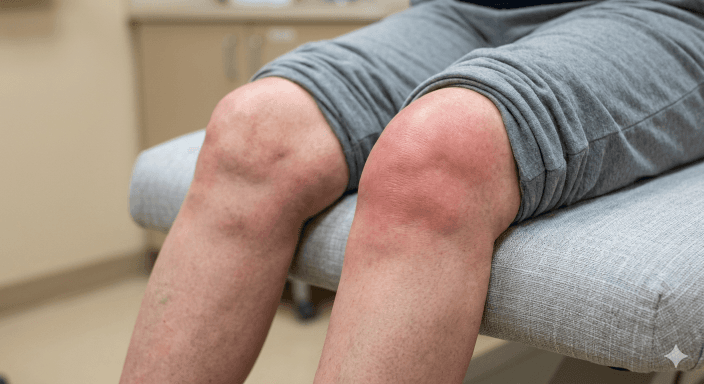
Pain in both knee joint with cracking sound on walking.

Treatment:

Lac can - 200 (Single dose,)

Outcome:

Prognosis is favorable

Case reception:

On 19/05/2026, I received a case of acute articular rheumatism. The patient arrived at my clinic during the evening hours, accompanying another individual who had come for consultation. After the primary consultation was completed, he himself approached me and said:

“Doctor, I have pain in my knee joints. Both knees are affected, and the pain becomes much worse when I ascend stairs.”

Recognizing the modality of aggravation with motion and particularly with ascending steps, I prescribed Bryonia 30, to be taken at intervals of every two hours, for a period of seven days.

Official case taking:

After three days of treatment, I received a phone call from the patient’s mother. She reported with concern:

“Doctor, the pain has become much worse after taking the medicine. Now he is unable to move even a little. Both knees are contracted and stiff.”

Recognizing the seriousness of the aggravation, I immediately instructed her to bring the patient to the clinic for direct examination and reassessment. after vising on the clinic, following symptoms were noted down. 

Clinical presentation:

When the patient visited my clinic, I observed that both knee joints were markedly stiff. He could scarcely straighten them, and his movements were extremely restricted.

He arrived in a car and required the assistance of two attendants to help him alight. With great difficulty, he managed to walk into the clinic, his gait painfully slow and labored. Finally, he sat down before me, visibly distressed and exhausted from the effort.

After sitting down, the patient began narrating his complaints:

“Doctor, my pain became much worse just after taking 3 to 4 doses of the previously prescribed medicine (Bryonia 30). Now both of my knee joints are swollen, very stiff, and hardly movable. One of the most important symptoms I must tell you is that the pain alternates between the knees — both are not affected at the same time. The painful limb feels warm, while the other remains cold.”

This detailed narration revealed a striking feature of the case: the alternating nature of the pain, accompanied by contrasting sensations of warmth and coldness in opposite limbs

Symptoms recording:

1. Extremities - knee joint swelling with stiffness. 
2. Extremities - pain of alternating nature with marked thermograph.
3. Interrupted urination. with history of urinary infection. 
4. Palpitation of the heart - worse by motion along with pain in chest, (Rheumatic carditis) 

History of present illness:

The patient presented with an active history of urinary tract infection. Upon deeper investigation, a past surgical history of uterine fibroid in his wife (managed by complete hysterectomy) was revealed. From these findings, it can be reasonably concluded that the case bore the imprint of a latent Gonorrhoeal miasm. 

Miasm:

Sycosis: The condition was revealed in the context of an active urinary infection in the patient, alongside a family history of uterine fibroid in his wife, which had been surgically managed by complete hysterectomy.

Remedy Selection:

Prescription: A single dose of Lac caninum 200 was administered, selected on the basis of the vital expression of alternating sides—a keynote characteristic of the remedy. 

Outcome:

Prognosis: The outcome was highly favorable. Lac caninum provided instant relief; shortly after receiving the medicine, the patient slept peacefully for two hours without pain. The discomfort returned thereafter but gradually diminished, with nearly 80% of the pain resolved within three days. By the eighth day, the patient was completely cured, except for a residual cracking sound while ascending stairs.  
Have a Question?
Ask HomeoEra Journal Editorial Team about "Lac Caninum: Vital Expression, Articular Rheumatism—A Case Study" and get a personalized response directly to your email.

0/500 characters

0 characters (minimum 10 required)

🔒 Privacy Notice: Your information will only be used to respond to your query and won't be shared with third parties.

Unexpected Haemorrhage, Unexpected Cure: Mezereum’s Swift Action.
Acute Emergency

Unexpected Haemorrhage, Unexpected Cure: Mezereum’s Swift Action.

A male patient presented in a state of almost collapse, with profuse rectal haemorrhage of unknown origin. His appearance was almost cadaveric, with pallor and weakness so profound that life seemed to be ebbing away. Conventional measures offered no relief, and the urgency of the situation demanded immediate intervention. Mezereum was selected on the basis of its characteristic affinity for mucosal haemorrhage and profound exhaustion. A single dose was administered. Within minutes, the bleeding ceased entirely, and the patient’s vitality began to return. The rapidity of the response was striking: from a state resembling near‑death, the patient revived, stabilized, and recovered without further recurrence. This case illustrates the remarkable power of the similimum, where one well‑chosen dose of Mezereum transformed a desperate situation into complete restoration.

HHabib khan
4m335
Cervical Lymphadenopathy (Suspected Tuberculosis) with Intense Fever: case resolved by single dose of Lac canainum - 200.
Acute Emergency

Cervical Lymphadenopathy (Suspected Tuberculosis) with Intense Fever: case resolved by single dose of Lac canainum - 200.

Although this case was not an acute emergency, the statement of the attending allopathic physician turned it into one. His remarks deeply distressed the patient’s mother, as he asserted that the enlarged gland was not a simple infection but could be tubercular or even cancerous, necessitating a biopsy. At that time, the patient was suffering from intense fever accompanied by cervical gland enlargement. The illness had begun with pain in the right cheek and swelling of the gums, and within a day had shifted to the left side, progressing to cervical lymphadenopathy with high fever, general malaise, anxious facial expression, and complete loss of appetite.

AAni Arya
3m957
Digitalis’s Therapeutic Value in Acute Hypertension: A Rapid Case Report
Acute Emergency

Digitalis’s Therapeutic Value in Acute Hypertension: A Rapid Case Report

A male patient presented with acute hypertension, marked by a blood pressure of 200/110 mmHg, chest constriction, husky voice, and anxious facial expression. A single dose of Digitalis 30 was prescribed. Within 20 minutes, the patient’s blood pressure reduced to 140/90 mmHg, chest constriction subsided, and overall comfort was restored. This case illustrates the therapeutic value of Digitalis in acute hypertensive states, highlighting its rapid action and clinical significance in homoeopathic practice.

HHabib khan
2m1182
Nux vomica: role of complete symptoms; A case study.
Acute Emergency

Nux vomica: role of complete symptoms; A case study.

Nux Vomica is not ordinarily regarded as a remedy for headache. Yet, in certain cases of hepato‑encephalopathic headache, it demonstrates striking efficacy. One patient, nearly unconscious, suffered from severe headache aggravated by motion and light. The anxious family members surrounded him, witnessing his rapid decline. Guided by the theory of complete symptoms, Nux Vomica 200 was administered. Within one hour, the patient experienced marked relief, regaining clarity and comfort. This case illustrates how Nux Vomica, though not classically catalogued as a headache remedy, can act profoundly when the totality of symptoms directs its selection.

HHabib khan
3m1240

Comments (0)

Sign in or sign up to join the discussion

No comments yet. Be the first to share your thoughts!

Newsletter

Stay Updated with Latest Research

Get weekly digests of new articles, case studies, and homeopathic insights delivered to your inbox

By subscribing, you agree to our Privacy Policy. Unsubscribe anytime.