
Dr. Afzal khan
Homeopathic DoctorHomoeopathic Physician
Practicing at: Hahnemann Homoeopathic Clinic
About Dr. Afzal
Dr. Afzal khan Practicing Homoeopathy in Guna (M.P.) last from 12 years, He is eminent Homoeopathic Physician, cares particularly of Kidney patient.
Total Articles
Blog Posts
Case Studies
Total Views
 Blog
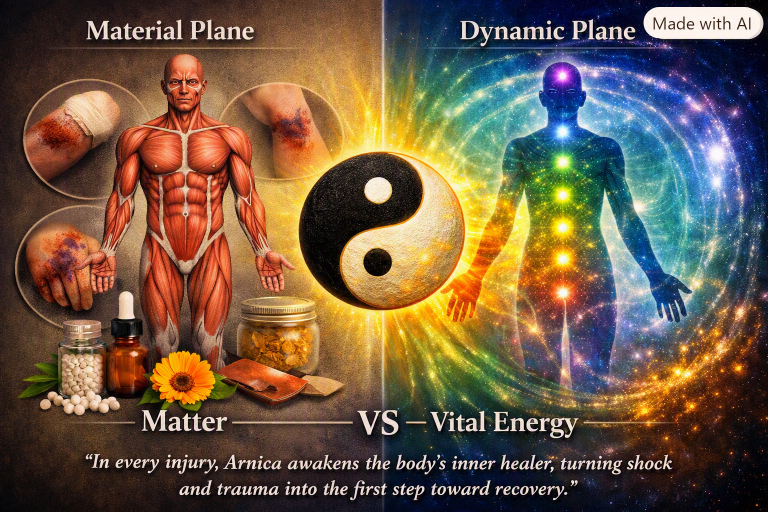
BlogHealing Injuries through Homoeopathy: From Minor Wounds to Head Trauma
Trauma, whether minor or severe, challenges the body’s natural equilibrium and often leaves both physical and psychological sequelae. Homoeopathy approaches traumatic diseases not merely as mechanical injuries but as disturbances of the vital force, requiring remedies that stimulate the body’s innate healing capacity. the key remedies are Arnica, Ledum, Hypericum, Calendula, Ruta, Bellis perenis, Calc, Rhustox. Trauma, whether minor or severe, challenges the body’s natural equilibrium and often leaves both physical and psychological sequelae. Homoeopathy approaches traumatic diseases not merely as mechanical injuries but as disturbances of the vital force, requiring remedies that stimulate the body’s innate healing capacity.
 Blog
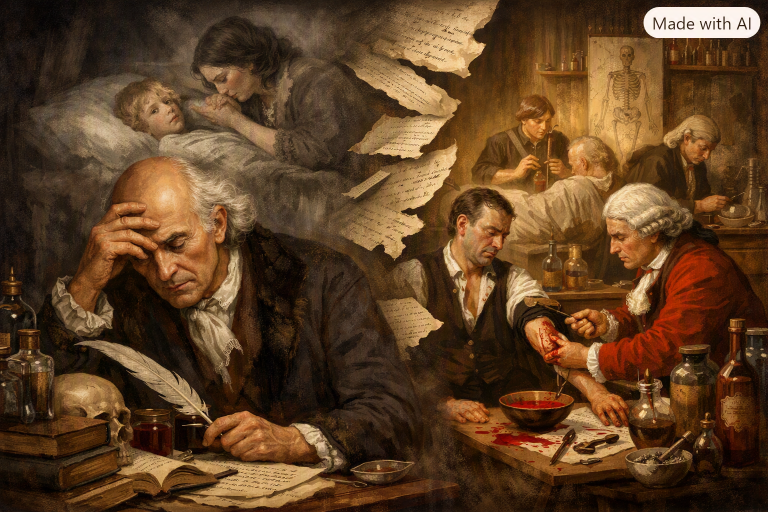
BlogDr. Constantine Hering: From Surgical Knife to Homoeopathic Light.
Dr. Constantine Hering’s journey into homoeopathy began not with admiration, but with opposition. As a young allopathic physician and surgeon in America, he was commissioned to write against Dr. Samuel Hahnemann and the rising system of homoeopathy. Yet, curiosity led him to experiment, and conviction slowly replaced skepticism. The turning point came during an autopsy when Hering accidentally injured himself with a surgeon’s knife. The wound developed into gangrene, a condition that threatened his life. Conventional methods failed, but the homoeopathic remedy Arsenicum album brought about a remarkable cure. This personal experience transformed his outlook entirely. From an adversary, he became a devoted practitioner, and ultimately one of the greatest pioneers of homoeopathy. His conversion stands as a testament to the power of lived experience in shaping medical philosophy and practice.
 Blog
BlogHomoeopathy; Discovery, Principles, and the Divine Gift of Healing
Homoeopathy, discovered at the turn of the 19th century by Dr. Samuel Hahnemann, arose as a revolutionary response to the harsh medical practices of his time. While translating Cullen’s Materia Medica, Hahnemann experimented with cinchona bark and observed that it produced symptoms similar to malaria in a healthy person. This profound insight gave birth to the principle of Similia Similibus Curentur — “like cures like.” The philosophy of Homoeopathy rests on three cardinal pillars: the law of similars, the minimum dose, and potentization. Remedies are prepared through successive dilutions and succussions, transforming crude substances into dynamic medicines that act gently yet powerfully. Unlike conventional medicine, Homoeopathy seeks not to suppress symptoms but to awaken the body’s innate healing force, restoring harmony between mind, body, and spirit. More than a therapeutic system, Homoeopathy is a philosophy of healing — a divine gift that respects nature’s laws and honors the individuality of every patient. Its enduring relevance lies in its holistic vision: to cure without harm, to treat without violence, and to heal by aligning with the wisdom of life itself.
 Blog
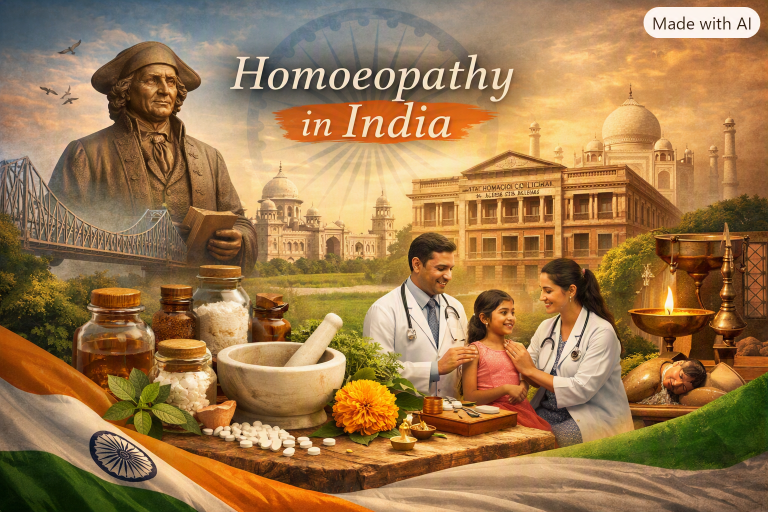
BlogIntroduction of Homoeopathy into INDIA: Role of Dr. Honigberger, and other pointer.
Homoeopathy entered India in the early 19th century, finding its first foothold through the remarkable success of Dr. John Martin Honigberger, who treated Maharaja Ranjit Singh in 1839. From Calcutta, the system spread rapidly, winning public trust during epidemics and gaining institutional support. Over time, homoeopathy moved from being a foreign medical curiosity to an officially recognized system under the Government of India, culminating in its inclusion within the AYUSH framework. Today, India stands as one of the largest global centers of homoeopathy, where tradition and modern regulation converge to sustain its growth and relevance.
Contact Dr. Afzal khan
Have a question or need professional advice? Send a direct inquiry to Dr. Afzal.