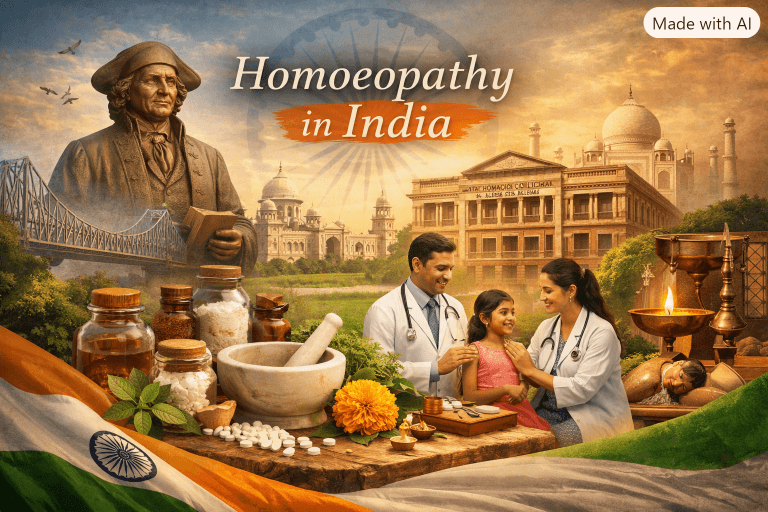
Introduction of Homoeopathy in India:
Arrival (1810s): Homoeopathy first entered India
through Western travelers, missionaries, and military personnel.
Dr. John Martin Honigberger (1839): Often called the “Father of Indian Homoeopathy,” Honigberger treated Maharaja Ranjit Singh of Punjab for paralysis and vocal cord issues. His success brought homoeopathy into royal and public attention.
Settlement in Calcutta: After his work in Punjab, Honigberger settled in Calcutta, where homoeopathy gained its first institutional foothold.
Growth and Acceptance:
Bengal as the cradle: Bengal nurtured homoeopathy through training institutions and treatment centers.
Hospitals in Calcutta: These became famous for treating intractable diseases and epidemics like cholera, boosting public trust.
Spread across India: Success in epidemic control and the dedication of early practitioners helped homoeopathy gain acceptance nationwide.
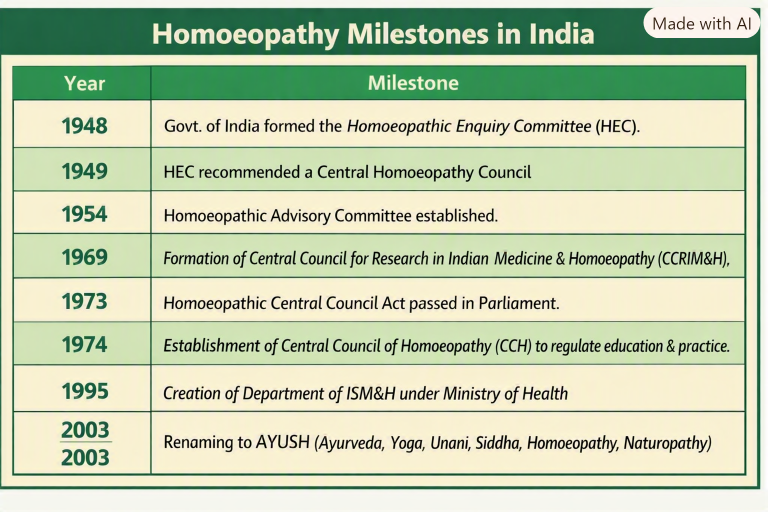
Government Recognition and Milestones:
Vidyasagar’s Role in Homoeopathy and Cholera:
1. Social Reform Meets Medical Practice
Beyond education and widow remarriage reforms,
Vidyasagar quietly practiced homoeopathy, treating patients and documenting
outcomes in medical notebooks.
He was motivated by humanitarian concern,
offering affordable care to those who could not access conventional medicine.
2. Contribution During Asiatic Cholera
Cholera epidemics in 19th-century Bengal devastated
communities, especially the poor.
Vidyasagar’s integration of homoeopathy into his
social work (from 1864 onward) provided relief to thousands during
these outbreaks.
His approach represented one of the earliest
structured efforts to use homoeopathy at scale in epidemic conditions,
laying groundwork for Bengal’s prominence in Indian homoeopathy.
3. Legacy and Institutional Impact
Vidyasagar’s nephew, Maharishi Pareshnath Banerji,
later established the Mihijam homoeopathic centre (Jharkhand), which treated
nearly 1% of undivided India’s population—an unprecedented scale in
medical history.
This lineage of practice continued through Prof. Dr. Parimal Banerji and later generations, ensuring Bengal’s enduring role in homoeopathy.
Key Points for Homoeopathy File Note:
Ishwar Chandra Vidyasagar (1820–1891): Renowned reformer and educationist.
Role in Asiatic Cholera: Applied homoeopathy in
epidemic relief, especially for underserved communities.
Documentation: Maintained medical diaries, recording
symptoms, remedies, and cures.
Institutional Legacy: Inspired establishment of
Mihijam homoeopathic centre, which became globally recognized.
Impact: Helped popularize homoeopathy in Bengal, making it a trusted system of care during epidemics.
Contribution of Rajen Babu Datta in Indian Homoeopathy:
Babu Rajendra Lal Dutta (popularly known as Rajen Babu Datta) is regarded as the “Father of Indian Homoeopathy,” whose pioneering work in 19th‑century Bengal laid the foundation for homoeopathy’s acceptance and institutional growth in India. His selfless service, successful treatment of eminent personalities, and influence on Dr. Mahendra Lal Sircar were crucial in elevating homoeopathy to national recognition.
Key Contributions of Rajen Babu Datta:
Early Life & Background (1818–1889): Born in
Calcutta’s renowned Dutta family, Rajen Babu was a philanthropist who invested
much of his wealth in promoting homoeopathy.
Public Health Impact: During the malaria epidemic of 1861 in Bengal, he treated countless patients with homoeopathy, gaining widespread trust.
Institutions Founded: He established a native homoeopathic hospital and free dispensary, making treatment accessible to the poor.
Collaboration with Foreign Homoeopaths: Worked with French homoeopaths like Dr. Thinet Barinier and helped Dr. Tonnerre establish practice in Calcutta.
Influence on Eminent Figures: Successfully treated Pandit Ishwar Chandra Vidyasagar (social reformer), Raja Radhakanta Deb Bahadur, and many others, which gave homoeopathy social legitimacy.
Conversion of Dr. Mahendra Lal Sircar: His greatest achievement was persuading Sircar, a leading allopathic physician, to adopt homoeopathy. Sircar later became the first formally qualified Indian homoeopath, inspiring generations
Dr. Mahendra Lal Sircar: India’s First Qualified Homoeopathic Practitioner.
Key contribution:
Current Status in India:
Registered Doctors: ~3.45 lakh
Dispensaries: 8,593+
Educational Institutions: 277+
Research Centres: 34+
Popularity: Homoeopathy is the third most popular medical system in India, after allopathy and Ayurveda.
Conclusion:
The journey of homoeopathy into India reflects a fascinating
blend of Western innovation and Indian receptivity. What began in
the early 19th century with German missionaries and pioneering physicians soon
evolved into a structured medical system, gaining strong roots in
Bengal and spreading across the nation. The establishment of the Calcutta
Homoeopathic Medical College in 1881 marked a turning point, laying
the foundation for formal education and practice.
Over time, homoeopathy earned government recognition
in 1973, and with the creation of the Central Council of
Homoeopathy and later integration under the Ministry of AYUSH,
it became a nationally endorsed system of medicine. Today, India stands as
the global leader in homoeopathy, with the largest number of
practitioners, institutions, and patients worldwide.
In essence, the introduction of homoeopathy into India was
not merely a transfer of medical knowledge from Europe—it became a cultural
and scientific synthesis, embraced by millions for its holistic philosophy
and gentle healing approach. Its growth from missionary practice to mainstream
healthcare underscores India’s unique role in preserving and expanding this
system for the world.
Would you like me to expand this conclusion into a
more reflective ending—highlighting India’s role as the “guardian of
homoeopathy” for global health—or keep it concise and academic for case
reports.