
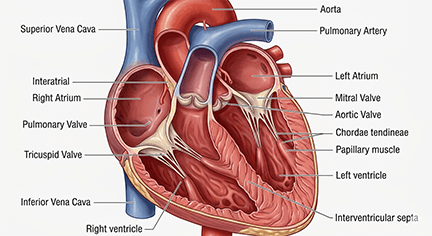
Anatomy and Physiology of Heart (Brief description)
The human heart is a four‑chambered muscular pump located in the middle mediastinum, between the two lungs. Its chambers are the right atrium and right ventricle, and the left atrium and left ventricle. The left ventricle is oriented toward the left side of the chest, which is why the heartbeat is most distinctly heard on the left.
Blood from the body enters the right atrium via the superior and inferior vena cava. From the right atrium, it flows into the right ventricle, which pumps it into the pulmonary trunk. The pulmonary arteries distribute this blood to the lungs for oxygenation. Oxygen‑rich blood then returns to the left atrium through the pulmonary veins. It passes through the bicuspid (mitral) valve into the left ventricle, which pumps it into the aorta for systemic circulation. This ensures a unidirectional flow of blood through the heart.
The mitral valve is the most commonly affected valve in heart disease. When it becomes incompetent, blood may leak backward from the left ventricle into the left atrium during contraction. This backward flow is called mitral regurgitation, and it can lead to symptoms such as shortness of breath, fatigue, and palpitations.
Common Symptoms of the heart diseases
A physical symptom is often accompanied by an analogous mental symptom. Whenever the heart is involved, or when a disease has its seat in the heart, the mind frequently reflects the symptom of fear of death. This is a well-known feature of Arsenicum Album. Of course, many other medicines also present this symptom—such as Aconite, Naja, Opium, Arnica, and several others. A deeper study of these remedies reveals that each of them, to a greater or lesser degree, exerts a significant influence on the heart.
Symptoms of Mitral regurgitation:
1. Shortness of breath (Dyspnea) especially when lying down or during exertion.
2. Fatigue and reduced exercise tolerance.
3. Palpitations rapid, pounding, or fluttering heartbeat.
4. Swelling (Edema) in feet or ankles joints.
5. Irregular heartbeat often atrial fibrillation.
6. Chest discomfort and atypical chest pain.
7. Fainting with coughing in severe cases.
Symptoms of Valvular incompetence:
1. Shortness of breath occurs during physical activity, at rest, or when lying flat. caused by fluid buildup in the lungs due to backward blood flow.
2. Fatigue and weakness: Reduced blood flow to the body makes patients feel tried easily, often the earliest noticeable symptoms.
3. Chest pain and discomfort: Especially during exertion, due to strain on the heart muscle.
4. Palpitation (Irregular heartbeats) Sensation of skipped beats, fluttering, or rapid heart rhythms. indicate arrhythmias linked to valve dysfunction.
5. Swelling (Odema) Fluid retention in ankles, feet, legs, or abdomen. a sign of worsening heart failure.
6. Fainting (Syncope) Severe cases may cause sudden loss of consciousness.
7. Lightheadedness: reduced blood flow to the brain cause fainting spells.
Symptoms of Mitral stenosis:
1. Shortness of breath and Dyspnoea.
2. Fatigue and weakness.
3. Palpitation of the heart.
4. Chest discomfort or pain
5. Coughing of blood (hemoptysis)
6. Recurrent bronchitis or respiratory infections.
The clinical picture of Arsenicum album closely resembles that of heart disease. Symptoms such as restlessness, aggravation at night, anxiety, weakness, and fatigue strongly suggest its usefulness in cardiac conditions. Consequently, Arsenicum album, particularly in the 6CH potency, has shown value in managing heart diseases including mitral regurgitation, valvular incompetence, and mitral stenosis.
Case presentation cured by Arsenicum album