
Cause and effect:
It is noteworthy that heel pain, a condition widely prevalent in society, is frequently associated with faulty lifestyle habits. Both males and females are equally susceptible to this malady. According to the conventional medical system, prolonged standing, obesity, sedentary habits, inappropriate footwear, and excessive strain on the plantar fascia are regarded as the principal etiological factors responsible for heel pain. Consequently, conventional management places considerable emphasis on correcting these predisposing factors, with particular attention given to appropriate footwear and lifestyle modification.
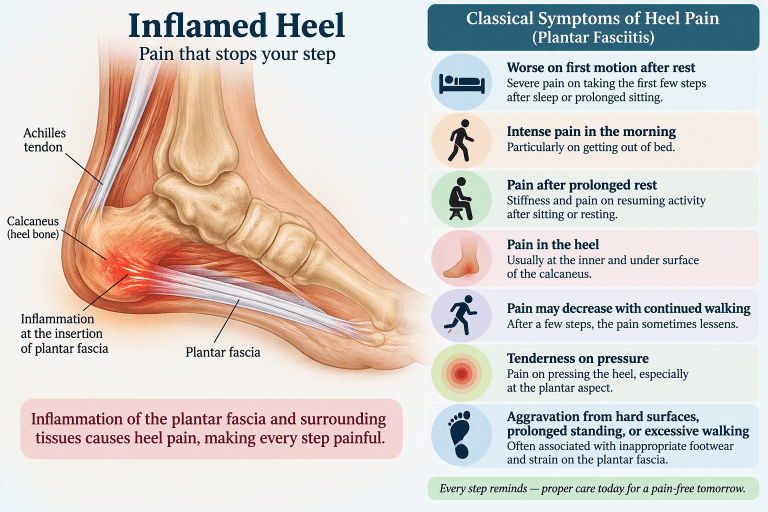
However, the underlying reality is not as simple as we may assume. In fact, heel pain is essentially a rheumatic affection of the calcaneus and its surrounding tissues. The classical symptom of heel pain, namely that the pain is aggravated on first motion after rest or sleep, or that there is intense pain on attempting to walk after prolonged rest, especially in the morning after sleep, corresponds closely to the well-known modality of Rhus toxicodendron. Nevertheless, Rhus tox often fails to bring the desired relief in many cases.
This is a classic example illustrating Aphorism 7 of the Organon, which teaches that the symptoms are merely the outward manifestations of the internal disease. Symptoms do not always faithfully represent the actual derangement of the vital force. In cases of heel pain, Rhus toxicodendron appears to be indicated in almost every instance on the basis of the characteristic symptomatology, particularly the aggravation on first motion after rest. However, despite its apparent similarity on symptomatic grounds, Rhus tox frequently fails to produce the desired curative effect. This suggests that the physician must look beyond the superficial symptom picture and perceive the deeper nature of the disease.
Underlying Miasm:
It may reasonably be inferred that the sycotic miasm, supported by an underlying psoric foundation, constitutes a fundamental factor in the development of chronic heel pain. From a homoeopathic standpoint, the condition is frequently associated with a disturbance in the body's thermal economy, characterized by heat in the upper parts and coldness in the lower extremities, particularly the soles and heels. This altered temperature distribution may create a predisposition to rheumatic affections of the calcaneus and its surrounding tissues, ultimately manifesting as persistent heel pain. hence there are several factors that can worsen your heel pain.
Trigging cause:
Following are the trigging factor that can worse heel pain.
1. Frequent walking barefoot on cold surfaces, particularly marble floors.
2. Frequent washing of the feet, particularly in individuals who suffer from excessive perspiration of the feet.
3. Excessive indulgence may lead to a disturbance of the energy balance of the genito-urinary sphere, which, in susceptible individuals, is believed to contribute to the development of heel pain.
4. Occasionally, diabetes mellitus is found to be associated with heel pain.
5. Increased uric acid levels may be found in association with heel pain and can be considered a secondary cause.
Homoeopathic therapeutics:
1. Pulsatilla:
2. Medorrhinum:
3. Colchicum:
4. Calc flour:
5. Araniea diadema: