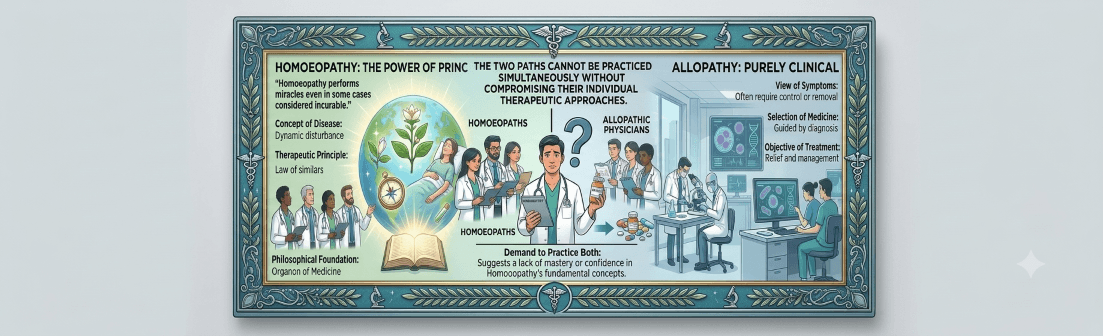
The Crisis of Confidence in Modern Homoeopathic Practice
A well-known quotation widely circulated in society is that "Homoeopathy performs miracles even in some cases considered incurable." Every homoeopath, even one who has only briefly encountered the science of Homoeopathy, recognizes its remarkable power. Many allopathic physicians who have occasionally observed its results also acknowledge that Homoeopathy can produce outcomes that appear almost miraculous. Its ability to bring relief and recovery in difficult and long-standing conditions often inspires admiration among both patients and practitioners.
Unfortunately, the other side of the coin presents a different picture. Among us, there are many homoeopathic physicians who advocate the simultaneous use of allopathic medicines alongside homoeopathic treatment. Moreover, some even demand legal permission to practice allopathic medicine in addition to Homoeopathy. Such a position raises an important question: if Homoeopathy is widely acknowledged for its remarkable curative power, why should its practitioners feel the need to rely upon or seek authority to practice another system of medicine?
The answer is simple: very few homoeopaths are truly aware of, or able to grasp, the fundamental concepts of disease and health as explained in homoeopathic philosophy. Likewise, only a small number possess a deep understanding of the spirit and essence of the Organon of Medicine. Without a clear comprehension of these foundational principles, confidence in the homoeopathic method naturally weakens, leading many practitioners to seek support from other therapeutic systems rather than relying upon the full potential of their own science.
" In fact, Homoeopathy and Allopathy are fundamentally different medical sciences, each based on its own principles, philosophy, and methods of treatment. Consequently, they cannot be practiced simultaneously without compromising their individual therapeutic approaches."
Demanding the right to practice Allopathic medicine by a homoeopathic physician is not only unethical but also raises serious questions regarding professional integrity. A homoeopathic physician who has mastered his own science and thoroughly understands the fundamental concepts of disease, health, and cure as taught in Homoeopathy can scarcely feel the need to advocate the use of Allopathic medicine. Such a practitioner places confidence in the principles and therapeutic resources of his own system. Therefore, when a homoeopathic physician persistently demands the right to practice Allopathy or promotes its routine use alongside Homoeopathy, it may suggest a lack of complete confidence in, or mastery of, the principles of his own profession.
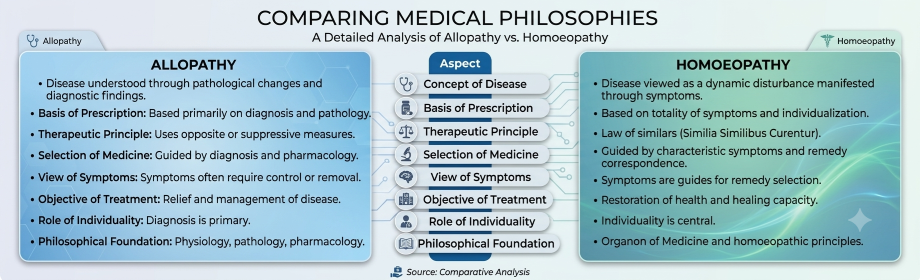
Key difference between Allopathy and Homoeopathy:
Homoeopathy:
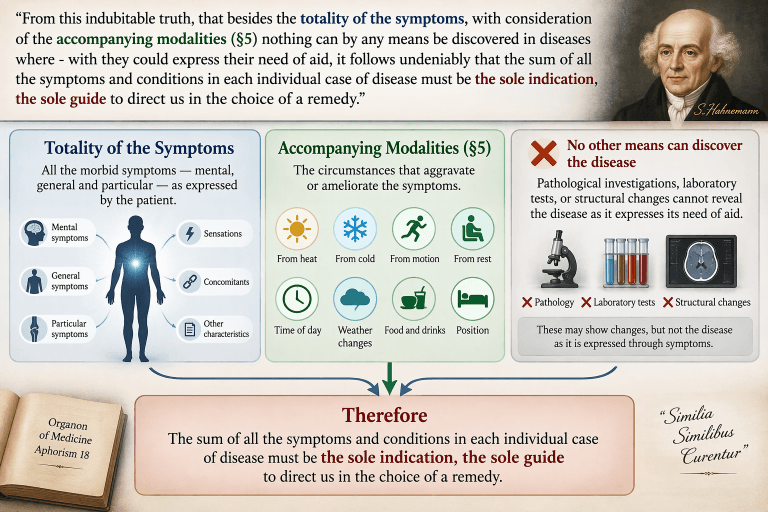
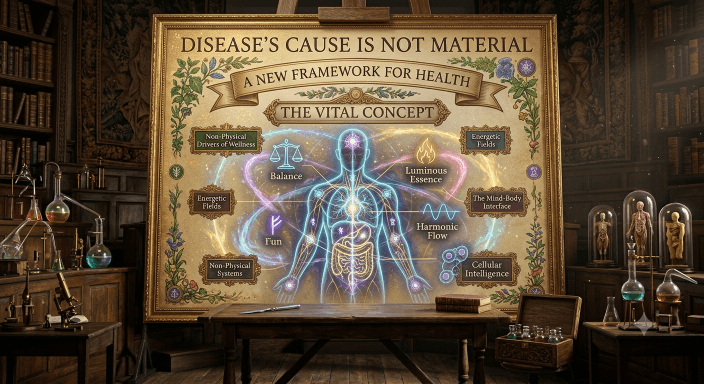
1. Concept: Disease viewed as a dynamic disturbance manifested through symptoms.
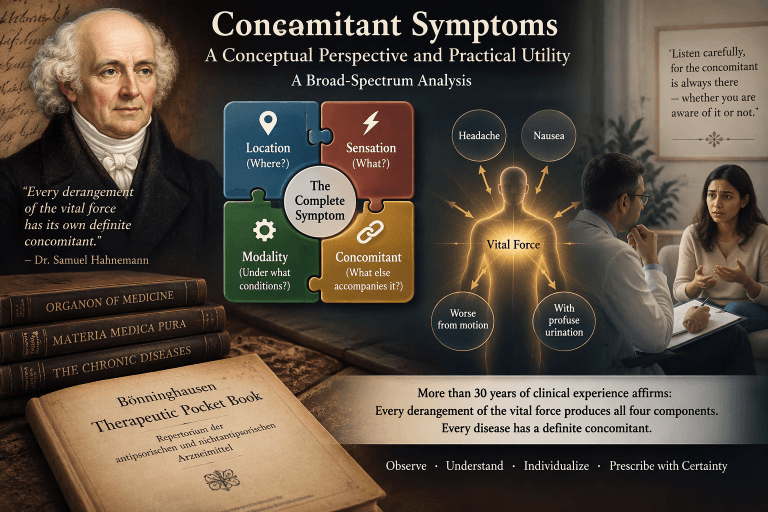
2. Basis of prescription: Based on totality of symptoms and individualization.
3. Therapeutic principle: Law of similar (Similia Similibus curentur)
4. Selection of medicine: Guided by characteristic symptoms and remedy correspondence.
5. View of symptoms: Symptoms are guides for remedy selection.
6. Objective of treatment: Restoration of health adn healing capacity.
7. Role of individuality: Individuality is central.
8. Philosophical foundation: Organon of medicine and Homoeopathic principles.
Allopathy:
1. Concept: Disease understood through pathological changes and diagnostic finding.
2. Basis of prescription: Based primarily on diagnosis and pathology.
3. Therapeutic principle: uses opposite or suppressive measure.
4. Selection of medicine: guided by diagnosis and pharmacology.
5. View of symptoms: Symptoms often require control or removal.
6. Objective of treatment: Relief and management of disease.
7. Role of individuality: Diagnosis is primary.
8. Philosophical foundation: Physiology, Pathology, and pharmacology.
Guidance for Homoeopathic Physician:
It is my sincere suggestion to every student and learner of Homoeopathy to undertake a thorough study of the Organon of Medicine. Equally important is learning how to study and interpret the Materia Medica in the light of the principles laid down in the Organon. While pursuing such studies, great care should be taken to select only authentic study materials that faithfully represent the original teachings and philosophy of Homoeopathy. A sound understanding of these foundational works strengthens confidence in the science and enables its correct application in practice.