
Gastro-intestinal disorder
Digestion related diseease are the most troublesome disorder, affect all over health of the patient.
5 articles
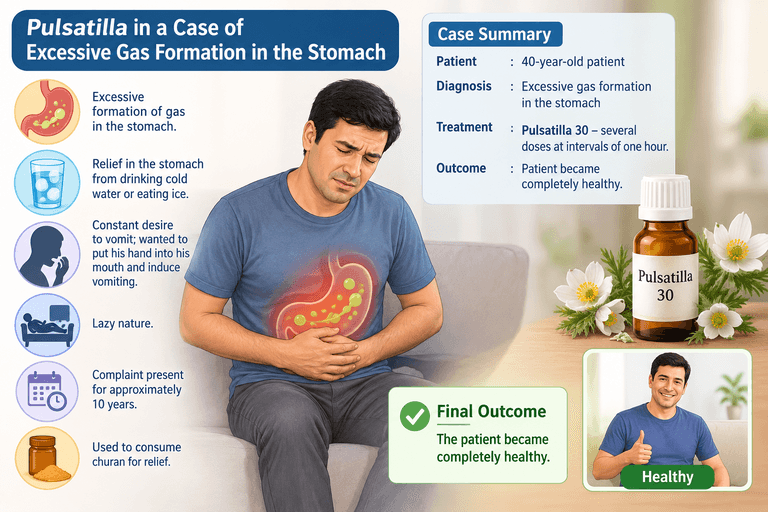
Pulsatilla in a Case of Excessive Gas Formation in the Stomach
Generally, it is believed that Pulsatilla is only a medicine for women. However, this is a common misconception. It is true that Pulsatilla has provided relief to many women, and it suits complaints occurring in women that are aggravated by pregnancy. Yet, its therapeutic sphere is not confined to female constitutions alone. The remedy acts universally, provided the prescription is guided by the totality of symptoms rather than by gender stereotypes
Aphorism 6 in Practice: The Physician Beyond Prejudice.
A 40‑year‑old female presented with a constellation of chronic complaints reflecting both physical discomfort and constitutional imbalance. Urinary symptoms were marked by interrupted, scanty flow with burning, temporarily relieved by local oiling. Abdominal tympanites with frequent eructations failed to provide relief, while general soreness, laziness, and constipation added to her burden. Hair fall was noted, along with numbness and restlessness in the extremities (ameliorated by cold drinks), weakness and pain in the lower limbs, and monthly headaches beginning at the nape and settling at the vertex. Medical history revealed a tendency toward typhoid fever. Generalities included alternating sleep, diminished appetite and thirst, craving for salt, aggravation from food, and sensitivity to both heat and cold. The peculiar modalities — relief by oiling and cold drinks — provided key individualizing features for remedy selection.
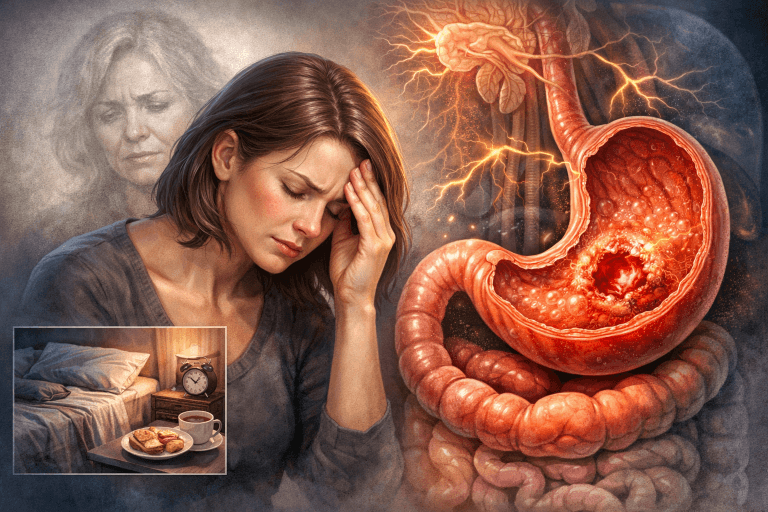
Ignatia Amara in Peptic Ulcer with Melancholic Disposition: A Case Study
A 33‑year‑old female, referred by one of my old patients, consulted me at my evening clinic with stomach complaints. Detailed case‑taking revealed a history of mental trauma following the death of her mother, whose demise was associated with irregular lifestyle, loss of sleep, and delayed meals. The patient was admitted to the hospital and managed with allopathic treatment. Investigations, including upper GI endoscopy, confirmed the diagnosis of peptic ulcer disease. Clinically, this was a case of nervous dyspepsia progressing into peptic ulcer, with the underlying etiology traced to profound emotional shock. Remedy selection was guided entirely by the predominance of mental symptoms, reaffirming Dr. Hahnemann’s observation that mental symptoms occupy a central and decisive role in homeopathic prescription.

Terebinthina: A Case of Abdominal Bloating Cured by a Single Dose
This case demonstrates the remarkable efficacy of homoeopathic medicine, where a single, well‑selected dose brought lasting relief in a chronic condition. A 32‑year‑old male, long troubled by abdominal bloating and a history of chronic urinary infection, had undergone numerous investigations without a clear diagnosis. He suffered from a gripping abdominal sensation, inability to eat comfortably, and early satiety after meals. Following administration of the indicated remedy, his symptoms subsided, appetite improved, and overall health was restored—highlighting the curative potential of individualized homoeopathic treatment.

Antimonium Crudum in Chronic Summer Diarrhoea with Early Morning Aggravation: A Case Report
On 18th April 2026, during the evening clinic hours, a 35‑year‑old male teacher presented with a long‑standing complaint of chronic diarrhoea. The patient reported that for several years he had been experiencing early morning onset of watery stools, typically between 4:00–5:00 A.M., which continued throughout the day. He described associated cramping pain in the intestines, with partial relief at night, only for the symptoms to recur the following morning. A striking feature of the case was the seasonal modality: the diarrhoea was markedly aggravated during summer, with heat exerting a pronounced influence on the intensity of the complaints. The chronicity of the condition, coupled with its peculiar time modality and seasonal aggravation, made the case noteworthy for clinical documentation.