
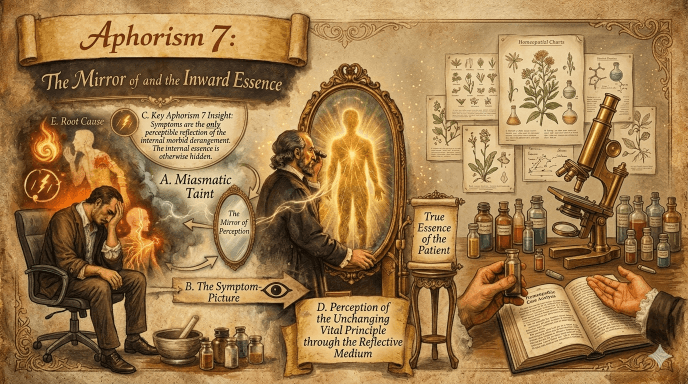
Symptomatology Does Not Furnish the True Foundation for Prescription: Perception of the Internal Essence as the Physician’s Guide
Aphorism - 7
Fractional Analysis of the Aphorism - 7:
In the aphorism 7 Dr. Hahnemann says:
When a disease has no obvious external cause that can be removed (like a foreign object or poison), then only the symptoms remain for the physician to study. Of course, if there is such a cause, any intelligent doctor would first remove it—for example.
1.
Taking away strong-smelling flowers that cause
fainting,
2.
Removing a foreign body from the eye,
3.
Loosening a tight bandage that threatens
mortification,
4.
Inducing vomiting to expel poisonous berries,
5.
Extracting objects stuck in the nose, throat, or
other passages,
6.
Crushing a bladder stone, or
7.
Opening an imperforate anus in a newborn.
But when no such cause exists, the physician must rely solely on the symptoms. These symptoms form the outward picture of the inner disturbance of the vital force. (we have no other means then symptoms) The totality of symptoms is therefore the only guide to selecting the right remedy.
Old-school physicians often tried to suppress single symptoms with medicines, a practice called “symptomatic treatment.” This approach was one-sided and harmful, because treating one symptom does not cure the disease—just as a single foot does not represent the whole man. Such treatment was usually palliative, giving temporary relief but making the condition worse later.
Thus, the physician’s duty is to observe and remove the entire totality of symptoms through the proper remedy, so that the disease is cured and health restored.
Reflection :

Combined view about totality of the symptoms:
Example: by a case illustration:
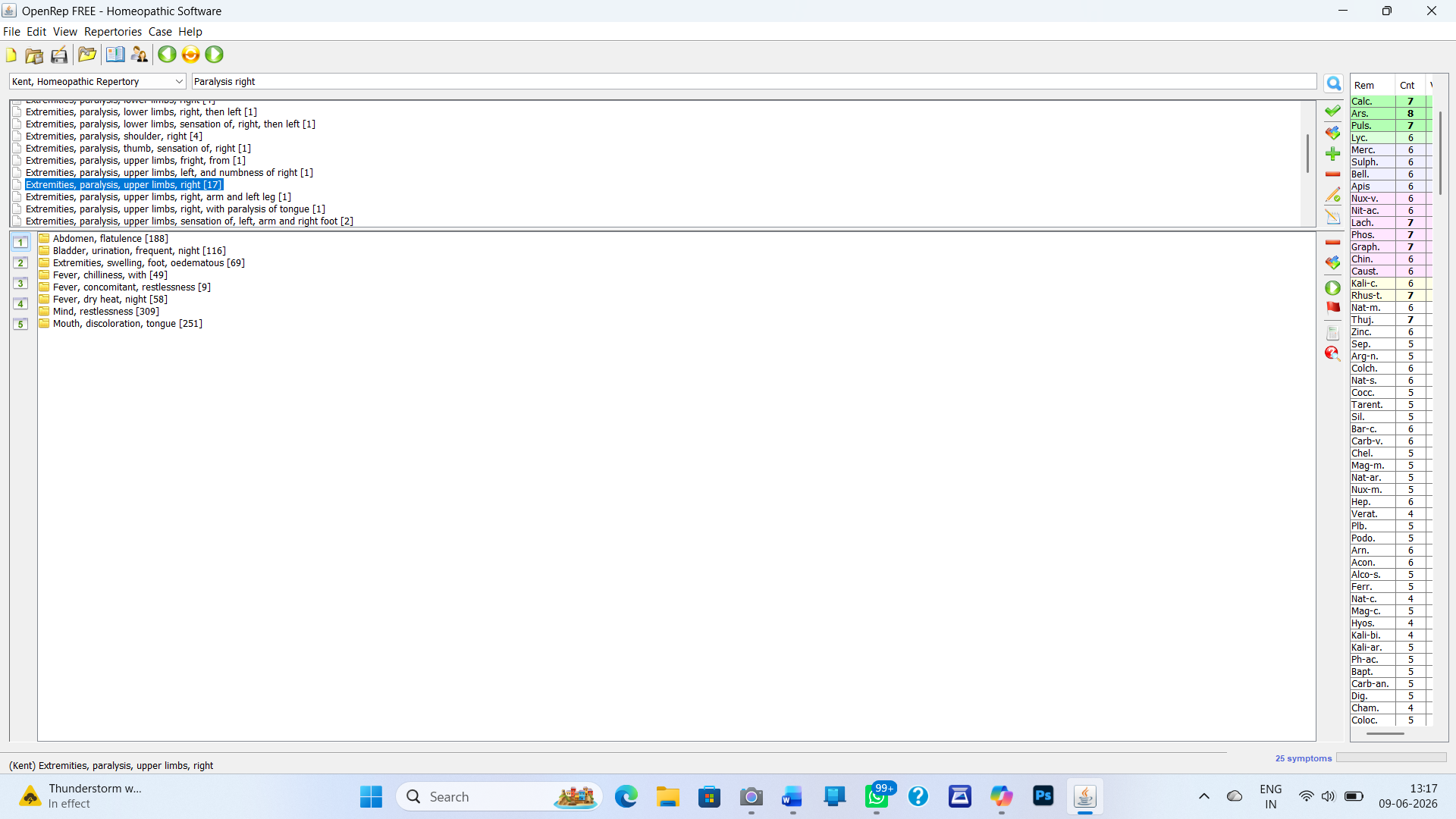
Internal essence:
Both the repertory and symptomatology indicate that Arsenic album is a well selected remedy, but this case has been cured by Single dose of Sambucus nigra - 200. This is the difference between Outwardly reflection and the internal essence of the disease, cause a big failure in the Homoeopathic practice.
Note -This article is continued with the title of " Causa Occasionalis: The Distinct Cause Beyond Exciting, Maintaining, and Fundamental cause."