
Homeopathic Medicine
Homeopathic medicine are our Healing agent, has the power of cure, that are unique to every medicine.
2 articles
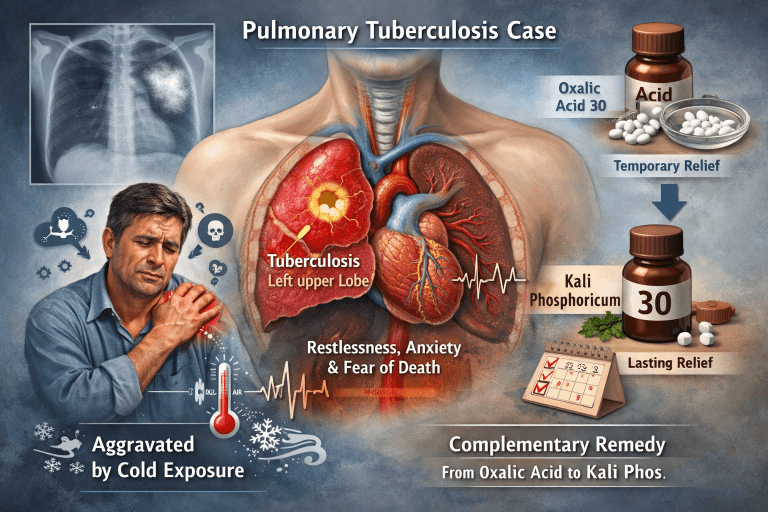
Kali Phosphoric as Complementary to Oxalic Acid: in Tubercular Affection of the Left Scapular Region
This case illustrates the dynamic role of complementary remedies in homoeopathy. A patient with pulmonary tuberculosis of the left upper lobe, complicated by pleural effusion, initially responded to Calcarea Carbonica and later obtained temporary relief from Oxalic Acid. However, the persistence of pain, restlessness, anxiety, and fear of death—aggravated by cold exposure—necessitated deeper exploration. Guided by Hering’s Guiding Symptoms, Kali Phosphoricum was identified as a complementary and chronic remedy to Oxalic Acid. Its administration provided lasting relief, with sustained improvement even after discontinuation. This outcome highlights the importance of contextual complementarity, where Kali Phos not only complemented Oxalic Acid but also addressed the chronic dimension of cardiac‑pulmonary involvement.
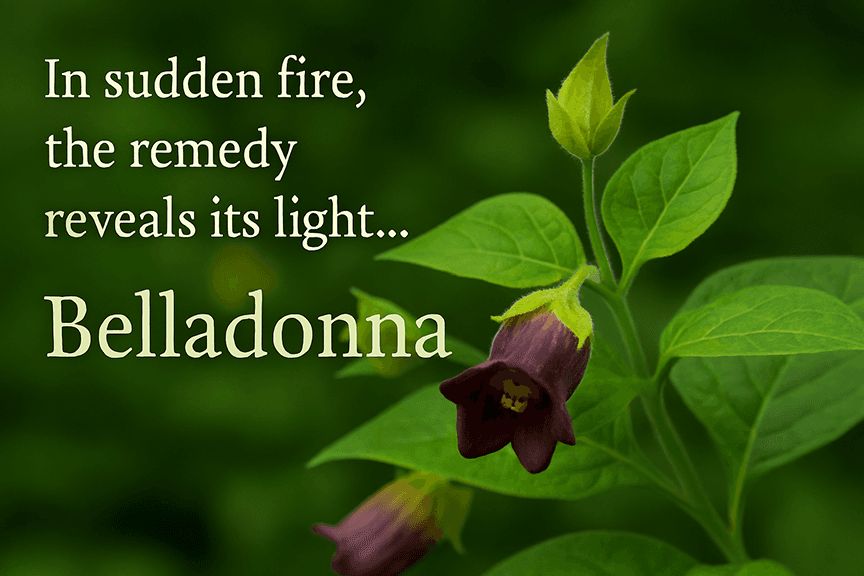
Belladonna (Deadly Nightshade)
Belladonna, commonly known as Deadly Nightshade (Atropa belladonna), is a perennial herb belonging to the Solanaceae family. Renowned for its striking purple flowers and glossy black berries, the plant has long captivated both healers and historians. Its name, meaning “beautiful lady” in Italian, reflects its historical use in cosmetics, where extracts were applied to dilate pupils for an alluring appearance. Medicinally, belladonna contains potent tropane alkaloids—atropine, scopolamine, and hyoscyamine—that exert anticholinergic effects. These compounds have been employed to relieve muscle spasms, reduce secretions, and manage certain inflammatory conditions, though their therapeutic window is narrow and toxicity risk is high. While modern pharmacology recognizes belladonna derivatives in controlled medical use, the plant itself remains a symbol of the fine line between remedy and poison, embodying the dual nature of nature’s pharmacopeia.